
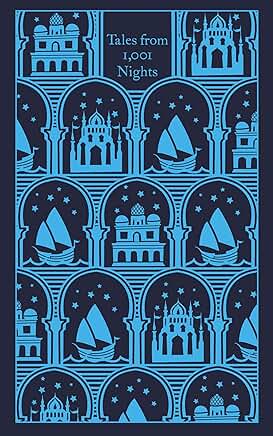
Title: One Thousand and One Nights
Author: Various (Compiled over centuries by various authors, translators, and scholars across the Middle East, South Asia, and North Africa)
Genre: Folk Tales, Fantasy, Adventure, and Romance
Original Language: Arabic
Publication Date: Earliest known manuscript dates to the 9th century, with stories added until the 14th century
Introduction
“One Thousand and One Nights,” also known as “The Arabian Nights,” is a seminal work of world literature that has captivated readers for centuries with its rich tapestry of stories. The collection is a composite of Middle Eastern, South Asian, and North African tales, woven together through a unique and intriguing narrative framework. This report delves into the origins, structure, themes, and enduring legacy of this classic work.
Summary
The narrative framework of “One Thousand and One Nights” revolves around King Shahryar and Scheherazade. After discovering his wife’s infidelity, Shahryar becomes embittered and vows to marry a new woman each day, only to execute her the following morning. Scheherazade, the vizier’s daughter, volunteers to marry the king and devises a plan to save herself and others. Each night, she tells the king a story, stopping at a cliffhanger, compelling him to keep her alive for another day to hear the story’s conclusion. This cycle continues for one thousand and one nights, during which she tells numerous tales that ultimately soften the king’s heart and transform his worldview.
The stories within the collection vary widely in genre and theme. They include adventure tales like “Sinbad the Sailor,” romantic stories like “The Tale of the Three Apples,” and humorous anecdotes like “The Hunchback’s Tale.” Each story is imbued with rich cultural motifs, ethical dilemmas, and philosophical inquiries, providing a window into the values and traditions of the diverse societies from which they originated.
Themes
Power and Justice: Many stories explore themes of justice, with characters often facing moral and ethical quandaries. The overarching narrative itself is a profound commentary on the use and abuse of power, as seen in Shahryar’s initial tyranny and eventual transformation.
Fate and Destiny: The tales frequently delve into the concept of fate, with characters navigating the complexities of predestined events versus free will. This is evident in stories like “The Tale of the Enchanted King,” where destiny plays a crucial role.
Wisdom and Cunning: Scheherazade’s use of storytelling as a means of survival highlights the power of wisdom and wit over brute force. Many characters in the individual tales also rely on cleverness and resourcefulness to overcome obstacles.
Love and Loyalty: Romantic and familial love are central to many stories, often depicted as forces capable of driving both great heroism and tragic folly. The tales frequently emphasize loyalty, be it between lovers, friends, or family members.
Literary Style and Structure
“One Thousand and One Nights” employs a nested or frame narrative structure, with stories within stories. This technique allows for a diverse array of genres and styles, from poetic verses to prosaic dialogues, enhancing the richness of the text. The use of cliffhangers in Scheherazade’s storytelling serves to create suspense and maintain engagement, a testament to the oral tradition from which these tales emerged.
The language is often ornate, reflecting the literary styles of the various cultures that contributed to the collection. The stories incorporate elements of magic realism, where fantastical elements are presented in a matter-of-fact manner, blending the extraordinary with the everyday.
Historical and Cultural Context
“One Thousand and One Nights” is a mosaic of stories from different periods and regions, each contributing to the text’s depth and diversity. The earliest stories likely originated in Persian folklore, with subsequent additions from Arabic, Indian, Egyptian, and Mesopotamian sources. The compilation reflects the cross-cultural exchanges of the medieval Islamic world, a melting pot of ideas, traditions, and narratives.
The tales were transmitted orally before being compiled in written form, and they have been translated and adapted countless times, influencing literature across the globe. Notably, European translations in the 18th and 19th centuries brought these stories to a wider audience, inspiring writers like Edgar Allan Poe, James Joyce, and Jorge Luis Borges.
Legacy and Impact
The influence of “One Thousand and One Nights” extends far beyond its literary origins. The collection has left an indelible mark on global culture, inspiring adaptations in theatre, film, music, and art. Characters such as Aladdin, Ali Baba, and Sinbad the Sailor have become cultural icons, their stories retold and reimagined in numerous contexts.
Moreover, the themes and narrative techniques of the collection have enriched literary traditions worldwide, offering a timeless exploration of human nature, morality, and the power of storytelling. “One Thousand and One Nights” continues to be a source of fascination and inspiration, a testament to its enduring appeal and profound impact on world literature.
Conclusion
“One Thousand and One Nights” is more than just a collection of tales; it is a treasure trove of cultural wisdom and artistic expression. Its intricate narrative structure, rich themes, and historical significance make it a cornerstone of world literature. Through the voice of Scheherazade, the work underscores the transformative power of stories, a message as relevant today as it was centuries ago.
Discover more from The New Renaissance Mindset
Subscribe to get the latest posts sent to your email.
 The New Renaissance Mindset