
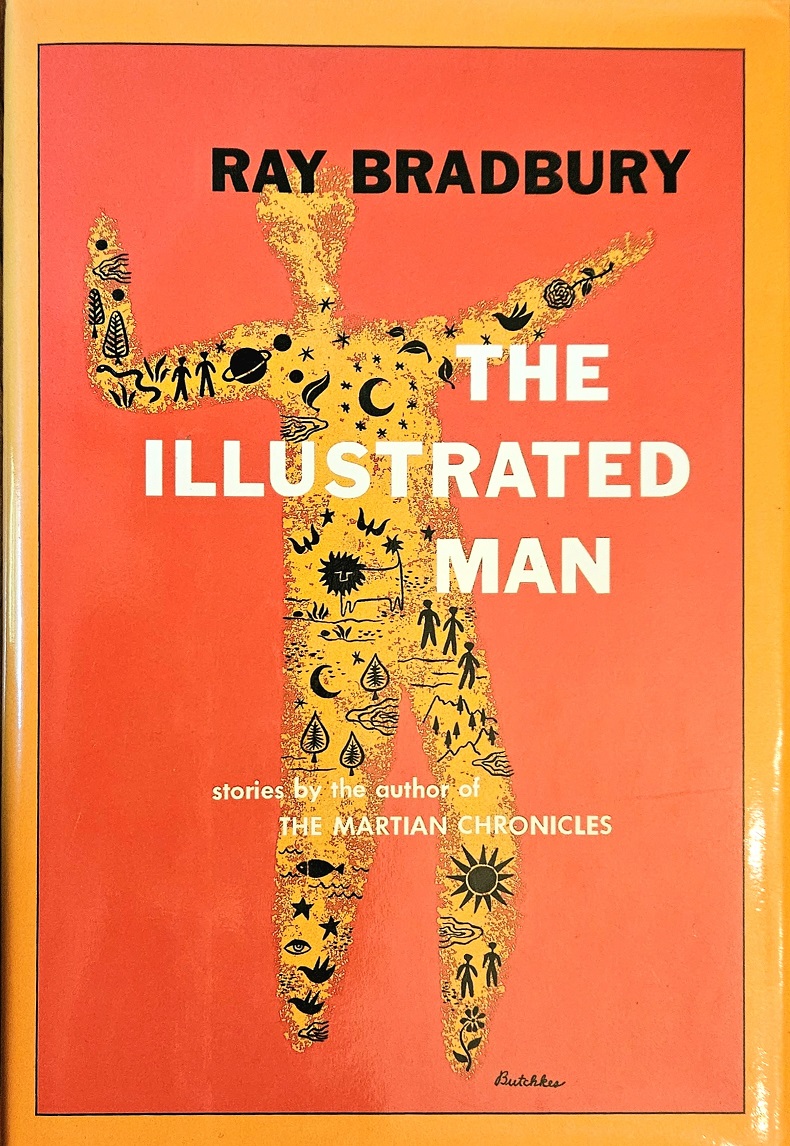
“The Illustrated Man” by Ray Bradbury (1951) is a collection of eighteen science fiction short stories, framed by a narrative about a man whose tattoos come to life and tell these stories. Bradbury’s work delves into complex themes such as the human condition, the impact of technology, and the nature of fear and hope. Each story, though distinct in its narrative, collectively paints a profound picture of humanity’s struggles and triumphs in an ever-changing world.
Summary: The book begins with the narrator encountering the Illustrated Man, a vagrant whose body is covered in mystical tattoos. Each tattoo moves and animates, revealing a story. The Illustrated Man warns the narrator that these tattoos predict the future and that those who see them are cursed. As night falls, the stories begin to unfold.
Key Stories and Themes:
- “The Veldt” This story explores the consequences of over-reliance on technology. In a futuristic house, the nursery’s virtual reality system becomes a deadly trap for the parents, illustrating the dangers of neglecting real human connections in favor of technological conveniences.
- “Kaleidoscope” A tale of astronauts cast adrift in space after their rocket explodes. It delves into existential themes, pondering the meaning of life, death, and human insignificance in the vast cosmos.
- “The Other Foot” In this narrative, African Americans have colonized Mars, escaping the oppression on Earth. When white people seek refuge on Mars after Earth is devastated by war, the Martians must confront their own feelings of resentment and the possibility of reconciliation.
- “The Long Rain” Set on Venus, where it constantly rains, a group of astronauts searches for a Sun Dome, a shelter from the relentless downpour. This story explores themes of perseverance and the psychological effects of an unending struggle against nature.
- “The Rocket Man” The story of a boy whose father is an astronaut, constantly leaving for space missions. It examines the toll of space exploration on family life and the longing for stability and connection.
Analysis: Bradbury’s writing is characterized by its lyrical prose and deep philosophical undertones. The stories in “The Illustrated Man” are not just speculative tales; they are reflections on human nature, society, and the future. Bradbury masterfully uses science fiction to explore real-world issues, making his stories timeless and relevant.
The framing device of the Illustrated Man’s tattoos adds a layer of cohesion to the collection, creating a sense of interconnectedness among the diverse stories. It also serves as a metaphor for the unpredictability of life and the inevitability of change.
Themes:
- Technology and Humanity: Many stories in the collection address the double-edged sword of technological advancement. While technology has the potential to improve lives, it also poses significant risks, particularly when it diminishes human interaction and empathy.
- Isolation and Connection: Bradbury often explores the isolation of individuals, whether it be physical, emotional, or psychological. The stories highlight the human need for connection and the consequences of its absence.
- Existentialism: Questions about the meaning of life, the inevitability of death, and humanity’s place in the universe permeate the collection. Bradbury encourages readers to reflect on their existence and the legacies they leave behind.
Conclusion: “The Illustrated Man” is a seminal work in the science fiction genre, showcasing Ray Bradbury’s unparalleled ability to weave thought-provoking narratives with rich, descriptive language. Each story stands on its own, yet collectively they form a tapestry that captures the essence of the human experience. Bradbury’s exploration of timeless themes through the lens of speculative fiction ensures that “The Illustrated Man” remains a vital and impactful piece of literature.
Discover more from The New Renaissance Mindset
Subscribe to get the latest posts sent to your email.
 The New Renaissance Mindset