
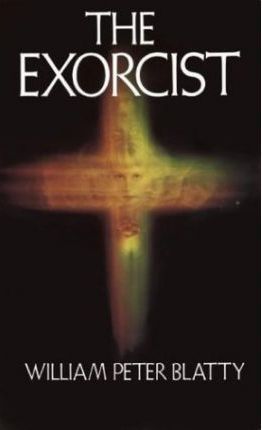
William Peter Blatty’s “The Exorcist” is a seminal work in the horror genre, blending supernatural terror with profound theological and philosophical questions. Drawing from a real-life exorcism that took place in 1949, Blatty crafts a narrative that delves into the ancient battle between good and evil, making readers question the nature of faith, the existence of the devil, and the power of human resilience.
Summary
The novel centers around Regan MacNeil, a twelve-year-old girl who begins to exhibit strange and disturbing behavior. Her mother, Chris MacNeil, a successful actress, becomes desperate as Regan’s condition worsens, displaying symptoms that defy medical explanation. The story unfolds in Georgetown, Washington D.C., where Chris seeks help from various doctors and psychiatrists, all of whom fail to provide a diagnosis or cure.
As Regan’s situation becomes increasingly dire, Chris turns to Father Damien Karras, a Jesuit priest and psychiatrist who is grappling with his own crisis of faith following the death of his mother. Initially skeptical, Father Karras soon becomes convinced that Regan is possessed by a demonic entity and recommends an exorcism. Enter Father Lankester Merrin, an experienced exorcist who has faced demonic forces before, to lead the ritual.
The exorcism itself is a harrowing ordeal, filled with violent confrontations between the priests and the demon. The climax of the novel is both a physical and spiritual battle, testing the limits of faith and endurance. Father Merrin ultimately succumbs to a heart attack, and in a final act of sacrifice, Father Karras invites the demon to possess him instead, before throwing himself out of a window to his death, thereby freeing Regan.
Themes
- Faith and Doubt: Central to the narrative is the theme of faith, particularly through the character of Father Karras, who embodies the struggle between belief and skepticism. His journey reflects the broader human condition, questioning the existence of God and the devil and the nature of suffering and redemption.
- Good vs. Evil: The novel is a stark depiction of the battle between good and evil, both in the literal sense of the exorcism and the metaphorical sense of human morality and choices. The presence of the demon challenges the characters’ understanding of evil and their capacity to confront it.
- The Power of Love and Sacrifice: Chris MacNeil’s unconditional love for her daughter drives her to seek help beyond the rational world, and Father Karras’s ultimate sacrifice underscores the redemptive power of love and selflessness.
- Science vs. Supernatural: The story juxtaposes scientific explanations with supernatural phenomena, highlighting the limitations of human knowledge and the potential existence of forces beyond our understanding.
Characters
- Regan MacNeil: A young girl whose possession serves as the catalyst for the novel’s events. Her transformation from innocence to a vessel of evil is both tragic and horrifying.
- Chris MacNeil: A strong-willed actress and mother, whose desperation to save her daughter leads her into the realm of the supernatural. Her journey is one of a mother’s love overcoming rational disbelief.
- Father Damien Karras: A Jesuit priest struggling with his faith. His internal conflict and eventual redemption form the emotional core of the novel.
- Father Lankester Merrin: The titular exorcist, whose past experiences with exorcism lend him a profound sense of purpose and determination. He represents unwavering faith and strength.
Style and Structure
Blatty’s writing is characterized by its meticulous attention to detail and atmospheric descriptions. The novel’s structure builds tension gradually, interweaving psychological horror with supernatural elements. Blatty employs a third-person omniscient narrative, allowing for deep dives into the characters’ psyches and enhancing the sense of dread and anticipation.
Impact and Legacy
“The Exorcist” is widely regarded as one of the greatest horror novels of all time, its influence extending beyond literature to film and popular culture. The 1973 film adaptation directed by William Friedkin became a landmark in horror cinema, cementing the story’s place in the cultural zeitgeist. The novel’s exploration of faith, evil, and the human condition continues to resonate with readers, making it a timeless piece of horror fiction.
Conclusion
William Peter Blatty’s “The Exorcist” is a masterful blend of horror and existential inquiry. It challenges readers to confront their own beliefs about the supernatural and the power of faith, all while delivering a gripping and terrifying narrative. Its enduring impact on the genre and its ability to provoke deep reflection make it a classic that transcends the boundaries of horror literature.
Discover more from The New Renaissance Mindset
Subscribe to get the latest posts sent to your email.
 The New Renaissance Mindset