
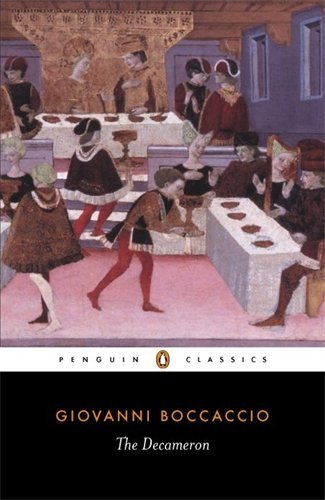
Giovanni Boccaccio’s The Decameron, composed in the mid-14th century, is a cornerstone of Italian literature and a significant work in the canon of world literature. Written in the wake of the Black Death, this collection of 100 tales told by ten young people—seven women and three men—offers a multifaceted view of human life and society in medieval Europe. Through its engaging narratives, Boccaccio explores themes of love, fortune, intelligence, and the human condition.
Summary
The frame narrative of The Decameron begins with the ten protagonists fleeing Florence to escape the plague, taking refuge in a secluded villa in the countryside. To pass the time during their two-week stay, they agree to tell stories, with each person telling one story each night for ten nights (excluding holy days), resulting in a total of 100 tales. Each day is presided over by a different “king” or “queen,” who sets a theme for the stories to follow.
The tales range widely in content and tone, from the humorous and bawdy to the tragic and pious. They encompass a variety of genres, including romance, fable, parable, and farce. Despite their diversity, the stories are unified by their focus on the complexities of human nature and the social dynamics of the time.
Themes
- Love and Desire: Many of the tales revolve around romantic and erotic adventures, highlighting the joys and sorrows of love. Boccaccio portrays love as a powerful and often uncontrollable force that can lead to both happiness and suffering.
- Fortune and Fate: The concept of fortune, or the unpredictability of life, is a recurring theme. Characters often find themselves at the mercy of fate, experiencing sudden reversals of fortune that reflect the capricious nature of life.
- Intelligence and Ingenuity: The Decameron celebrates human wit and cleverness, with many stories featuring characters who use their intelligence to navigate difficult situations, achieve their desires, or outsmart their adversaries.
- Social Commentary: Through his stories, Boccaccio offers a critique of contemporary society, addressing issues such as the corruption of the clergy, the hypocrisy of social norms, and the tensions between different social classes.
- The Human Condition: Ultimately, The Decameron is a reflection on the human experience, capturing the full spectrum of emotions and behaviors that define humanity. Boccaccio’s characters are vividly drawn and deeply human, making their stories resonate with readers across the ages.
Style and Structure
Boccaccio’s prose is notable for its elegance and clarity, blending vivid descriptions with lively dialogue. His narrative style is both sophisticated and accessible, allowing readers to engage with the tales on multiple levels. The structure of the work, with its overarching frame narrative and nested stories, creates a rich tapestry that mirrors the complexity of life itself.
Conclusion
The Decameron remains a timeless work, offering insights into human nature and society that are as relevant today as they were in Boccaccio’s time. Its rich variety of stories, combined with its profound themes and masterful storytelling, make it a masterpiece of literature. Through the lens of The Decameron, we gain a deeper understanding of the joys, sorrows, and enduring resilience of the human spirit.
Discover more from The New Renaissance Mindset
Subscribe to get the latest posts sent to your email.
 The New Renaissance Mindset