
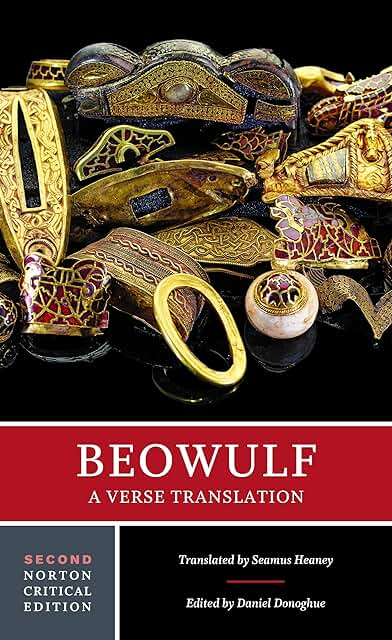
“Beowulf” is an epic poem of monumental importance in English literature. Although its author remains anonymous, it is believed to have been composed between the 8th and 11th centuries. The poem is set in Scandinavia and follows the heroic exploits of its titular character, Beowulf, as he battles formidable foes. As one of the oldest surviving pieces of literature in the English language, “Beowulf” provides profound insights into the values, culture, and societal norms of the time.
Plot Summary
The narrative of “Beowulf” unfolds in three significant acts:
- Beowulf and Grendel: The poem begins with King Hrothgar of Denmark, whose great hall, Heorot, is under attack by the monstrous creature Grendel. Beowulf, a hero from Geatland, hears of Hrothgar’s plight and sails to Denmark with his men to offer help. In a fierce battle, Beowulf fights Grendel bare-handed, ultimately tearing off the monster’s arm, which leads to Grendel’s death.
- Beowulf and Grendel’s Mother: The joy of Grendel’s defeat is short-lived as Grendel’s mother seeks revenge. She attacks Heorot, killing Hrothgar’s trusted advisor. Beowulf then pursues her to her underwater lair and engages in a brutal combat. With a giant’s sword he finds in her lair, Beowulf slays Grendel’s mother, further solidifying his heroic status.
- Beowulf and the Dragon: The final act occurs many years later, when Beowulf is king of the Geats. A dragon, angered by a stolen treasure, begins ravaging his kingdom. Despite his advanced age, Beowulf decides to confront the dragon. In the ensuing battle, Beowulf manages to kill the dragon but is mortally wounded. He dies a hero’s death, and his people mourn him deeply.
Themes
- Heroism and Valor: Central to “Beowulf” is the theme of heroism. Beowulf epitomizes the ideal hero, demonstrating unparalleled bravery, strength, and a sense of duty. His willingness to face great danger for the sake of others highlights the cultural admiration for heroic feats and self-sacrifice.
- Good vs. Evil: The poem is a classic tale of good versus evil, with Beowulf representing good and the monstrous entities like Grendel and the dragon symbolizing evil. This dichotomy underscores the moral framework of the time, where heroes were celebrated for their ability to vanquish malevolent forces.
- Fate and Providence: “Beowulf” frequently references fate, suggesting that destiny plays a crucial role in the lives of men. The hero’s acknowledgment of fate’s power reflects the era’s belief in a predetermined path and the influence of divine will.
- Loyalty and Kinship: Loyalty to lords and kinship bonds are recurring motifs. Beowulf’s actions are driven by a sense of loyalty to Hrothgar and later, his own people. This theme underscores the importance of social bonds and the collective responsibility of individuals within the community.
Character Analysis
- Beowulf: The quintessential hero, Beowulf is a paragon of strength, courage, and nobility. His character is defined by his heroic deeds and his unwavering commitment to protect others, even at the cost of his own life.
- King Hrothgar: As the ruler of the Danes, Hrothgar represents wisdom and generosity. His troubled reign due to Grendel’s attacks sets the stage for Beowulf’s heroism.
- Grendel and Grendel’s Mother: These antagonists symbolize chaos and vengeance. Their monstrous nature and actions provide a stark contrast to the heroism and order represented by Beowulf and Hrothgar.
- The Dragon: The final adversary Beowulf faces, the dragon, embodies greed and destruction. The dragon’s fight with Beowulf serves as a climactic end to the hero’s saga, marking his final act of bravery.
Literary Significance
“Beowulf” is not only a remarkable narrative but also a valuable historical document. Its rich use of language, including kennings and alliteration, showcases the artistry of Anglo-Saxon poetry. The poem’s blend of pagan and Christian elements provides insight into the transitional period in which it was composed.
The epic’s exploration of timeless themes such as heroism, loyalty, and the struggle between good and evil ensures its enduring relevance. “Beowulf” remains a foundational text in the study of English literature, offering a window into the cultural and literary heritage of early medieval Europe.
Conclusion
“Beowulf” stands as a monumental work that captures the essence of heroism and the values of its time. Its enduring legacy continues to inspire and influence modern literature and popular culture. As we delve into the epic’s rich narrative and themes, we not only appreciate its historical significance but also recognize the universal human experiences it encapsulates.
Discover more from The New Renaissance Mindset
Subscribe to get the latest posts sent to your email.
 The New Renaissance Mindset