
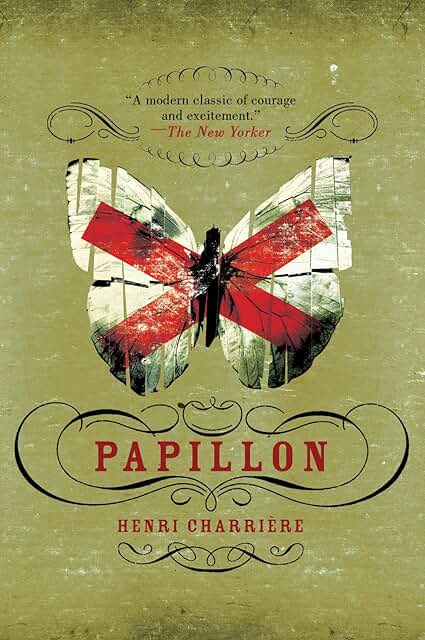
Papillon is an extraordinary tale of resilience, hope, and the unbreakable human spirit. The book is an autobiographical account of Henri Charrière, also known by his nickname “Papillon” (French for “butterfly”), who was wrongfully convicted of murder in 1931 and sentenced to life imprisonment in the notorious French Guiana penal colony. The memoir chronicles his numerous daring escape attempts, his life in the brutal prison environment, and his journey towards eventual freedom.
Plot Summary
The narrative begins with Charrière’s conviction in France, despite his fervent declarations of innocence. He is sentenced to life imprisonment at the Devil’s Island penal colony, a place renowned for its harsh conditions and high mortality rate among prisoners. Charrière’s first escape attempt occurs almost immediately after his arrival. Though unsuccessful, it sets the tone for his relentless quest for freedom.
Throughout the book, Charrière embarks on several escape attempts, each more audacious than the last. These attempts take him through various settings—jungles, the open sea, indigenous villages, and more. His journey is marked by moments of intense suffering, yet also by remarkable encounters with other inmates, local villagers, and even sympathetic guards.
One of the most remarkable aspects of Papillon is Charrière’s indomitable spirit. No matter how dire his circumstances, he refuses to accept his fate. His nickname, “Papillon,” symbolizes this very determination—like a butterfly emerging from a cocoon, Charrière is constantly striving to break free from his imprisonment.
The book concludes with Charrière’s final, successful escape to Venezuela, where he ultimately finds freedom and builds a new life. The closing chapters reflect on his journey, the friendships he formed, the people who helped him, and the lessons he learned about survival, justice, and freedom.
Themes and Analysis
- The Human Spirit and the Will to Survive: The central theme of Papillon is the resilience of the human spirit. Charrière’s repeated escape attempts demonstrate an extraordinary will to survive and a refusal to be crushed by an unjust system. His journey is not just physical but also psychological—he maintains hope and a sense of purpose even in the most dehumanizing conditions.
- Injustice and the Penal System: The book provides a harsh critique of the French penal system of the time, exposing the inhumanity and brutality that prisoners were subjected to. The inhumane conditions of the prison and the cruelty of the guards serve as a backdrop against which Charrière’s moral fortitude is highlighted.
- Friendship and Loyalty: Despite the grim environment, Papillon is also a story of camaraderie and mutual support among the prisoners. Charrière forms deep bonds with fellow inmates, and these relationships often become crucial to his survival. The loyalty and trust between these men add a layer of humanity to the otherwise brutal world of the penal colony.
- Freedom and Identity: Throughout the narrative, Charrière’s quest for freedom is not just about physical escape but also about reclaiming his identity. His fight against his wrongful conviction is as much about clearing his name as it is about escaping the physical confines of the prison.
- Moral Ambiguity and Redemption: While Charrière is portrayed as a victim of a miscarriage of justice, the memoir does not shy away from the moral ambiguities of his character. He is, after all, a convicted criminal, and his methods are often morally questionable. Yet, his journey towards freedom can also be seen as a quest for redemption—a reclaiming of his humanity in a world that seeks to strip it away.
Style and Structure
Papillon is written in a straightforward, almost journalistic style, which adds to its authenticity and immediacy. Charrière’s voice is direct and unembellished, which makes his experiences all the more harrowing. The episodic structure of the book, with each chapter detailing a specific escape attempt or significant event, keeps the narrative engaging and fast-paced.
The vivid descriptions of the various landscapes Charrière traverses—the dense jungles, the treacherous seas, and the claustrophobic prison cells—immerse the reader in his world. The detailed recounting of escape plans and the tension of the attempts themselves create a sense of urgency and excitement.
Historical and Cultural Context
Papillon was published in 1969, at a time when public interest in stories of survival and adventure was high. The book became an instant bestseller, appealing to readers’ fascination with true crime and adventure. However, its publication also sparked controversy, with some questioning the authenticity of Charrière’s account. Despite these debates, the book’s impact on popular culture is undeniable, inspiring a successful film adaptation in 1973 and a remake in 2017.
The French penal colony system, particularly the infamous Devil’s Island, is a significant historical backdrop to the memoir. The brutal conditions depicted in Papillon are a stark reminder of the harsh realities faced by prisoners during this period and serve as a critique of colonial and penal practices of the time.
Conclusion
Papillon by Henri Charrière is more than just a memoir of prison escapes; it is a profound exploration of the human spirit’s capacity to endure and triumph against overwhelming odds. Charrière’s story, whether entirely factual or partly fictionalized, resonates with readers as a testament to resilience, hope, and the quest for freedom. The book remains a powerful and gripping account of one man’s fight for justice and liberation, making it a timeless piece of literature that continues to inspire and captivate readers around the world.
Discover more from The New Renaissance Mindset
Subscribe to get the latest posts sent to your email.
 The New Renaissance Mindset