
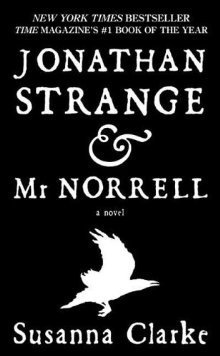
“Jonathan Strange & Mr. Norrell”(2004) is a richly woven tapestry of historical fantasy, set against the backdrop of 19th-century England during the Napoleonic Wars. Susanna Clarke’s debut novel masterfully blends magic, history, and intricate character development, presenting an alternative history where magic once flourished but has since faded into obscurity.
Plot Summary
The novel is structured into three volumes:
- Mr. Norrell: The story begins in 1806 with Mr. Gilbert Norrell, a reclusive and scholarly magician, who aims to restore practical magic to England. He demonstrates his powers by making the statues of York Minster speak and revives Lady Pole from the dead, albeit with unforeseen consequences. Mr. Norrell seeks to control and monopolize English magic, believing it should be respectable and methodical.
- Jonathan Strange: Enter Jonathan Strange, a young, handsome, and intuitive magician who becomes Mr. Norrell’s pupil. Unlike his mentor, Strange is adventurous and more open to the wild, ancient aspects of magic. Their relationship is central to the narrative, shifting from mentorship to rivalry as their differing philosophies on magic come to a head. Strange’s magical exploits, including his involvement in the Napoleonic Wars and his attempt to summon the mysterious and dangerous Raven King, lead to dramatic developments.
- John Uskglass: The final volume sees the rivalry between Strange and Norrell reaching its climax. Strange becomes increasingly obsessed with the Raven King, a legendary figure who once ruled Northern England with powerful magic. Strange’s descent into madness and Norrell’s rigid adherence to his principles culminate in a dramatic confrontation with the enigmatic forces that govern English magic. The novel concludes with an ambiguous but hopeful ending, suggesting that the future of English magic remains uncertain yet promising.
Themes
Rationalism vs. Romanticism: The conflict between Mr. Norrell and Jonathan Strange epitomizes the clash between rationalism and romanticism. Norrell’s structured, cautious approach contrasts sharply with Strange’s bold, intuitive use of magic, reflecting broader philosophical debates of the period.
Power and Control: The novel explores themes of power and control, both in the political realm and within the magical community. Norrell’s desire to control magic and maintain order contrasts with Strange’s more chaotic and liberating approach.
The Supernatural and the Mundane: Clarke deftly intertwines the supernatural with the mundane, creating a world where magic is treated with the same seriousness as any other academic or professional pursuit. This blend of the extraordinary with the ordinary adds depth and realism to the narrative.
Style and Structure
Clarke’s writing is notable for its wit, elegance, and attention to detail. The narrative is enriched by extensive footnotes that provide historical context, elaborate on magical theory, and offer amusing asides, creating a layered and immersive reading experience. The novel’s structure, divided into three volumes, allows for a gradual build-up of tension and complexity.
Impact and Legacy
“Jonathan Strange & Mr. Norrell” was met with critical acclaim upon its release, winning numerous awards, including the Hugo Award for Best Novel. Its unique blend of historical fiction and fantasy has set a high standard in the genre, influencing subsequent works and inspiring adaptations, including a BBC television series.
Personal Reflection
Reading “Jonathan Strange & Mr. Norrell” is a deeply rewarding experience, offering a rich narrative that is both intellectually stimulating and emotionally engaging. Clarke’s ability to create a fully realized world where magic and history intersect is nothing short of remarkable. The novel’s characters are complex and memorable, and the interplay between historical events and magical elements provides a fresh and captivating perspective on 19th-century England.
Susanna Clarke’s “Jonathan Strange & Mr. Norrell” is a masterful work of historical fantasy, combining meticulous historical detail with imaginative and compelling storytelling. Its exploration of the nature of magic, power, and human ambition makes it a timeless and thought-provoking read.
Discover more from The New Renaissance Mindset
Subscribe to get the latest posts sent to your email.
 The New Renaissance Mindset