
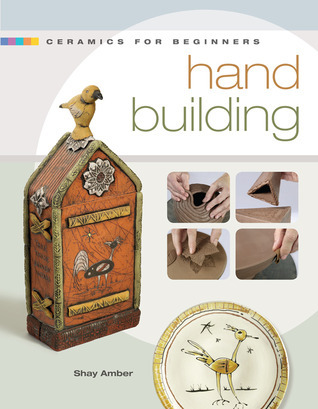
Shay Amber’s Hand Building: Ceramics for Beginners is an insightful and accessible guide that serves both as a technical manual and an artistic inspiration for those venturing into the ancient craft of ceramics. While its title suggests simplicity, Amber weaves together a comprehensive approach to hand-building that goes beyond rudimentary instruction, blending practical knowledge with an awareness of the material’s cultural and historical significance.
At the heart of this book is Amber’s clear, step-by-step methodology that demystifies the hand-building process. What sets Amber’s work apart from more utilitarian guides is her keen awareness of the tactile, almost meditative experience of working with clay. The techniques of pinching, coiling, and slab-building are presented not just as mechanical skills, but as invitations to connect with clay as a living medium. Amber provides an artist’s philosophy behind these techniques, emphasizing the organic nature of hand-building in contrast to the often mechanical precision of wheel-throwing.
Amber’s text excels in its accessibility. While it is rich with technical detail, it remains approachable for complete novices. Her language is straightforward, yet it does not sacrifice depth. She offers insights into surface treatments, textures, and glazing techniques, making sure that her audience understands how to infuse personality into their creations. This approachability is enhanced by the book’s thoughtful structure—each chapter logically follows the previous, building the reader’s confidence from basic techniques to more advanced projects.
Where Amber particularly shines is in her use of visual material. The book is filled with clear, high-quality photographs that do not merely illustrate the finished product but show each step in a project’s creation. These images are not only instructional but act as a form of encouragement, showcasing the beauty of imperfection that defines the handmade object. Amber’s commitment to celebrating the uniqueness of hand-built ceramics aligns with the Japanese aesthetic of wabi-sabi, underscoring the beauty of the imperfect and incomplete, a subtle thematic thread that runs throughout the book.
Moreover, Amber touches on the spiritual and emotional dimensions of ceramics. She understands that the act of hand-building is not solely about the object, but the process—about slowing down, engaging with a material that has been molded by human hands for millennia. This philosophical reflection offers the reader more than just technical mastery; it provides a sense of mindfulness and presence, making the practice of ceramics an antidote to modern life’s hurried pace. In doing so, Amber’s book speaks to a larger audience than just ceramicists—it reaches anyone who is interested in the art of making and the emotional resonance of working with their hands.
For a beginner, Amber’s Hand Building: Ceramics for Beginners is indispensable, offering foundational knowledge with an inviting tone. For the more seasoned artist, the book’s exploration of texture, design, and surface treatment offers a chance to revisit and refine basic techniques in new and creative ways. Yet, it is Amber’s ability to blend technicality with artistic philosophy that makes this book essential for anyone looking to deepen their connection to both the material and the craft. By the end of the book, readers are not only equipped to create, but also inspired to explore the unique dialogue between hand, clay, and form.
Amber’s work stands as a bridge between craft and artistry, offering both inspiration and practical skills in equal measure—a rare accomplishment for a book aimed at beginners.
Discover more from The New Renaissance Mindset
Subscribe to get the latest posts sent to your email.
 The New Renaissance Mindset