
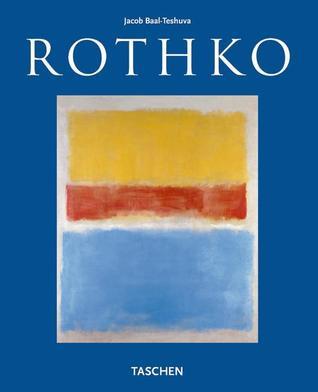
In Rothko, Jacob Baal-Teshuva crafts a compelling and deeply researched exploration of one of the 20th century’s most enigmatic and influential abstract painters, Mark Rothko. Through a combination of biographical insight, critical analysis, and careful curation of Rothko’s works, Baal-Teshuva’s book transcends the typical confines of an art monograph, positioning itself as a profound reflection on the relationship between art, emotion, and the human condition.
What makes Rothko stand out as a work of scholarship is Baal-Teshuva’s ability to contextualize the painter’s evolving style within both the broader art historical framework and the psychological intricacies of Rothko himself. Readers are not merely introduced to the well-known phases of his career—such as his early figurative works or his signature color field paintings—but also the philosophical and emotional turmoil that underpinned his creative process.
The book expertly balances personal biography with art critique. Baal-Teshuva delves into Rothko’s Russian-Jewish immigrant background and the intellectual ferment of mid-century New York, which shaped his ideals and sharpened his existential concerns. Rothko’s engagement with Nietzschean philosophy, particularly the tension between the Apollonian and Dionysian forces, is highlighted as a key thematic undercurrent of his work. This connection illuminates Rothko’s obsession with transcending mere representation in favor of what he called “the tragic and timeless” nature of pure form and color.
Baal-Teshuva’s treatment of Rothko’s artistic development is equally meticulous. From the surrealist influences in his earlier years to the monumental, meditative color fields that defined his later work, each chapter reveals how Rothko’s technical refinements aligned with his philosophical quest for a more direct, visceral engagement with the viewer. The author convincingly argues that Rothko’s towering blocks of color were not abstract for abstraction’s sake, but rather spiritual landscapes, evoking the depths of human emotion—grief, ecstasy, despair—without the need for literal narrative.
What is particularly effective is Baal-Teshuva’s use of Rothko’s own words, interwoven throughout the text, which allows the reader to witness the artist’s own vision and frustrations. His statement, “I am interested only in expressing basic human emotions—tragedy, ecstasy, doom, and so on—and the fact that people break down and cry when confronted with my pictures shows that I communicate those basic human emotions,” becomes a central thesis of the book. Baal-Teshuva unpacks how this emotional resonance was precisely the core of Rothko’s contribution to Abstract Expressionism, yet was also what set him apart from his contemporaries like Pollock and de Kooning, who were more preoccupied with the act of painting itself.
Visually, the book is a stunning homage to Rothko’s oeuvre. Full-color reproductions of his most significant works are accompanied by close-up details, which allow the reader to appreciate the subtleties of texture, brushwork, and the delicate interplay of hue and saturation that make Rothko’s canvases so alive. The placement of these images beside analytical commentary encourages an immersive experience, making it possible for readers to viscerally sense the spatial and emotional depth that Rothko aimed to achieve.
However, the book does not shy away from the darker elements of Rothko’s story. Baal-Teshuva deftly addresses the artist’s growing sense of isolation, his disillusionment with the commodification of art, and his tragic suicide in 1970. This somber conclusion frames Rothko’s body of work in a poignant light, as both a testament to his artistic genius and a reflection of the inescapable personal struggles that colored his life.
Rothko by Jacob Baal-Teshuva is not merely an art historical text; it is a meditation on the power of color and form to speak to the deepest layers of the human soul. For readers who are well-versed in art criticism, the book provides rich, nuanced insights into Rothko’s legacy. For newcomers to Rothko’s work, Baal-Teshuva offers a lucid guide to understanding why these seemingly simple compositions continue to evoke such profound emotional responses. It is a must-read for anyone interested in the intersections of art, emotion, and the search for meaning in modern life.
Discover more from The New Renaissance Mindset
Subscribe to get the latest posts sent to your email.
 The New Renaissance Mindset