
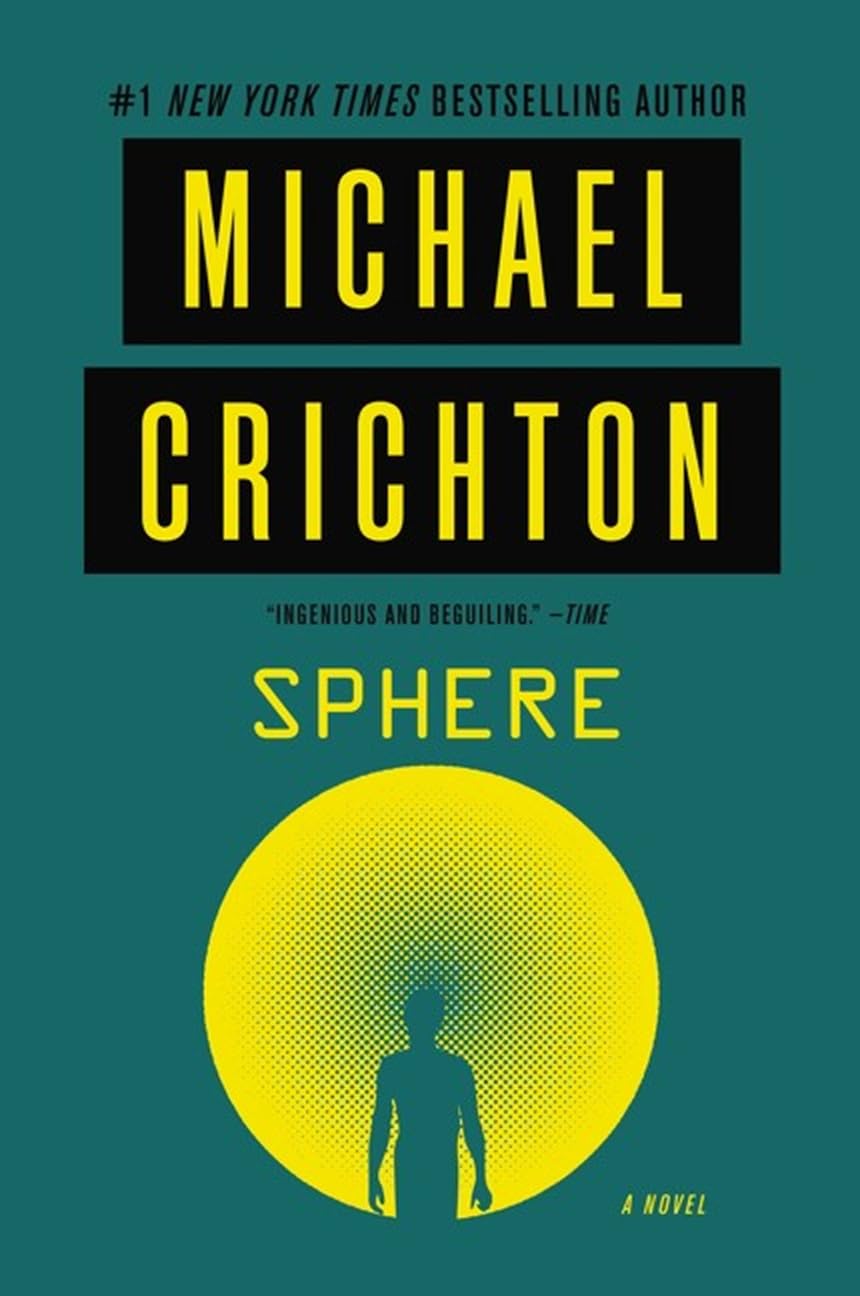
Michael Crichton’s Sphere is a masterclass in speculative fiction, blending hard science, psychological tension, and philosophical musings into a compelling narrative that examines the boundaries of human understanding and the fragile nature of the human psyche. First published in 1987, the novel remains a quintessential example of Crichton’s ability to weave scientific plausibility with thrilling storytelling.
At its core, Sphere is the story of an undersea expedition led by a diverse group of specialists, including psychologist Norman Goodman, mathematician Harry Adams, biologist Beth Halpern, and others. They are called to explore a mysterious spacecraft discovered at the bottom of the Pacific Ocean. What they find is far from ordinary—a perfectly intact, shimmering metallic sphere that defies explanation. The sphere becomes a symbol and a catalyst, revealing the characters’ deepest fears, desires, and flaws while unraveling the boundaries between the human and the unknown.
Narrative and Structure
Crichton structures the novel with surgical precision, balancing technical exposition with moments of raw tension and wonder. The setting, an isolated undersea habitat, becomes an oppressive character in itself, heightening the claustrophobia and unease that permeate the story. Crichton’s use of short chapters and shifting perspectives sustains a brisk pace, ensuring that the reader is as disoriented and captivated as the protagonists.
The dialogue-driven plot reveals much about the characters while advancing the mystery of the sphere. Each of the specialists brings their expertise and personal baggage to the fore, creating both collaboration and conflict. The interplay of their perspectives allows Crichton to explore themes of hubris, the fallibility of human perception, and the limits of scientific objectivity.
Themes and Philosophical Undertones
Sphere delves into several deep and enduring themes, including the nature of consciousness, the power of the subconscious, and the interplay between fear and imagination. The titular sphere is an ambiguous presence, representing both infinite possibility and unrelenting danger. Its true nature—seemingly an entity capable of manifesting human thoughts—forces the characters to confront their innermost fears and desires, often with disastrous consequences.
The novel also grapples with humanity’s insatiable curiosity and its tendency to overreach. The characters’ descent into paranoia and conflict underscores Crichton’s skeptical view of human adaptability when faced with incomprehensible phenomena. This critique is particularly resonant in the context of the era’s technological advancements and the burgeoning interest in artificial intelligence and space exploration.
Crichton’s Stylistic Hallmarks
Crichton’s prose is clean and efficient, eschewing ornamentation for clarity and momentum. His meticulous research shines through in the detailed descriptions of the underwater habitat, the mechanics of deep-sea diving, and the speculative technology surrounding the sphere. Yet, the novel never feels bogged down by its scientific underpinnings; instead, they enhance the sense of realism and plausibility that anchors the story’s more fantastical elements.
Crichton also demonstrates a remarkable ability to blend genres. While Sphere is ostensibly a science fiction novel, it borrows heavily from psychological thrillers and horror. The influence of works like 2001: A Space Odyssey and The Andromeda Strain is evident, but Crichton imbues his narrative with an existential tension that feels uniquely his own.
Critique and Legacy
While Sphere is an intellectually engaging and emotionally gripping read, it is not without its flaws. The characters, though well-drawn, occasionally veer into archetypal territory, and some of their decisions feel contrived to serve the plot. Additionally, the novel’s resolution, while thought-provoking, may strike some readers as overly abrupt or ambiguous.
Despite these minor shortcomings, Sphere remains a seminal work in Crichton’s oeuvre and in the broader canon of speculative fiction. It challenges readers to question the limits of human understanding and confront the darker recesses of their own minds. In doing so, it transcends its genre, offering a profound meditation on the intersection of science, imagination, and human fallibility.
Sphere is a timeless exploration of the unknown, a novel that combines the intellectual rigor of science fiction with the visceral thrills of a psychological drama. For readers willing to plumb the depths of both the ocean and the human mind, Sphere offers a journey that is as unsettling as it is enlightening. Crichton’s ability to provoke both wonder and introspection ensures that the novel continues to resonate, standing as a testament to his enduring legacy as a storyteller and thinker.
Discover more from The New Renaissance Mindset
Subscribe to get the latest posts sent to your email.
 The New Renaissance Mindset