
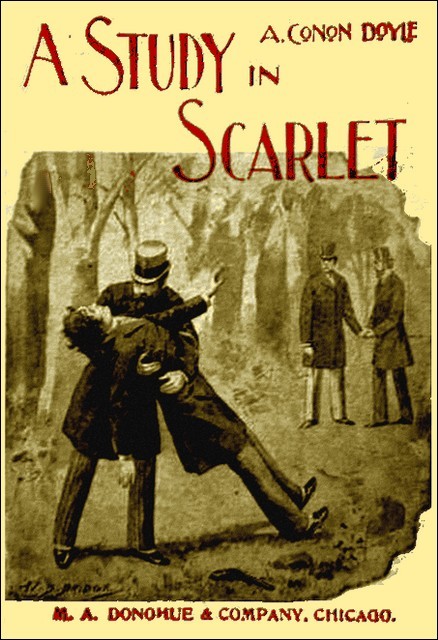
Arthur Conan Doyle’s A Study in Scarlet (1887) not only introduced the world to the inimitable Sherlock Holmes but also established a foundational text for the detective fiction genre. At first glance, the novel seems to follow a straightforward whodunit structure, yet beneath its veneer lies a richly textured narrative that straddles genres, subverts Victorian conventions, and offers profound commentary on justice, colonialism, and human nature.
The Making of a Detective Icon
The debut of Sherlock Holmes is nothing short of masterful. Doyle constructs Holmes as a figure of almost superhuman intellectual prowess—his deductive abilities bordering on clairvoyance—while grounding him in eccentricity and humanity. His disdain for social norms, combined with his obsessive devotion to logic, foreshadows the modern anti-hero archetype. Holmes’ introduction through the eyes of Dr. Watson, whose earnest bewilderment mirrors the reader’s awe, ensures that the detective’s brilliance is neither alienating nor implausible. This symbiotic relationship between Holmes and Watson—one built on complementary skills, admiration, and mutual dependence—forms the bedrock of the series.
Structure and Duality: The Story Within the Story
Doyle’s decision to bifurcate the novel into two distinct parts—a contemporary London-based investigation and an extended flashback to the American West—is audacious. This structural gamble allows the narrative to transcend the confines of urban Victorian England, expanding its scope to encompass themes of revenge, religious fanaticism, and the violence of frontier justice. While the first part dazzles with Holmes’ methodical unraveling of the crime, the second, with its starkly different tone and pacing, functions as a counterbalance, exposing the raw emotional undercurrents that propel the novel’s central conflict.
Thematic Richness: Justice and Morality
At its core, A Study in Scarlet grapples with questions of justice and morality, challenging the binary opposition of good and evil. Jefferson Hope, the antagonist, is a murderer, yet Doyle renders his vengeance comprehensible, even sympathetic. This moral ambiguity forces readers to confront the limitations of institutional justice and the deeply personal nature of retribution. By contrasting Hope’s deeply human motivations with Holmes’ cold, clinical detachment, Doyle raises a question that echoes through the ages: Is justice best served by the rational impartiality of the law or by the visceral passions of the wronged?
Victorian Critique and Cultural Reflections
Beyond its engrossing mystery, the novel offers subtle critiques of Victorian society. Holmes’ disdain for bureaucracy and his solitary, almost ascetic lifestyle serve as implicit rebukes to the rigid social hierarchies of the era. Moreover, the novel’s depiction of Mormonism, though deeply problematic and colored by the prejudices of Doyle’s time, underscores the Victorian fascination with the exotic and the fear of the “other.” This portrayal, while reflective of colonial anxieties, also illuminates the era’s obsession with the intersection of religion, power, and violence.
Legacy and Influence
A Study in Scarlet marks the birth of a genre-defining detective who has since become a cultural institution. Doyle’s intricate plotting, keen observational details, and ability to fuse logic with narrative intrigue set a standard that countless imitators have sought to emulate. Yet what truly elevates the novel is its willingness to innovate—to blend genres, challenge norms, and infuse a crime story with profound philosophical musings.
Final Thoughts
Though A Study in Scarlet is often overshadowed by later Holmes adventures, it remains a cornerstone of detective fiction and a testament to Doyle’s narrative daring. It is a work that rewards both casual readers seeking thrills and literary scholars drawn to its rich thematic complexity. As an introduction to one of literature’s most enduring characters, the novel is nothing short of revolutionary, serving as both a mirror to its time and a harbinger of the modern age of storytelling.
In A Study in Scarlet, Arthur Conan Doyle does more than entertain; he invites readers into a labyrinth of logic, morality, and humanity that continues to captivate more than a century later.
Discover more from The New Renaissance Mindset
Subscribe to get the latest posts sent to your email.
 The New Renaissance Mindset