
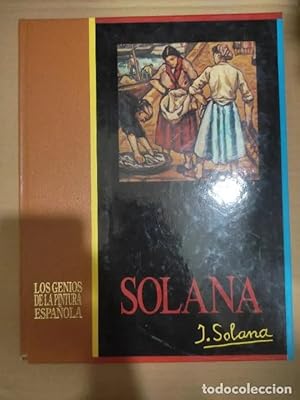
In Solana: Los Genios de la Pintura Española, Ediciones Rayuela provides readers with an eloquent and evocative exploration of the art and life of José Gutiérrez Solana, a painter who captured the soul of Spain’s cultural and existential dualities. This richly illustrated volume not only cements Solana’s legacy as a quintessential figure in Spanish art but also serves as a critical bridge between his work and the socio-historical currents that shaped it.
The book situates Solana within the broader lineage of Spanish masters, such as Velázquez, Goya, and Sorolla, but highlights his distinct voice as an artist of “esperpento”—a style that, much like Valle-Inclán’s literary grotesque, unveils the tragic and surreal underpinnings of human existence. Solana’s art thrives on contradiction: his palette is dark and brooding, yet the emotional resonance of his figures is luminous; his subjects are stark and grotesque, yet the scenes exude a haunting beauty. The text delves into these paradoxes, treating Solana as a painter who refused to shy away from the macabre realities of death, isolation, and societal decay.
One of the book’s strengths lies in its contextual grounding of Solana’s work within the cultural and historical tensions of early 20th-century Spain. The narrative unfolds against the backdrop of a nation grappling with modernization, where the rural traditions of the past clashed with urban industrialization. Ediciones Rayuela excels in drawing connections between Solana’s depictions of bullfights, religious processions, and funeral rites and the broader existential anxieties of a nation on the brink of transformation. The prose is academic yet accessible, making the book appealing to both seasoned art scholars and curious readers.
The inclusion of high-quality reproductions of Solana’s paintings is another triumph. These images allow readers to experience his dense, textural brushstrokes and muted, shadowed tones. The visceral immediacy of La Tertulia del Café Pombo or El Entierro de la Sardina is amplified when paired with the book’s insightful analysis, which teases out the psychological depth and folkloric richness embedded in these works. Each image is meticulously annotated, providing not just a visual experience but also an intellectual engagement with Solana’s thematic concerns.
However, the book does not shy away from critiquing Solana’s limitations. It acknowledges the occasional repetitiveness of his motifs and the ways in which his fixation on decay risks lapsing into a morbid romanticism. Yet, these critiques only deepen the reader’s appreciation for his relentless exploration of the human condition. Solana emerges not just as an artist but as a chronicler of a Spain teetering between tradition and modernity, between light and shadow.
What elevates Solana: Los Genios de la Pintura Española from a mere art book to a literary and philosophical exploration is its sensitivity to the intersections of art, culture, and philosophy. The text suggests that Solana’s work transcends national boundaries, speaking to universal themes of mortality, alienation, and the grotesque beauty of life’s imperfections. His paintings are visual meditations on the same existential questions posed by writers like Miguel de Unamuno and philosophers like Søren Kierkegaard.
Solana: Los Genios de la Pintura Española is a masterfully curated and thoughtfully written homage to a painter who remains as enigmatic as the shadows he painted. Ediciones Rayuela has crafted a book that is not only an indispensable resource for understanding José Gutiérrez Solana but also a profound meditation on the enduring power of art to reflect, challenge, and illuminate the human experience. It is a testament to the genius of Spanish painting and to Solana’s place within its pantheon.
A must-read for art historians, cultural scholars, and lovers of the evocative, this book affirms that José Gutiérrez Solana’s art, much like Spain itself, is a tapestry woven from the tension between darkness and light.
Discover more from The New Renaissance Mindset
Subscribe to get the latest posts sent to your email.
 The New Renaissance Mindset