
A Dystopian Fever Dream of Political Rot
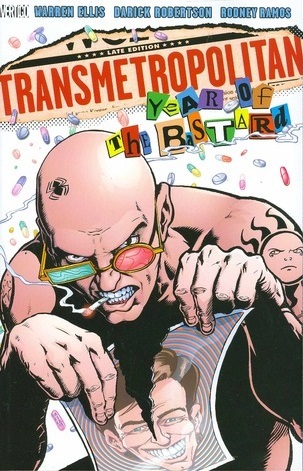
Warren Ellis’s Transmetropolitan, Vol. 3: Year of the Bastard is a searing critique of the political machinery that undergirds a society drowning in its own filth and apathy. This volume of the cyberpunk graphic novel series, illustrated with grimy brilliance by Darick Robertson, follows Spider Jerusalem—the acerbic, drug-fueled, gonzo journalist—as he plunges headfirst into the cesspool of electoral politics. What emerges is not only a deeply cynical but alarmingly prescient examination of democracy’s fragility in an era of media-driven manipulation.
The Corruption of the Political Spectacle
Ellis crafts a world where politics is not merely corrupt but a grotesque performance designed to manufacture consent through deception, infotainment, and distraction. As Spider is forced to cover the presidential campaign, he becomes entangled in the rivalry between the sitting President—the fascistic and Orwellian “Beast”—and his challenger, the superficially charming but equally hollow “Smiler.” In a world where policy is irrelevant and persona is everything, the election becomes a nihilistic farce, its candidates devoid of ideology beyond the hunger for control.
The book’s genius lies in how it refuses to provide a moral center. Neither candidate represents a hopeful alternative; rather, they serve as reflections of the same rotten system, wearing different masks. Through Spider’s disillusionment, Ellis deconstructs the idea of democracy itself, exposing how a corrupt media landscape, corporate overlords, and voter disinterest create the conditions for tyranny—be it smiling or snarling.
Spider Jerusalem: Prophet, Madman, or Both?
Spider is the perfect protagonist for this world—a volatile mix of Hunter S. Thompson and Diogenes, wielding his pen (or, in this case, his bowel disruptor) like a weapon. His cynicism is not just a coping mechanism but a survival strategy. As the reader’s surrogate, he delivers brutal, unfiltered truths wrapped in profane, drug-fueled tirades, but beneath his sneering nihilism lies a core of genuine rage at society’s failure to resist its own decline.
The book positions journalism as a vital but dying force, with Spider as its last, untamed practitioner. He stands against media conglomerates that function as little more than state propaganda, ensuring that the public remains comfortably numbed. His reporting on the election is less about unveiling truth—since the truth is already apparent to those who care to see it—and more about screaming it loud enough to cut through the collective stupor.
Darick Robertson’s Visual Dystopia
Robertson’s artwork is integral to the book’s impact. Every panel drips with the grime of a world in decay, from neon-lit alleyways brimming with desperation to the grotesque avatars of power who glide above it all, untouched. The sheer density of detail mirrors the overwhelming sensory overload of modern urban life, making each page feel like an assault on the senses—a perfect visual counterpart to Ellis’s relentless prose.
A Disturbingly Timely Narrative
What makes Year of the Bastard particularly haunting is its prescience. Though written in the late 1990s, its depiction of a political landscape driven by spectacle, media manipulation, and the illusion of choice feels eerily contemporary. In an age where populist demagogues rise to power through outrage rather than substance, where journalism is attacked or co-opted, and where elections often feel like exercises in futility, Ellis’s vision is less dystopian fiction and more a grim diagnosis of reality.
The Gospel According to Spider
Year of the Bastard is not a hopeful book, nor is it meant to be. It does not promise redemption or revolution, only the unflinching gaze of a journalist unwilling to look away. By refusing to provide easy answers, it forces the reader to confront uncomfortable truths about power, media, and our own complicity in the decay of democracy. Warren Ellis and Darick Robertson have crafted not just a graphic novel but a blistering work of political philosophy—one that remains as urgent today as it was upon its release.
Discover more from The New Renaissance Mindset
Subscribe to get the latest posts sent to your email.
 The New Renaissance Mindset