
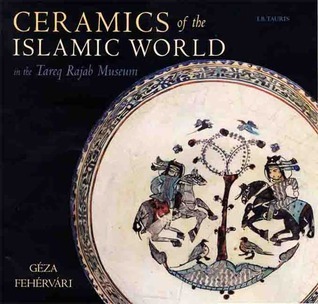
Géza Fehérvári’s Ceramics of the Islamic World is an exquisite and meticulously researched exploration of one of the most significant artistic traditions in Islamic culture. As both an art historian and a scholar of Islamic material culture, Fehérvári offers a study that is as visually rich as it is intellectually rigorous, providing an indispensable reference for scholars, collectors, and students of Islamic art.
At its core, the book functions as both a historical survey and a technical analysis, spanning from the earliest Islamic ceramics of the 7th century to the refined productions of the Ottoman, Safavid, and Mughal empires. Fehérvári demonstrates a mastery of the subject, weaving together archaeological evidence, stylistic evolution, and cultural exchange to present a comprehensive narrative of ceramic production across different regions and dynastic periods.
Historical and Stylistic Analysis
One of Fehérvári’s greatest strengths lies in his ability to contextualize Islamic ceramics within broader social and historical frameworks. He illustrates how the innovations in glazing techniques—such as lusterware, underglaze painting, and cobalt blue decoration—were not only artistic advancements but also reflections of economic and technological shifts in the Islamic world. His discussion of Abbasid Samarra wares, for example, reveals the ways in which luxury ceramics were shaped by political patronage and courtly aesthetics, while his analysis of Timurid and Safavid pottery highlights the increasing influence of Chinese porcelain, a testament to the interconnectedness of global trade networks.
The book does not merely catalogue styles and techniques; it also considers the semiotics of ceramic decoration. Fehérvári interprets calligraphic inscriptions, arabesque motifs, and figural representations as components of a visual language that communicates religious, philosophical, and poetic themes. His study of Kufic inscriptions on early Islamic ceramics, for instance, underscores the interplay between textual and visual expression in Islamic art.
Technical Aspects and Archaeological Contributions
Beyond aesthetics, Ceramics of the Islamic World is a valuable resource for understanding the technical processes behind ceramic production. Fehérvári’s examination of kilns, clay sources, and glaze compositions offers insight into the scientific aspects of the craft. His discussion of lusterware, which he traces back to Abbasid Iraq and Fatimid Egypt, is particularly noteworthy, as he meticulously reconstructs the chemical and procedural intricacies of this technique.
His expertise as an archaeologist enriches the study further, as he incorporates findings from excavation sites such as Nishapur, Raqqa, and Kashan. The inclusion of site-specific analyses lends a material authenticity to the book, grounding the discussion in tangible historical evidence rather than abstract stylistic evolution alone.
Scholarly Impact and Limitations
Fehérvári’s work stands as a seminal contribution to the study of Islamic ceramics, synthesizing decades of research into an accessible yet scholarly tome. However, the book is not without its limitations. Given its publication date, some aspects of his analysis may require re-evaluation in light of more recent archaeological discoveries and advancements in ceramic analysis. Additionally, while Fehérvári’s discussion is comprehensive, his focus remains predominantly on high-art ceramics, occasionally overlooking the quotidian wares used in everyday life, which also hold cultural and historical significance.
Despite these minor critiques, Ceramics of the Islamic World remains an essential text for anyone seeking a deep understanding of the Islamic ceramic tradition. Fehérvári’s erudition, combined with the book’s stunning visual documentation, ensures its place as a cornerstone of Islamic art scholarship. His ability to synthesize artistic, technical, and historical perspectives makes this work not just a reference book but a compelling narrative of cultural continuity and artistic ingenuity.
Discover more from The New Renaissance Mindset
Subscribe to get the latest posts sent to your email.
 The New Renaissance Mindset