
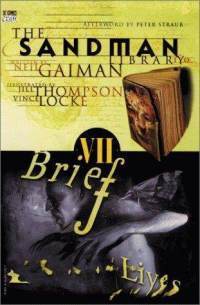
Neil Gaiman’s The Sandman, Vol. 7: Brief Lives stands as a masterful convergence of myth, memory, and existential inquiry, weaving an intricate narrative that challenges the boundaries between fantasy and philosophy. In this volume, Gaiman not only advances the overarching lore of the Dreaming but also delves deeply into themes of mortality, loss, and the capricious nature of time, all the while achieving a delicate balance between epic storytelling and intimate character introspection.
Narrative Architecture and Thematic Resonance
At its core, Brief Lives is a meditation on the fleeting nature of existence. Gaiman constructs a narrative where the characters are as much metaphors for universal human experiences as they are individuals within a fantastical realm. The quest undertaken by the protagonists to reconcile with the past and negotiate the tenuous thread of life mirrors classical quests found within mythology, yet the subversion of traditional heroic narratives is palpable throughout. Gaiman’s intertextual references to Greek mythology and classical literature serve to elevate the narrative, inviting readers to consider how ancient paradigms continue to shape our understanding of modern existence.
Linguistic Precision and Intertextuality
One of Gaiman’s most striking literary achievements in this volume is the precision of his language. Every panel and dialogue is meticulously crafted, allowing the text to operate on multiple levels. For literary scholars, the use of mythological allusion is particularly intriguing; the narrative is steeped in a rich tapestry of symbols that reference both historical lore and the artist’s personal mythopoeic vision. Gaiman’s subtle blending of high and low cultural references encourages a reevaluation of what constitutes “canon” in literature—a dialogue that resonates well beyond the confines of the graphic novel medium.
Characterization and the Subversion of Archetypes
In Brief Lives, characters are portrayed with an ambiguous complexity that defies reduction to mere archetypes. Even figures steeped in myth emerge as flawed and deeply human, engaging in quests not only for redemption or power but for understanding and connection. The series’ protagonists, while endowed with supernatural qualities, exhibit vulnerabilities and inner conflicts that make them relatable to a diverse readership. This nuanced depiction calls into question the simplistic binaries of heroism versus villainy and invites a more compassionate appraisal of the characters’ existential journeys.
Visual Metaphor and Narrative Form
The interplay between visual art and narrative in Brief Lives is nothing short of symphonic. The artwork, replete with visual metaphors, works in tandem with Gaiman’s evocative prose to create a layered reading experience. Every panel becomes a microcosm for broader thematic considerations—the transient beauty of human lives juxtaposed with the eternal, if elusive, nature of dreams. The artwork is not merely illustrative; it is dialogic, engaging with the text to amplify the thematic richness and to evoke emotional responses that resonate long after the book is closed.
Historical Context and Legacy
Published as part of the seminal Sandman series, Brief Lives occupies a pivotal moment in both the narrative chronology and the evolution of the graphic novel as an art form. Gaiman’s work is reflective of a broader shift in the perception of comics—from mere entertainment to vehicles for sophisticated literary expression. In this volume, Gaiman reaffirms the graphic novel’s capacity to tackle existential and metaphysical questions, positioning his work within a lineage of literary giants who have used myth and metaphor to interrogate the human condition.
The Sandman, Vol. 7: Brief Lives is a work that rewards careful, reflective reading. Its layers of meaning—woven through narrative complexity, sophisticated wordplay, and visual artistry—offer endless avenues for scholarly inquiry. Gaiman’s bold narrative choices, his seamless integration of ancient mythologies with modern sensibilities, and his celebration of the transient nature of life make this volume an indispensable text for any literary scholar seeking to understand the evolving dialogue between myth, art, and human experience. It stands not only as a highlight of The Sandman series but also as a testament to the enduring power of graphic literature to illuminate the depths of the human soul.
Discover more from The New Renaissance Mindset
Subscribe to get the latest posts sent to your email.
 The New Renaissance Mindset