
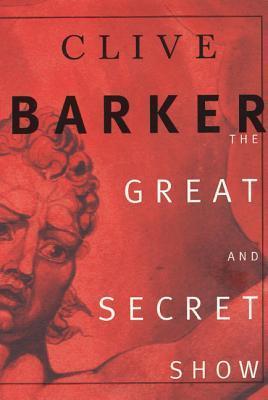
Clive Barker’s debut novel The Great and Secret Show (1989) inaugurates his mythopoetic “Books of the Art” sequence by fusing visceral horror with metaphysical speculation. At its core, the novel posits a hidden dimension—Quiddity, the dream-swamp of collective unconscious—accessible only to a select few. Barker situates this cosmological conceit within a sprawling narrative that spans generations, weaving together the fates of Fletcher, a manipulative sorcerer seeking godlike power, and Jaffery, his equally driven counterpart, along with a chorus of seemingly ordinary characters drawn into the unfolding conflict.
Mythic Resonance and Metaphysical Inquiry
Barker’s use of Quiddity evokes the Jungian collective unconscious and the Romantic notion of the primal world beneath waking reality. Through lush, almost hypnotic prose, he stages Fletcher’s “Great and Secret Show”—an apotheotic plan to reshape existence by tapping into that subterranean realm. This resonates with a longstanding literary tradition of forbidden knowledge, from Milton’s Paradise Lost to Mary Shelley’s Frankenstein, yet Barker subverts it by rendering the Otherworld not as static mythology but as a fluid, living landscape that both nourishes and destroys the psyche.
Character Dynamics and Moral Ambiguity
Unlike straightforward heroes and villains, Barker’s figures operate in moral greys. Fletcher is monstrous in ambition yet magnetic in intellect; Jaffery, though ostensibly his foil, harbors comparable ruthlessness under the guise of righteous opposition. Secondary characters—Catherine Quidd, a young woman whose mystical bond with Fletcher and Jaffery is both tender and tragic, and the self-effacing New Orleans couple who inherit the legacy—embody human vulnerability confronted with cosmic indifference. Barker suggests that heroism and monstrosity may share the same root: the will to impose one’s vision on reality.
Stylistic Inventiveness
Barker’s prose oscillates between poetic evocation and grotesque vividness. His descriptions of Quiddity’s crimson swamps and amber skies conjure a phantasmagoria that parallels the characters’ altered states. At moments, the narrative veers into fever-dream sequences—memories bleed into visions, nightmares into epiphanies—creating a destabilizing effect that echoes the characters’ loss of ontological bearings. This stylistic daring distinguishes Barker from his contemporaries: he is as much a fantasist as a horror writer, and the novel’s pacing—alternating high-speed action with languorous, meditative passages—underscores the fluidity of his imagined cosmos.
Intertextuality and Genre Blurring
The Great and Secret Show defies neat classification. It borrows the apocalyptic speculative scope of science fiction, the labyrinthine symbolism of high fantasy, and the visceral shocks of horror. Barker’s extensive references to art and theatre (note the novel’s theatrical title) invite comparison to Goethe’s Faust and Shakespeare’s metaphysical tragedies. Yet Barker refracts those models through a postmodern lens: reality is a stage upon which competing magicians vie for authorship, and identity itself is a mutable performance.
Thematic Depth and Enduring Impact
At its heart, the novel asks: what is the price of creativity? Fletcher and Jaffery’s rivalry allegorizes the artist’s desire to transcend human limits, even as they unleash forces they cannot fully control. The narrative implicates the reader, too, as witness and catalyst. Barker’s ending—both catastrophic and insistent on renewal—suggests that every act of creation bears the seed of destruction, yet also the promise of transformation.
The Great and Secret Show remains a cornerstone of late-20th-century dark fantasy. Its ambition is audacious: to craft a horror epic that questions the fabric of reality and the nature of art itself. As a literary scholar, one can appreciate how Barker revitalizes mythic archetypes, challenges genre boundaries, and fashions a unique narrative architecture that continues to inspire writers and theorists alike.
Discover more from The New Renaissance Mindset
Subscribe to get the latest posts sent to your email.
 The New Renaissance Mindset