
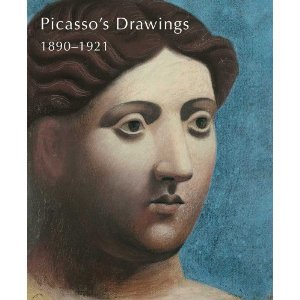
Drawing deeply from the currents of academic rigour and the sensibility of an art historian steeped in modernism, Picasso Drawings 1890–1921: Reinventing Tradition by Susan Grace Galassi and Marilyn McCully emerges not merely as a catalogue raisonné but as a scholarly paradigm shift in our understanding of Picasso’s formative years. This review will examine the book’s structure, its argument about tradition and innovation, and the ways in which it reshapes our reading of Picasso’s early graphic oeuvre.
1. Framing the Early Picasso: Context and Structure
Galassi and McCully organize the volume chronologically, with each section bracketed by rich archival material—letters, contemporaneous critiques, and period photographs—that immerse readers in the social and artistic milieus of Barcelona, Paris, and beyond. Rather than adopting a purely stylistic taxonomy, the authors interweave biographical moments (the death of Picasso’s sister Conchita in 1895, the family’s move to Barcelona in 1896) with shifts in his drawing practice. This dual approach—biographical alongside formal analysis—allows the reader to see how personal upheavals occasioned technical reinvention, from realist portraiture to the schematized linearity that presaged his Blue Period.
2. Tradition Revisited: Academic Roots and Iberian Legacies
A central thesis of the book is that Picasso’s early apprenticeship under académie-trained artists and his absorption of Iberian sculpture created a dialectical tension between academic convention and primitivist impulses. Galassi’s chapter on the Escuela de Bellas Artes in Barcelona meticulously demonstrates how Picasso’s charcoal figure studies negotiate the dictates of proportion and anatomical correctness against an emergent proclivity for hieratic simplification. McCully’s essays on Iberian funerary reliefs further argue that those archaic idioms—flattened planes, frontal poses—would become formal touchstones for Picasso’s later breakthroughs. In challenging the received wisdom that Picasso “broke” from tradition wholesale, the authors show instead how he absorbed, reformulated, and ultimately transcended it.
3. Thematic Clusters: From Intimacy to Public Spectacle
Rather than presenting every drawing in a monolithic stream, the volume groups works into thematic clusters—“Family and Intimacy,” “Bohemian Paris,” “Literary and Musical Circles”—each accompanied by interpretive essays. In the “Literary and Musical Circles” section, for instance, McCully reads Picasso’s pen-and-ink portraits of troubadours and poets (from Jean Moréas to Stéphane Mallarmé) as visual conversations with contemporary symbolist poetics. They foreground the performative aspects of Picasso’s self-fashioning as an artist, revealing how the mise-en-page of a page-bound drawing could echo the layout of a poetry broadside or a program for a chanson recital.
4. Materiality and Process: Studio Reconstructions
One of the book’s most illuminating contributions is its reconstruction of Picasso’s working methods. Through X-radiographs and close-up photography of paper fibers, the authors trace how an erasure here or a scraped line there signals not failure but an exploratory process. Galassi’s technical appendix, devoted to the evolution of drawing implements—from coal to sanguine chalk—underscores Picasso’s materially experimental ethos. These analyses convincingly argue that Picasso’s draftsmanly virtuosity was inseparable from his tactile engagement with medium and surface.
5. Rethinking the Narrative of Modernism
By charting the contingency and continuity of Picasso’s early drawings, Reinventing Tradition prompts a broader reconsideration of how modernism itself is narrated. If Picasso is conventionally credited with rupturing the canon—most famously in 1907 with Les Demoiselles d’Avignon—Galassi and McCully instead position him as a rigorous innovator who consistently re-interpreted art’s lineage. This reframing invites scholars to see the avant-garde not as a sudden apparition but as the cumulative product of decades-long engagements with precedent.
Picasso Drawings 1890–1921: Reinventing Tradition stands as a landmark in Picasso scholarship—dense yet lucid, richly illustrated yet keenly analytic. Galassi and McCully have given us more than a definitive corpus of early drawings; they have provided the conceptual apparatus to re-think how tradition and innovation co-produce artistic genius. For anyone interested in the genesis of modern art, this volume is indispensable: it is, in the most literal sense, a reinvention of how we understand Picasso’s roots.
Discover more from The New Renaissance Mindset
Subscribe to get the latest posts sent to your email.
 The New Renaissance Mindset