
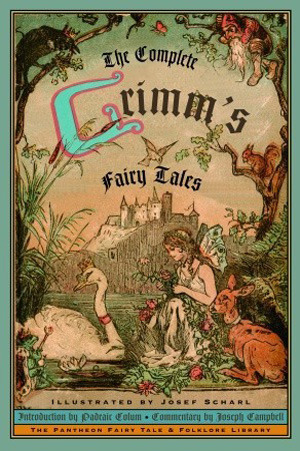
The Grimm brothers’ Complete Fairy Tales, first published in 1812 (with subsequent revisions through 1857), stand as a cornerstone of Western narrative tradition. Jacob and Wilhelm Grimm, originally philologists and lexicographers, approached these tales not simply as children’s stories but as artifacts of a living oral tradition—repositories of communal memory, social norms, and psychological archetypes. This volume, gathering over two hundred narratives ranging from the macabre (“Hansel and Gretel”) to the whimsical (“The Golden Goose”), rewards close scholarly reading with its complex interweaving of folklore motifs, moral schemas, and linguistic evolution.
Historical and Cultural Context
In the early 19th century German states, the Brothers Grimm embarked upon a mission to collect and codify vernacular tales threatened by the tides of modernization and the Napoleonic Wars. Their early editions (1812–1815) reflect a raw authenticity, preserving dialectal inflections and more overt violence, while later editions (notably the 5th in 1857) exhibit a gradual sanitization—both to appease bourgeois sensibilities and to align the tales with emerging nationalist ideologies. The metamorphosis from “Kinder- und Hausmärchen” (Children’s and Household Tales) to the standardized “Complete Fairy Tales” thus mirrors the consolidation of German cultural identity and the tensions between—orality and print culture—at a pivotal historical juncture.
Structural and Thematic Cohesion
At first glance, the collection’s diverse narratives might seem loosely connected, yet keen analysis reveals a deliberate structural symmetry:
- Binary Oppositions: Many tales pivot on stark dichotomies—rich/poor, beautiful/ugly, kind/cruel—that underscore moral lessons. For instance, “Cinderella” juxtaposes the humble virtue of the mistreated heroine against the vanity and cruelty of her stepsisters.
- Transformation and Identity: Metamorphosis recurs as both plot device and metaphor: animals becoming humans (“The White Snake”), objects springing to life (“The Juniper Tree”), even the self transforming through trials (“The Fisherman’s Wife”). Such transformations articulate questions of selfhood, power, and agency.
- Journey Motif: The physical voyage—into forests, ponds, or witch’s lair—echoes an inner psychic odyssey. The forest, in particular, symbolizes the unconscious: liminal, dangerous, yet teeming with potential for growth.
Linguistic and Stylistic Considerations
The Grimms employed a deceptively straightforward prose style, marked by parataxis and repetition (“und sie lebten glücklich…” – “and they lived happily…”). This simplicity belies subtle layers of meaning: strategic silences, elliptical dialogues, and formulaic incantations (“Simsalabim!”) anchor the tales in ritualistic cadence. Moreover, their annotations and linguistic glosses in later scholarly editions reveal Jacob Grimm’s philological rigor—tracing etymologies, comparing cognate forms across Germanic dialects, and aligning variant versions of the same tale across Europe.
Moral Ambiguity and Psychological Depth
Although often framed as moral parables, many stories resist facile didacticism. “The Robber Bridegroom” unsettles with its graphic violence and ambiguous justice, prompting readers to question social order itself. Similarly, “The Juniper Tree” blends fratricide and cannibalism with miraculous resurrection, unsettling our moral compass. From a Jungian perspective, these tales enact collective shadow work: repressed fears and desires surface in grotesque imagery, only to be reintegrated through narrative resolution.
Influence and Legacy
The Grimm collection’s resonance extends far beyond 19th-century Germany. Its tales have been adapted—often sanitized—into children’s books, ballets (e.g., Humperdinck’s Hänsel und Gretel), films (notably Disney’s mid-20th-century canon), and scholarly treatises (Bettelheim, Propp). Yet each retelling inevitably pares away the darker, more unsentimental core that the Grimms preserved. Contemporary writers like Angela Carter and Philip Pullman have reclaimed this depth, reimagining the tales through feminist and postmodern lenses.
Reflections
The Complete Grimm’s Fairy Tales remains indispensable for scholars of literature, folklore, and cultural history. Its enduring power lies in the tension between the familiar and the uncanny, the simple and the profound. Reading the Grimms is to engage with a palimpsest of human imagination—where every repetition, every cruel twist, echoes ancestral voices. As educators and artists, we can draw from this rich well not only narrative inspiration but also methodological rigor: valuing the interplay of oral tradition and textual form, and honoring the uncanny depths beneath the surface of “children’s stories.” In revisiting these tales today, one rediscovers the transformative capacity of folk narratives to reflect, challenge, and reshape our collective psyche.
Discover more from The New Renaissance Mindset
Subscribe to get the latest posts sent to your email.
 The New Renaissance Mindset