
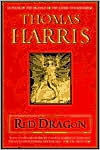
Thomas Harris’s Red Dragon (1981) inaugurates the series of novels centred on the formidable figure of Dr. Hannibal Lecter, yet it is far more than a preliminary sketch of later events. As a literary scholar might observe, Harris marries the methods of traditional detective fiction with a deep psychological probing, situating Red Dragon at the confluence of Gothic sensibility, crime procedural, and existential inquiry. In this review, I will analyze how Harris’s narrative strategies, character constructions, and thematic preoccupations coalesce to produce a text that is both gripping as a thriller and rich for sustained literary reflection.
Narrative Structure and Point of View
At the heart of Red Dragon is a carefully calibrated interplay of perspectives. Harris employs a third-person omniscient narrator that shifts focalization among three primary viewpoints: that of Will Graham, the tormented former FBI profiler; Francis Dolarhyde, the serial killer known as “the Tooth Fairy”; and—briefly, but memorably—Dr. Hannibal Lecter. This triangulation allows Harris to build suspense through dramatic irony: readers often know as much—or more—than Graham does, while also glimpsing the psychopathology that drives Dolarhyde.
From a structural standpoint, this multi-perspectival approach resembles the technique used by early twentieth-century psychological novels (for instance, Henry James’s shifting consciousnesses), yet Harris subordinates interiority to procedural detail. In Graham’s chapters, readers encounter not only his analytical mind parsing crime scene evidence but also his haunted memories of Lecter’s earlier betrayal. In Dolarhyde’s chapters, the prose is hushed and obsessive, reflecting Dolarhyde’s self-described metamorphosis into “The Great Red Dragon.” The fleeting interludes with Lecter—primal, wry, and carnivalesque—both foreshadow his later centrality in Harris’s oeuvre and underscore how depravity can be conducted with chilling sophistication.
Thus, Harris’s careful weaving of viewpoints produces narrative tension on multiple levels: the procedural (Will Graham’s hunt), the psychological (Dolarhyde’s internal torment), and the gothic (Lecter’s lurking menace).
Characterization: Will Graham, Francis Dolarhyde, and Hannibal Lecter
Will Graham: The Haunted Seeker
Will Graham’s characterization hinges on duality. Once lauded as the FBI’s “most intuitive profiler,” Graham is now in exile, wrestling with the trauma inflicted by Lecter’s subterfuge during the “Chilham incident.” Critics have pointed out (see, e.g., Baird 1982; Jensen 1990) that Graham embodies a kind of postmodern detective: he is no longer the infallible sleuth of Golden Age whodunits but a fallible, psychologically wounded man whose empathy for killers verges on self-destruction. Harris accentuates this by describing Graham’s vivid hallucinations—himself “wearing the skins” of perpetrators—which not only facilitates his investigative brilliance but also exacerbates his sense of moral jeopardy.
Graham’s moral arc reverberates throughout the novel: he is at once repelled by Dolarhyde’s crimes and compelled to inhabit the murderer’s psyche. This dialectic of empathy and self-preservation generates some of the text’s most affecting passages, as Graham contemplates the possibility that, if he enters the killer’s mind too deeply, he risks losing himself altogether. In scholarly terms, Graham exemplifies the tortured hero archetype—bound by his vocation to confront the abyss, yet never quite certain whether he will endure its gaze.
Francis Dolarhyde: The Mythos of Transformation
If Graham represents empathy, Dolarhyde personifies a Nietzschean Übermensch gone awry, fused with a tragic quest for metamorphosis. Harris draws explicit allusions to William Blake’s “The Great Red Dragon” series of watercolors, invoking the Biblical Apocalypse to lend a mythic dimension to Dolarhyde’s self-conception. He is not merely a “Tooth Fairy” killer; he sees himself as becoming the Dragon, shedding his own “false” humanity to transcend mortal constraints.
This mythic overlay complicates Dolarhyde’s monstrosity. Although he commits unspeakable violence—strangling entire families in their beds—Harris invites readers to attend to Dolarhyde’s history of horrific childhood abuse and physical disfigurement. The novel refrains from exonerating him but emphasizes that his quest for “the Dragon” is rooted in a yearning to escape his own vulnerability. In passages that describe him ritually staring at the moonlit sky or speaking to “the Dragon” inhabiting his mirror image, Harris’s prose acquires an incantatory quality. The effect is that Dolarhyde’s depravity is not merely sensational; it resonates as a profoundly human (albeit distorted) striving for meaning.
Hannibal Lecter: The Foil and Catalyst
Although Lecter appears only in fragments—summoned from his cell by Graham’s last-ditch effort to profile the Tooth Fairy—his presence looms large. In his dialogue with Graham, Lecter embodies the classic Byronic villain cured through rhetoric; he is erudite, composed, and philosophically provocative. In many respects, Lecter is the novel’s greater thematic fulcrum: he symbolizes the seductive allure of evil as an aestheticized, self-aware force. When he tells Graham, “We are alone in this world and should be grateful for it,” he advances the idea that moral laws are self-imposed illusions, and that only those willing to transcend conventional ethics are truly free.
From a literary-historical angle, Lecter can be compared to the Oscar Wilde–influenced aristocratic psychopath, a figure dating back to Bram Stoker’s Lord Ruthven archetype. Yet Harris situates Lecter in a modern context—an ex-psychiatrist with impeccable manners who nevertheless savors human flesh. He thus becomes the ultimate foil to Graham’s moral earnestness and Dolarhyde’s tortured striving. Lecter’s chilling rationality also presages the postmodern conflation of knowledge with power: he knows how both Graham’s mind and Dolarhyde’s psyche function, yet he refuses to function merely as an information source; he toys with secrets, demonstrating his aestheticization of manipulation.
Thematic Concerns
The Nature of Evil
One of Red Dragon’s central preoccupations is the ontology of evil. Harris interrogates whether evil is an external force—manifested as “the Dragon”—or whether it is intrinsic to flawed human nature. Through Dolarhyde, the novel explores the manner in which a victim of brutality can become a perpetrator of even greater atrocity. The interplay between Dolarhyde’s inner voice (“the Dragon”) and his grotesque actions suggests that evil in Harris’s universe is simultaneously personal (rooted in trauma) and mythic (projected as a transcendent force).
By contrast, Lecter’s portrayal challenges the separability of “evil genius” from rationality. He performs evil with surgical precision, yet, as a former psychiatrist, he understands pathology perhaps more deeply than any character. His very existence in a maximum-security prison—redolent of Dante’s Inferno—creates a metatextual commentary on the boundaries between civilization and savagery. Harris implicitly asks: does the very act of naming, classifying, and studying evil contribute to its perpetuation? The novel does not offer easy answers but invites readers to contemplate these questions long after the final page.
The Limits of Empathy
Harris uses Graham’s empathic powers to probe the moral ambivalence of profiling. By “becoming” the killer—literally envisioning himself committing the murders—Graham occupies a liminal space between law enforcer and lawbreaker. The more he understands Dolarhyde’s motives, the more he risks becoming—in thought—what he hunts. In a crucial chapter late in the novel, Graham must feign closeness to Dolarhyde’s captive family, prompting him to question his own complicity: to what extent does the pursuit of justice require an embrace of darkness?
In academic terms, Graham’s plight recalls post-Freudian psychoanalytic insights: the notion that an overinvestment in the “other” risks disintegration of the self. Harris dramatizes this in visceral terms, creating a tension between professional detachment and moral engagement. The question lingers: is Graham’s ability to kill (hypnotically) for a moment in his mind a necessary evil in combating greater evil? The novel’s refusal to resolve this tension definitively aligns it with modernist and postmodernist explorations of fractured identity.
Style and Language
Economy and Detail
Unlike some contemporaneous crime fiction that revels in graphic set pieces for sensational effect, Harris’s prose is remarkably economical. Descriptions of crime scenes in Red Dragon are spare but meticulously chosen: a child’s half-eaten candy bar, the pattern of blood spatter that resembles bat wings—each detail carries symbolic weight without becoming overwrought. Harris achieves a delicate balance, immersing readers in the forensic minutiae while never losing sight of the novel’s broader existential stakes.
Gothic Allusions and Symbolism
Harris deliberately invokes Gothic tropes—dark, decaying settings, the grotesque body, the monster in human guise—yet he reframes them within late twentieth-century concerns about criminal pathology. The “Tooth Fairy” motif, redolent of childhood innocence turned predatorily sinister, resonates as a perverse inversion of domestic sanctuary. The Blakean imagery—Dolarhyde’s compulsion to transform into a cosmic dragon—imbues the text with a mythopoetic dimension. Academic readers have noted (e.g., Carter 1995) how these Gothic inflections underscore the tension between the Enlightenment’s faith in reason and the irrational depths lurking beneath civilized surfaces.
Position within Genre and Influence
Red Dragon operates at the intersection of the “thriller” and the “psychological novel,” and its publication helped catalyze a shift in crime fiction toward more psychologically intricate villains. Harris’s integration of psychoanalytic detail prefigures the “serial killer novel” boom of the 1990s. Moreover, the novel’s influence on subsequent media—most notably Michael Mann’s 1986 film Manhunter and Ridley Scott’s 2002 Red Dragon—attests to its enduring appeal. From a scholarly perspective, one might situate Harris alongside Raymond Chandler and Patricia Highsmith, albeit with a heavier emphasis on psychopathology. Like Highsmith’s Ripley novels, Red Dragon interrogates the aesthetic pull of criminal charisma, yet Harris grounds this in a procedural realism that grants the narrative both gravity and plausibility.
Thomas Harris’s Red Dragon is not simply a compelling thriller; it is a sophisticated literary artifact that invites critical engagement on multiple levels. Through his adept manipulation of narrative viewpoints, his psychologically complex characters, and his fusion of Gothic symbolism with forensic detail, Harris crafts a novel that interrogates the nature of evil, the cost of empathy, and the fragility of identity. For readers and scholars alike, Red Dragon remains a touchstone in crime literature—a work that transcends genre conventions to probe the darkest corners of the human psyche.
Discover more from The New Renaissance Mindset
Subscribe to get the latest posts sent to your email.
 The New Renaissance Mindset