
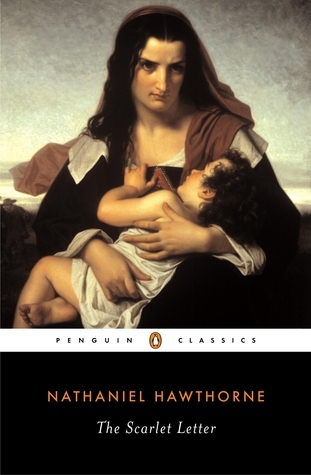
“The Scarlet Letter,” first published in 1850, stands as Nathaniel Hawthorne’s masterwork—a profound exploration of sin, guilt, and redemption set against the rigid moralism of 17th-century Puritan New England. As a literary scholar might observe, the novel operates on multiple levels: as a historical romance, a psychological case study, and an ethical parable. Hawthorne’s layered symbolism, nuanced characterizations, and his critique of communal judgment mark the novel as a pivotal contribution to American literature and to the nascent tradition of literary realism.
Historical and Cultural Context
Hawthorne penned “The Scarlet Letter” in mid-19th-century America, a period of burgeoning national identity and intense moral debate. By revisiting the Puritan era, he both distances and critiques his own society’s zeal for moral reform. The Puritan community of Boston, depicted here, functions as a microcosm for any self-righteous collectivity. Hawthorne—himself a descendant of Puritan forebears and heir to the legacy of the Salem witch trials—carefully interrogates how historical memory and inherited guilt warp individual conscience. Thus, the novel’s setting is never merely historical backdrop; it becomes a living critique of how communal ideology can both construct and destroy identities.
Narrative Arc and Structure
The story centers on Hester Prynne, branded with the letter “A” (for “Adultery”) after bearing an illegitimate child. Forced to wear this scarlet emblem for the judgment of her community, she endures public shaming on Boston’s scaffold. Hester’s husband, arriving secretly under the pseudonym Roger Chillingworth, learns of her betrayal yet conceals his identity. Meanwhile, the child’s father—Arthur Dimmesdale, Boston’s revered minister—torments himself with hidden guilt. Over the novel’s 24 chapters, Hawthorne interweaves three primary threads: Hester’s evolving dignity in isolation, Dimmesdale’s psychological unraveling, and Chillingworth’s obsessive pursuit of vengeance. The climax—where Dimmesdale publicly confesses on the scaffold and then dies—is both tragic and redemptive, consolidating Hawthorne’s moral vision.
Themes of Sin, Guilt, and Redemption
At the core of “The Scarlet Letter” is a meditation on the nature of sin. Hester’s adulterous act is visible and punished; yet Hawthorne invites readers to consider whether her actual moral state—resilient, loving, and altruistic—may surpass that of others. Dimmesdale’s concealed sin, by contrast, wreaks far deeper personal havoc; his inability to confess renders him physically and spiritually hollow. Chillingworth, who claims to seek truth, embodies a different kind of transgression: in his unchecked desire for revenge, he sacrifices his own humanity. Thus, Hawthorne suggests that the communal punishment of a visible sin can perpetuate real evil when hypocrisy and hidden guilt remain unaddressed. Notably, when Hester ultimately removes her scarlet letter—embracing a more private identity—it signals not moral failure but her transcendence of Puritan constraint. The strength of her compassion for others, including the ill Reverend Dimmesdale, underscores Hawthorne’s argument that empathy, not punitive shame, should be the basis of social conscience.
Symbolism and Imagery
Hawthorne’s skill as a symbolist is on full display. The scarlet letter itself evolves: initially a mark of shame, it becomes a complex signifier of Hester’s identity and her capacity for heroic endurance. Pearl, Hester’s daughter, functions simultaneously as a living “scarlet letter” and as a moral agent, often intuitively grasping truths that elude the adults around her. The forest—beyond the Puritan settlement—offers a potent counterpoint to the constraining structures of society; it is there that Hester and Dimmesdale share moments of truth. Conversely, the scaffold, where public confession is imposed, represents the crushing weight of communal judgment. Even the color imagery—scarlet against Boston’s austere backdrop or the “dim and yellow light” in which Dimmesdale preaches—serves to highlight contrasts between appearance and authentic moral being.
Characterization and Psychological Depth
Hester Prynne emerges as one of Hawthorne’s most nuanced protagonists. Though she enters the novel as a stigmatized sinner, her quiet fortitude, dignity, and charitable acts eventually earn grudging respect—even in a society that once reviled her. Her refusal to reveal her child’s father further underscores her moral autonomy. By contrast, Dimmesdale’s eloquence as a minister hides a tortured conscience; Hawthorne portrays his inner conflict through subtle psychological markers—his nocturnal vigils, his increasingly frail appearance, and his bouts of frenzy. Chillingworth, once bearing a guise of mild scholarship, grows nearly inhuman as his obsession with discovering and punishing Dimmesdale’s sin consumes him. These three central figures—as well as Reverend Wilson, Governor Bellingham, and other minor characters—populate a moral landscape in which public posturing and private anguish constantly collide.
Language, Style, and Narrative Voice
Hawthorne’s prose is characteristically rich and contemplative, weaving elaborate descriptions with philosophical digressions. Sentences often unfold with a deliberate pace—each clause expanding upon moral and symbolic resonances. For example, his portrayal of the prison door “with rusted iron spikes” and the “trembling” rosebush beside it inaugurates a motif of beauty emerging from harshness. At times, Hawthorne’s style verges on the archaic—an intentional echo of Puritan dialects—yet it never feels stilted; instead, it reinforces the sense of historical distance. The anonymous narrator, who occasionally intrudes to comment on manuscript fragments or reflect on New England lore, creates a metafictional frame that underscores the novel’s historical and moral stakes.
Critical Evaluation and Enduring Significance
From a scholarly perspective, “The Scarlet Letter” can be read as an early critique of any moral absolutism—whether religious or social. Hawthorne’s ambivalence toward sin complicates simplistic binaries of villain and victim. Although some critics have noted the novel’s episodic pacing and occasional melodrama, most agree that Hawthorne’s exploration of inner lives transcends narrative unevenness. Moreover, the novel inaugurated the American tradition of psychological realism, paving the way for writers such as Henry James and later Edith Wharton. Its themes—public shaming, the policing of female sexuality, the corrosive effects of hidden guilt—retain prescience in light of modern debates about social media cancel culture and the stigmatization of women’s bodies.
Ultimately, “The Scarlet Letter” endures because it speaks to our ongoing struggle with shame, identity, and the tension between individual conscience and communal mores. Hawthorne’s talent lies in rendering a so-called historical romance both particular to its time and timeless in its moral complexity. A literary scholar, surveying this work, must acknowledge its layered symbols, its profound psychological insight, and its unwavering critique of hypocrisy. Beyond its 19th-century Puritan setting, the novel invites each generation to reconsider how we mark, punish, and ultimately redeem those who transgress—prompting us to weigh whether we ourselves might be more compassionate, more honest, and more aware of our own concealed shadows
Discover more from The New Renaissance Mindset
Subscribe to get the latest posts sent to your email.
 The New Renaissance Mindset