
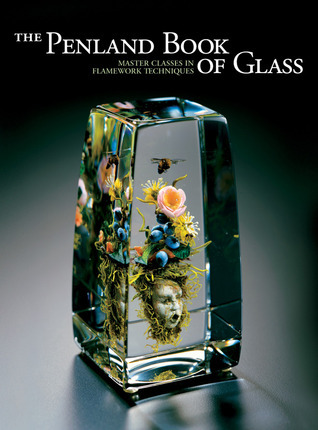
The Penland Book of Glass: Master Classes in Framework Techniques by Ray Hemachandra is a magisterial contribution to contemporary glass artistry, offering both a panoramic survey of framework methods and an intimate glimpse into the creative processes of some of today’s most innovative practitioners. Hemachandra, himself a seasoned educator at the storied Penland School of Crafts, curates an anthology that is as much a pedagogical manifesto as it is a celebration of material possibility.
Structural Elegance and Pedagogical Rigor
The volume is organized into a series of “master classes,” each led by a distinguished artist whose work exemplifies a particular framework technique—be it traditional lampworking, Venetian-style cane construction, or large-scale kiln-forming. Hemachandra’s introductory essay deftly contextualizes these approaches within the broader history of studio glass, tracing their evolution from technical curiosities in the mid-twentieth century to expressive tools in the hands of twenty-first-century glassmakers. This framing essay serves not only to orient the reader but also to underscore the book’s dual nature: it is at once a technical manual and a scholarly history.
Clarity of Instruction and Depth of Insight
Each chapter follows a consistent pattern: an artist’s statement on their philosophical approach to glass, detailed step‑by‑step photographs of a signature project, and sidebars that offer practical tips, troubleshooting advice, and reflections on the interplay between form and function. The photographic sequences are especially noteworthy; Hemachandra ensures that no critical stage is left undocumented, while the accompanying captions elucidate subtle shifts in temperature control, tool positioning, and glass behavior. This balance of visual documentation and incisive commentary will prove invaluable for both advanced students and seasoned professionals seeking to refine their craft.
Interdisciplinary Resonances
What elevates this work beyond a mere how‑to manual is Hemachandra’s insistence on situating each framework technique within a broader artistic discourse. Essays on color theory, material science, and even the psychology of hand‑eye coordination invite readers to consider glass not only as a physical medium but as a language of light and transformation. By drawing connections to fields as varied as textile weaving and digital animation, the book encourages a cross‑pollination of ideas that resonates with the increasingly interdisciplinary ethos of contemporary art.
Contributions to the Field
The Penland Book of Glass stands as a landmark text for the glass community. Its thoughtful curation of voices and methods reflects Penland School’s legacy of innovation and pedagogy. Moreover, Hemachandra’s editorial vision ensures that the book will serve as both a reference work and an enduring source of inspiration. In an era when the boundaries between craft and fine art are continually being redefined, this anthology asserts the relevance of technical mastery as the foundation for creative exploration.
Ray Hemachandra’s The Penland Book of Glass is a triumph of form and function: an elegantly structured compendium that marries rigorous instruction with scholarly breadth. For anyone committed to the study or practice of glass, it offers a rare combination of skillful guidance, historical perspective, and intellectual provocation—affirming that the true art of glass lies in the alchemy between technique and imagination.
Discover more from The New Renaissance Mindset
Subscribe to get the latest posts sent to your email.
 The New Renaissance Mindset