
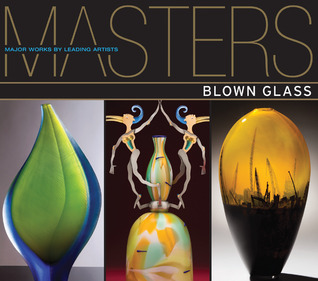
Before delving into detailed analysis, this review establishes that Masters: Blown Glass: Major Works by Leading Artists(2010) is a seminal survey of forty studio‐glass practitioners from North America, Europe, and Asia, curated by Susan Rossi-Wilcox and edited by Ray Hemachandra, which foregrounds the conceptual breadth and technical virtuosity of contemporary blown glass. The volume’s generous format—330 pages of large‐format photography paired with concise artist statements—invites sustained “slow looking,” while its global roster of contributors underscores the maturation of the studio-glass movement beyond its 1960s American origins into a truly international phenomenon. Although the printed page cannot fully convey the interplay of light, scale, and space that defines glass in situ, the book’s production values and editorial restraint render it an indispensable resource for scholars, collectors, and practitioners alike.
Overview and Publication Context
Masters: Blown Glass was published by Sterling Publishing on October 5, 2010, as part of Lark Books’ acclaimed Masters series, which highlights major works across a range of media.
Edited by Ray Hemachandra with curatorial essays by Susan Rossi-Wilcox, the book spans 330 pages in a 9″×7.9″ paperback format, making it both substantial and accessible for academic and coffee-table display.
Priced reasonably, it competes favourably with other survey volumes in the field, offering high production quality—thick, glossy paper stock and full-bleed images—without an exorbitant cost.
Curatorial Vision and Structure
The book’s structure is deceptively simple: forty artists receive ten-page spreads, each beginning with a brief biographical sketch and artist statement by Rossi-Wilcox, followed by up to a dozen images of their signature works.
This layout privileges the visual over the textual, encouraging readers to engage directly with form, color, and surface while relying on minimal critical apparatus to guide interpretation.
By resisting over-contextualization, the volume mirrors the ethos of studio glass itself: an art form grounded in material presence and the artist’s direct manipulation of molten medium.
Artistic Highlights
Among the most arresting contributions are Dante Marioni’s vessels, whose sinuous lines and classical references attest to a mastery of thin-wall blowing and sustained heat control.
Sunny Wang’s calligraphic forms introduce a gestural dynamism that recalls Abstract Expressionism, demonstrating the adaptability of glassblowing to sculptural and painterly modes.
Paul Stankard’s botanical inclusions function as glass reliquaries—encapsulating delicate flora in pristine clarity—and invite comparisons to conservation and botanical illustration.
Aesthetic and Photographic Excellence
The photography, executed by leading art‐book specialists, captures both translucency and hue gradients with remarkable fidelity, crucial qualities when rendering glass’s optical phenomena in two dimensions.
Image sequencing and generous white margins afford each object a “breathing space,” simulating gallery-like presentation and guiding the eye in a curated visual narrative.
Scholarly Significance
By documenting a cross-section of artists working across North America, Australia, China, Germany, Japan, and the Netherlands, the volume asserts the globalization of the studio-glass movement first crystallized in the 1960s under Harvey Littleton and Dominick Labino.
While not an academic monograph, it fills a gap between technical how-to manuals and large-scale exhibition catalogues, providing a critical bridge for researchers exploring glass as a fine-art medium rather than purely craft.
Limitations
Inevitably, the medium’s spatial and kinetic qualities—its shifting hues in changing light, its presence in situ—are flattened on the page; however, the editors mitigate this through careful cropping, paired detail shots, and images of objects in situ where possible.
In sum, Masters: Blown Glass stands as both a definitive visual compendium and a scholarly prompt: it compels further investigation into individual artists’ processes and situates blown glass firmly within contemporary art discourse. This volume belongs on the shelves of glass historians, museum curators, and anyone invested in the ongoing dialogue between material, form, and conceptual intent.
Discover more from The New Renaissance Mindset
Subscribe to get the latest posts sent to your email.
 The New Renaissance Mindset