
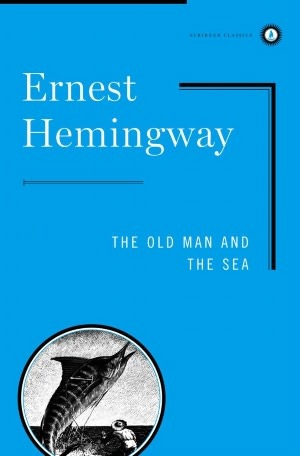
The Old Man and the Sea (1952) stands as one of Ernest Hemingway’s most distilled and profound works. Awarded the Pulitzer Prize in 1953—and contributing significantly to Hemingway’s Nobel Prize in Literature the following year—the novella encapsulates the writer’s enduring themes of stoicism, struggle, and the dignity inherent in defeat. Below, I explore the work’s historical context, narrative economy, thematic resonance, and stylistic innovations, revealing why this slender text continues to command deep admiration and scholarly discourse.
Historical and Biographical Context
Ernest Hemingway wrote The Old Man and the Sea in Cuba, drawing on his deep familiarity with the sea life that surrounded his Key West and Havana residences. At this late stage in his career, Hemingway had experienced both triumph and crisis—his earlier works had cemented his reputation, but he sought a final, redemptive masterpiece. The novella’s publication in 1952 marked a renaissance for Hemingway, reaffirming his command of the pared-down prose that he had championed since In Our Time (1925).
Narrative Economy and Structure
Hemingway’s narrative is famously spare. In just 127 pages, he assembles a tight framework:
- Exposition – We meet Santiago, an aged Cuban fisherman who has not caught a fish in eighty-four days.
- Rising Action – Determined to end his bad luck, he sails far into the Gulf Stream.
- Climax – Santiago hooks a great marlin and endures a brutal three-day battle.
- Falling Action & Resolution – Sharks devour the marlin’s carcass, and a broken Santiago returns to shore defeated yet unbowed.
Rather than a sprawling epic, the novella’s unity of place (the small skiff) and its singular quest heighten its mythic quality. This adherence to the classical unities demonstrates Hemingway’s mastery of structural economy; every paragraph propels both plot and symbolic weight.
Themes of Endurance, Pride, and Defeat
At its heart, The Old Man and the Sea is a meditation on human dignity in the face of insurmountable odds. Santiago embodies the Hemingway code hero: stoic, honorable, and bound by a personal code of conduct. His struggle with the marlin becomes allegorical:
- Endurance and Suffering: Santiago’s body is “as old as the hills,” yet he refuses to yield, echoing Hemingway’s broader fascination with grace under pressure.
- Pride and Identity: The old man’s pride is both his driving force and his potential downfall. He declares, “A man can be destroyed but not defeated,” signaling that moral victory transcends physical loss.
- Interconnectedness of Life: Hemingway paints the marlin not merely as prey but as a “brother” creature—an adversary worthy of respect. This nuanced portrayal softens the man-versus-nature trope, suggesting a deeper ecological empathy.
Stylistic Innovations: The Iceberg Theory
Hemingway’s hallmark “Iceberg Theory”—where the surface simplicity conceals profound emotional and intellectual depth—is on full display. His terse dialogue and unadorned descriptions belie a swelling undercurrent of existential reflection. For example, the sparse depiction of Santiago’s dreams of lions on an African beach hints at youthful optimism and lost grandeur, without explicit exposition.
The repetitive, rhythmic cadence of the fishing sequence mirrors the hypnotic pull of the sea itself. Phrases such as “He felt the line move” recur with subtle variation, engendering both tension and a liturgical chant of fate.
Literary Significance and Legacy
Though deceptively simple, The Old Man and the Sea has invited extensive critical interpretation—ranging from Christian allegory to existential parable to post-colonial readings of Cuban identity. Its universal themes have resonated through theater, film, and visual art, inspiring artists to capture Santiago’s tragic heroism.
Moreover, the novella reaffirmed Hemingway’s influence on 20th-century prose, demonstrating how economy and precision could yield profound emotional power. His model encouraged subsequent writers—John Steinbeck, Raymond Carver, and Cormac McCarthy among them—to pursue similar minimalistic approaches.
The Old Man and the Sea is more than a tale of an aging fisherman; it is a compact epic that probes the nature of heroism, respect for the natural world, and the courage to persevere. Hemingway’s deft economy summons an almost mythic resonance: every sentence functions as a testament to human will. As readers, we are invited to admire Santiago’s unwavering spirit, to reflect on our own encounters with adversity, and to appreciate the artistry of language so distilled that it gleams like a polished harpoon in the sun.
Discover more from The New Renaissance Mindset
Subscribe to get the latest posts sent to your email.
 The New Renaissance Mindset