
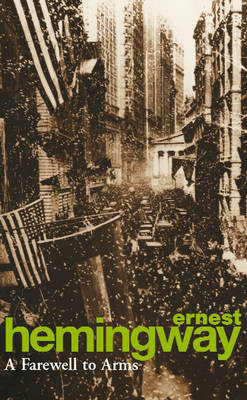
Ernest Hemingway’s A Farewell to Arms (1929) stands as a masterwork of modernist fiction, fusing the brutal immediacy of war reportage with the elegiac registers of a doomed love story. Drawing on his own experience as an ambulance driver on the Italian front, Hemingway distills the chaos of World War I into a lean, unflinching narrative that interrogates the very possibility of meaning amid the ruins of old certainties.
Historical and Biographical Context
Written in the aftermath of the Great War and published just a decade later, A Farewell to Arms reflects the disillusionment of a generation whose faith in progress and patriotism was shattered by mechanized slaughter. Hemingway, still in his twenties when he first sketched these episodes, channels firsthand knowledge of battlefield carnage—shrapnel wounds, typhus wards, wounded horses—into scenes that pulse with sensory verisimilitude. The novel’s protagonist, Lieutenant Frederic Henry, is essentially Hemingway’s avatar: an American expatriate who both participates in and ultimately deserts a conflict he finds irredeemably absurd.
Narrative Style and the “Iceberg Theory”
Hemingway’s signature minimalism—his “iceberg theory”—is on full display here. Sentence by sentence, he pares away all superfluous detail, leaving only what is strictly necessary to evoke mood and motive. Interiors are rendered in terse, clipped dialogue; exteriors, in spare, journalistic snapshots. Yet beneath this surface economy lies an immense emotional payload. The reader senses every unspoken terror and longing in Catherine Barkley’s soft admissions (“I love you,” she says, simply) and Frederic’s muted, almost oblivious responses. The spaces between words echo with fear, desire, and the dread knowledge that neither language nor love can fully encompass human suffering.
Themes of Love, Fate, and Disillusionment
The love affair at the novel’s center is at once shelter and crucible. Catherine represents both the possibility of transcendence and the fragility of human bonds. Their idyllic interlude in the Swiss mountains—bathed in sunlight, removed from the miasma of war—reads like a brief, shining transcendence, only to be shattered by the stillbirth of their child and Catherine’s untimely death. Here, Hemingway achieves a devastating counterpoint: love cannot arrest the machinery of fate, and human connection is always provisional.
_ A Farewell to Arms_ also interrogates notions of heroism and masculinity. Frederic’s desertion is not an act of cowardice but a refusal to participate in collective madness; his stoicism, far from noble, is a survival mechanism born of exhaustion. In this reading, Hemingway subverts the war novel’s traditional valorization of sacrifice, presenting instead a hero defined by personal ethics and humane compassion.
Symbolism and Modernist Structure
Rain, river, and mountain imagery punctuate the text, underscoring nature’s indifference to human endeavor. The recurrent motif of rain—often presaging calamity—becomes a leitmotif for grief itself. Structurally, the novel’s episodic progression and abrupt temporal shifts evoke the fractured subjectivity of modernist prose: memory, hope, and despair coexist in a narrative that runs on sudden jolts as much as careful build.
Ultimately, A Farewell to Arms endures because it refuses consolation. In its final, rain-drenched pages, Frederic Henry stands alone in a world from which he has been severed—by war, by loss, by the indifferent forces of history. Hemingway offers no tidy resolution, only the bleak, beautiful honesty that remains when all illusions have crumbled. For scholars and general readers alike, this novel is a testament to the power of pared-back language to evoke the deepest human truths.
Discover more from The New Renaissance Mindset
Subscribe to get the latest posts sent to your email.
 The New Renaissance Mindset
Fantastic review!
LikeLike