
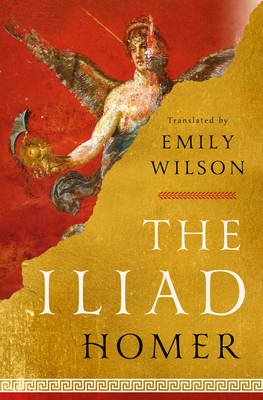
An Epic of Wrath, Honour, and the Human Condition
The Iliad, attributed to the ancient Greek bard Homer and composed in the late eighth or early seventh century BCE, remains one of the foundational pillars of Western literature. Far more than a mere chronicle of the Trojan War’s final weeks, the poem delves deeply into the psychology of its characters, the capricious will of the gods, and the fragile balance between individual pride and communal cohesion. Its enduring power lies in Homer’s ability to fuse grand martial spectacle with intimate human drama.
Epic Structure and Narrative Technique
Homer’s epic unfolds over 24 books (ήρες), employing the dactylic hexameter’s rolling cadence to propel listeners or readers through a rich tapestry of battle scenes, divine interventions, and eloquent speeches. The narrative pivots on Achilles’s withdrawal from combat after his honor is slighted by Agamemnon—an act that sets in motion the catastrophic reversal of fortunes for the Achaeans. This tight focus on a single emotional crisis, rather than a sprawling war narrative, exemplifies Homer’s mastery of unity of action. Throughout, flashbacks and foreshadowing (e.g., Achilles’ foretold early death) deepen the sense of imminent tragedy without sacrificing narrative momentum.
Themes of Wrath, Honor, and Mortality
At its core, The Iliad is “the wrath of Achilles” (Μῆνιν ἄειδε, θεά)—not simply as a private vendetta but as an elemental force that reshapes destinies. Homer interrogates the tension between personal honor (timê) and the needs of the polis: Achilles’s pride isolates him, yet his rage ultimately compels him to reenter the fray for the sake of his companion Patroclus. Moreover, the poem’s relentless confrontation with mortality—emblematized in Hector’s poignant farewell to Andromache and in Achilles’s own uneasy awareness of his fleeting glory—imbues the epic with universal resonance. The heroes’ recognition that “an honorable death” is both inevitable and desirable reflects a worldview in which kleos (renown) is the only bulwark against oblivion.
Depiction of Heroism and the Divine
Homerian heroism is multifaceted: valor on the battlefield coexists uneasily with moments of compassion, grief, and diplomacy. Hector, for instance, embodies the dutiful defender, torn between martial obligation and tender familial bonds. Achilles, contrastingly, epitomizes the solitary warrior whose exceptional prowess carries a moral and emotional cost. Overlaying the human drama is the pantheon of Olympian deities, who act more like capricious patrons than omnipotent overseers. Zeus, Hera, Athena, and Apollo manipulate outcomes according to personal grudges and loyalties, thereby underscoring the poem’s thematic inquiry into fate versus free will. Their interventions spotlight human vulnerability—no mortal can act without risking the ire of a god.
Poetic Style and Oral Tradition
Scholars have long debated the epic’s transmission: whether a single “Homer” or a tradition of rhapsodes shaped the text we possess. Lines such as the luminous ekphrasis of Achilles’s shield (Book 18) reveal an astonishing poetic imagination, while repeated formulae (e.g., “rosy-fingered Dawn,” “swift-footed Achilles”) testify to the mnemonic devices of oral composition. The seamless integration of formulaic diction and innovative, vivid imagery suggests that The Iliad stands at the apex of orality transitioning into written literature, preserving both the spontaneity of performance and the craft of composition.
Cultural Legacy and Modern Resonance
Through millennia, The Iliad has influenced epic poets from Virgil to Milton, informed dramatic tragedy from Aeschylus through Shakespeare, and provided a lexicon of archetypes—from the tragic hero to the capricious deity—for all Western storytelling. Contemporary readings often emphasize its psychological realism: Achilles’s grief over Patroclus prefigures modern notions of wounded masculinity, while Hector’s dilemma anticipates existentialist reflections on duty and authenticity. As war narratives in the twentieth and twenty-first centuries grapple with notions of honour and trauma, The Iliad continues to offer both a mirror and a measure.
Homer’s The Iliad is not merely a relic of antiquity but a living text—a study in the paradoxes of human nature, the allure and destructiveness of rage, and the eternal quest for meaning in the face of mortality. Its blend of grand spectacle and nuanced character study cements its place as a timeless masterpiece. For readers and scholars alike, revisiting The Iliad remains a journey into the heart of what it means to be both hero and human.
Discover more from The New Renaissance Mindset
Subscribe to get the latest posts sent to your email.
 The New Renaissance Mindset