
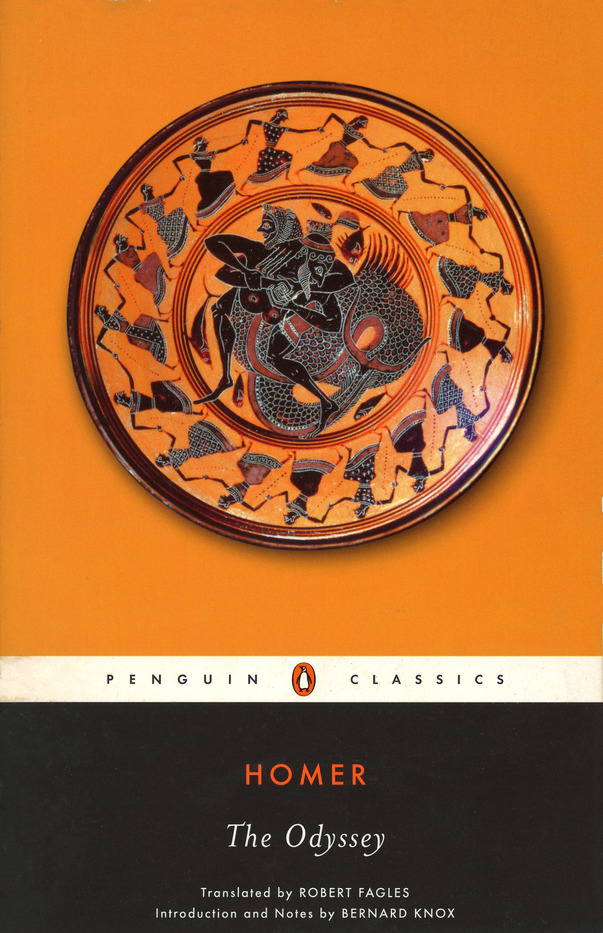
Homer’s The Odyssey stands as a foundational epic in Western literature, a tapestry of narrative virtuosity, psychological depth, and enduring thematic resonance. Composed—by oral tradition—sometime in the late eighth century BCE, this epic bridges mythic grandeur with remarkably human concerns.
Narrative Structure and Poetic Craft
From the very first lines (“Tell me, O Muse, of that ingenious hero…”), The Odyssey announces itself as a story about storytelling. Its non‐linear structure—shifting deftly between Telemachus’s coming‐of‐age in Ithaca and Odysseus’s wanderings—creates a dynamic rhythm. Each of the twenty‐four books functions almost as a self‑contained tableau, yet cumulatively they weave an overarching inquiry into identity, memory, and the relationship between mortal agency and divine caprice. Homer’s meter—the rolling hexameter—echoes the ebb and flow of the sea itself, conveying both the hero’s physical voyages and his interior odyssey.
Themes of Home, Hospitality, and Identity
At its heart, The Odyssey interrogates the meaning of nostos (homecoming). Odysseus’s yearning for Ithaca is counterbalanced by the pervasive Greek notion of xenia (guest‐friendship), a code that structures moral and social relations. The poem’s most poignant moments—Penelope’s silent weaving, Telemachus’s trembling recognition, the fickle welcome of various hosts—underscore the fragility and sanctity of hospitality. Meanwhile, Odysseus’s multiple disguises (“I am nobody,” he famously claims) engage with questions of selfhood: is identity rooted in name and reputation, or in constant self‐reinvention?
Characterization: Epic Hero and Sympathetic Everyman
Odysseus embodies the paradox of the epic hero: favored by Athena, cunning beyond measure, yet susceptible to human folly—his men slaughter the Sun‐god’s cattle; he succumbs to Circe’s spell. Unlike the almost uniformly stoic Achilles of The Iliad, Odysseus is a protean figure whose psychological complexity invites both admiration and critique. Likewise, Penelope and Telemachus emerge from the shadows as active participants in the narrative’s climax: Penelope’s test of the bow in Book XXIII rivals the martial knighting in Books V–XII in dramatic power.
Cultural and Historical Resonance
Although rooted in Bronze Age memory, The Odyssey speaks to successive generations precisely because its core tensions—exile and home, cunning and virtue, the human and the divine—remain universal. Its vivid topographies—from the Cyclopean cave to the shores of the Phaeacians—reflect a world both real and imagined, a liminal space between myth and history.
Enduring Legacy
Centuries before the novel’s advent, Homer laid the foundation for the Western narrative imagination. His subtle interplay of meter, character, and thematic ambiguity invites endless reinterpretation—from medieval retellings to modern feminist and postcolonial critiques. Reading The Odyssey today is to encounter an origin myth of storytelling itself: the pleasure of suspense, the pain of separation, and the triumph of cleverness and fidelity.
The Odyssey endures not merely as an archaeological relic of Homeric Greece, but as a living chronicle of the human condition—its wanderings, its reckonings, and, finally, its return.
Discover more from The New Renaissance Mindset
Subscribe to get the latest posts sent to your email.
 The New Renaissance Mindset