
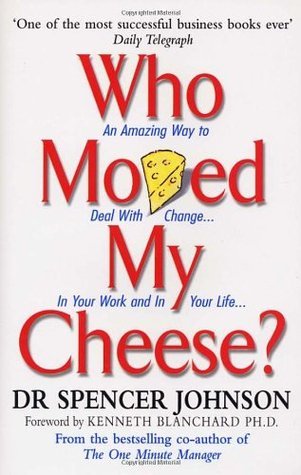
“Who Moved My Cheese?” by Spencer Johnson presents itself as a deceptively simple fable, yet beneath its pared‑down narrative lies a rich allegory about change, fear, and human adaptation. Framed as a parable of two mice—Sniff and Scurry—and two “littlepeople”—Hem and Haw—who live in a maze in search of cheese, Johnson’s novella crystallizes complex psychological and organizational dynamics into a readily digestible story. As a literary scholar might observe, it is precisely this combination of simplicity and depth that gives the text its enduring power—and invites both admiration and critique.
Narrative Economy and Fable Tradition
Johnson’s prose is spare, his dialogue functional rather than ornate. This economy evokes the tradition of Aesop and La Fontaine, where anthropomorphism serves to distance us from our habits and expose perennial truths. Yet “Who Moved My Cheese?” diverges from classic fable in its explicit didacticism: the moral is spelled out almost as soon as the plot unfolds. Hem’s paralysis and Haw’s eventual embrace of change become less surprises than enactments of predetermined lessons. For a literary scholar, this raises questions about reader agency: are we truly moved by surprise, or comforted by the reassurance that change can be mastered if we only heed the moral?
Characters as Psychological Archetypes
Hem and Haw function less as fully developed characters and more as psychological projections. Hem’s refusal to leave the old cheese station represents the denial and anger phases of change, while Haw’s journey through fear into acceptance embodies adaptation and growth. Sniff and Scurry, by contrast, enact the animalistic side of human psyche—simple, instinctive, and unburdened by overthinking. Viewed through archetypal criticism, Johnson constructs a quartet that externalizes inner conflict, offering readers the catharsis of watching their own fears and hopes dramatized in the maze’s corridors.
Stylistic Choices and Rhetorical Effect
The pedagogy of the book is transparent: short chapters, bullet‑pointed “Handwriting on the Wall,” and memorable aphorisms (“What would you do if you weren’t afraid?”). This isn’t high literature, and Johnson never pretends otherwise. His rhetorical strategy relies on repetition and mnemonic devices, ensuring that his key messages lodge firmly in the corporate mind. From a narratological standpoint, the maze itself is a cleverly mutable symbol—part corporate ladder, part life’s labyrinth—one that invites readers to map their own workplaces or personal journeys onto its walls.
Context and Legacy
Published in 1998 amid a wave of change‑management literature, “Who Moved My Cheese?” captured a cultural moment when globalization, technology, and market volatility forced organizations to rethink stability itself. Its popularity—millions of copies sold and translations into dozens of languages—speaks to its resonance with both executives and lay readers. Yet in retrospect, the book’s optimism can be read as overly simplistic. It privileges individual adaptability over structural critique: if the cheese moves, you should move too—no examination of who shifted it or why.
Critical Reflections
As a literary artifact, the novella’s limitations are as instructive as its strengths. Its fable format invites self‑reflection but risks flattening complex social forces into matters of personal attitude. Moreover, its unrelenting positivity may ring hollow for those facing systemic barriers rather than mere inertia. A more nuanced exploration might interrogate the ethics of the maze’s architects or the politics of cheese distribution—questions Johnson explicitly sidesteps in favor of universal applicability.
Ultimately, “Who Moved My Cheese?” succeeds as a catalyst: it prompts readers to confront their own resistance to change. Its didactic clarity and allegorical brevity ensure memorability, even if they sacrifice narrative subtlety. As a scholar might conclude, Johnson’s fable is less a finished work of literature than a conversation starter—one whose merits and blind spots alike continue to provoke debate about how—and why—we navigate the ever‑shifting corridors of our personal and professional lives.
Discover more from The New Renaissance Mindset
Subscribe to get the latest posts sent to your email.
 The New Renaissance Mindset