
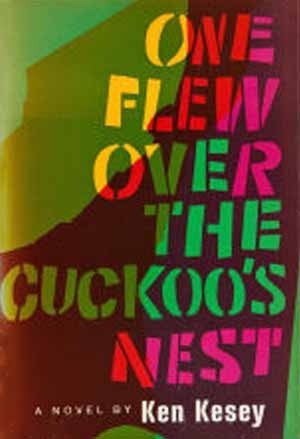
In One Flew Over the Cuckoo’s Nest (1962), Ken Kesey constructs a ferocious indictment of institutional power and a celebration of irrepressible individual spirit. Set almost entirely within the confines of a male psychiatric ward in rural Oregon, the novel’s claustrophobic milieu becomes a microcosm for the broader social order of mid‑century America. Through the interplay of its richly drawn characters, its hallucinatory narrative techniques, and its relentless interrogation of what constitutes sanity, Kesey crafts a work that still resonates with urgency today.
Narrator and Perspective
Kesey entrusts narration to “Chief” Bromden, a half‑Native American patient who pretends deafness and muteness to mask his keen observational acuity. This choice is doubly disruptive: Bromden’s “fog machine” hallucinations—where reality blurs into mechanized, dystopian imagery—allow Kesey to explore the dehumanizing effects of bureaucracy on the psyche; and the Chief’s eventual reclamation of voice parallels the novel’s larger motif of personal liberation. As a “traditioned American Indian,” Bromden simultaneously occupies and critiques the role of outsider, offering readers both the intimacy of internal monologue and the unsettling perspective of an unreliable narrator whose grip on reality is itself under interrogation.
Rebellion and Authority
At the heart of the ward stands Randle P. McMurphy, the swaggering ex–convict who enters the institution to escape prison labor—and promptly declares war on Nurse Ratched’s regime of sterilizing rituals. McMurphy’s animated, often bawdy humor punctures the ward’s stifling routines: his poker games become insurgent gatherings, his fishing trip a momentary exodus into autonomy. Yet Kesey never allows McMurphy to be unambiguously heroic; his antics, while liberating, also expose cracks in the notion of individual will. That McMurphy himself ultimately succumbs—to a lobotomy—poses a tragic question: can one man’s laughter truly dismantle a system built on dispassionate order?
The Symbolism of the Ward
The ward’s architecture is rendered as an apparatus of control. The ward’s clocks, medication schedules, and group‑therapy sessions become instruments of Ratched’s “combine,” a crushing machinery that grinds human complexity into conformity. Kesey’s recurring mechanistic imagery—lights that hum like factory generators, hallways that echo with an oppressive sameness—aligns the psychiatric hospital with the burgeoning techno‑industrial society of postwar America. Yet, the ward is also porous: the window through which McMurphy throws a football, the ventilator grille through which Bromden overhears the outside world, the illicit cigarette that passes hand to hand. These small breaches underscore the resilience of human defiance.
Themes of Sanity, Identity, and Community
Kesey destabilizes the binary of sane versus insane at every turn. The so‑called “insane” patients exhibit compassion, creativity, and solidarity—qualities glaringly absent in the cold efficiency of Nurse Ratched’s treatment regimen. Harding’s self‑conscious intellectualism, Cheswick’s emotional turbulence, Billy Bibbit’s stuttering vulnerability: each patient represents a facet of human being that the institution seeks to suppress. In their fragile alliances, Kesey suggests a radical redefinition of community: one forged not by uniformity but by mutual recognition of each other’s flaws and strengths.
Style and Language
Kesey’s prose shifts fluidly between Bromden’s poetic, hallucinatory idiom and frank, colloquial dialogue. He employs Monty Python–esque gallows humor alongside passages of stark violence, placing readers in a perpetual state of ambivalence. This stylistic oscillation mirrors the novel’s thematic tug‑of‑war between freedom and control, life and mechanization. Moreover, Kesey’s use of darkly comic hyperbole—McMurphy’s boast that he once “took a joyride in an army helicopter”—accentuates the absurdity of both institutional rituals and McMurphy’s own bravado.
Legacy and Resonance
When Kesey published One Flew Over the Cuckoo’s Nest on November 8, 1962, America was on the cusp of seismic social change. Today, his portrait of an individual’s clash with monolithic authority anticipates the countercultural revolts and questions of mental‑health care that would follow. The novel’s final image—Bromden’s lifting of the control panel to stage a desperate escape—remains a potent symbol: even in the darkest confines, the human spirit can wrench open a door to possibility.
In sum, One Flew Over the Cuckoo’s Nest is at once a blistering satire of bureaucratic dehumanization and a compassionate study of the fragile bonds that sustain us. Kesey’s daring narrative experiments and unsparing thematic exploration ensure that his work endures as both literary landmark and clarion call for the dignity of the individual soul.
Discover more from The New Renaissance Mindset
Subscribe to get the latest posts sent to your email.
 The New Renaissance Mindset