
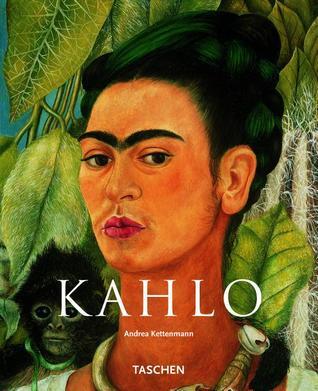
Andrea Kettenmann’s Frida Kahlo: 1907–1954 – Pain and Passion stands as one of the most perspicacious art‐historical studies of Kahlo’s life and work. Merging rigorous archival scholarship with a sensitive reading of visual and textual materials, Kettenmann offers readers not simply a chronology of events, but a nuanced portrait of an artist whose identity was inextricably bound to both physical suffering and creative transcendence.
Structure and Methodology
Kettenmann organizes her monograph chronologically, yet constantly overlays the biographical narrative with thematic chapters—trauma, self‐portraiture, political engagement, and the construction of myth. Each chapter opens with a close formal analysis of a key painting or series (e.g., The Two Fridas or The Broken Column), then situates the work in its broader social, cultural, and personal context. Archival letters, diary excerpts, and contemporaneous press provide the evidentiary scaffolding for her arguments, showcasing Kettenmann’s deft integration of primary sources into art‐historical discourse.
Major Themes and Interpretations
- Embodiment of Pain
Kettenmann persuasively argues that Kahlo’s recurrent depiction of bodily injury and reconstruction is not merely autobiographical catharsis, but a radical challenge to norms of femininity and medical discourse in early 20th‐century Mexico. Through readings of X‐ray–inspired imagery and corseted torsos, the text elucidates how physical vulnerability becomes a locus of artistic agency. - Self‐Mythologizing
Rather than treating Kahlo’s cultivated public persona as distortion, Kettenmann reads it as an intentional strategy. By analyzing Kahlo’s flamboyant Tehuana dress and meticulous public gestures, the book reveals how Kahlo navigated—and to some extent subverted—the tropes of “traditional” Mexicanidad to assert authorship of her own narrative. - Politics and Identity
Positioning Kahlo within the radical leftist milieu of postrevolutionary Mexico, Kettenmann demonstrates how political ideology and personal identity converge in works like Marxism Will Give Health to the Sick. Kahlo’s commitment to Communism, her friendship with Trotsky, and her fraught marriage to Diego Rivera are interwoven to show an artist for whom the political was never abstract.
Style and Scholarly Contribution
Kettenmann writes with both precision and empathy. Her prose is lucid without sacrificing complexity: detailed iconographic readings are balanced by broader cultural commentary. The richly reproduced color plates enable a direct engagement with Kahlo’s palette and compositional strategies, while extensive endnotes and bibliography mark this as indispensable for further research.
One of the book’s most significant contributions is its insistence on reading Kahlo not as a derivative follower of Surrealism, but as an original thinker whose work demands to be situated within Latin American modernism. In so doing, Kettenmann helps redress a historiographical imbalance that long privileged European avant‐gardes.
Critique
If one limitation can be noted, it is that the text occasionally assumes a reader already versed in Mexican revolutionary history; a more substantial introductory overview might have broadened accessibility. Additionally, while the focus on Kahlo’s physical suffering is justified, some later works—particularly her botanical and folk‐inspired pieces—receive less attention than they might warrant.
Frida Kahlo: 1907–1954 – Pain and Passion is a landmark study: rigorous yet vividly alive, scholarly yet deeply humane. For students, curators, and general readers alike, Kettenmann’s monograph offers the definitive synthesis of Frida Kahlo’s anguish, artistry, and enduring cultural resonance. It remains, nearly three decades after its first appearance, the benchmark against which all subsequent Kahlo scholarship must be measured.
Discover more from The New Renaissance Mindset
Subscribe to get the latest posts sent to your email.
 The New Renaissance Mindset