
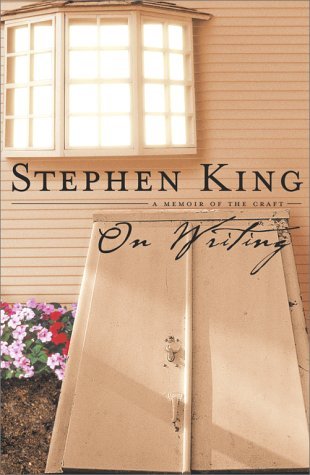
Stephen King’s On Writing: A Memoir of the Craft is a remarkable hybrid: part autobiography, part master class, and wholly characteristic of its author’s unpretentious candour. Far more than a mere how‑to manual, it offers an illuminated path through the writer’s life, exposing—like a carefully dissected cadaver—the anatomy of a story. King’s gift for storytelling transforms these pages into a narrative journey that is both instructive and emotionally resonant.
Structural Elegance and Narrative Voice
King organizes the book into four clear sections—“C.V.,” “What Writing Is,” “Toolbox,” and “On Writing”—which mirror the stages of a writer’s development. In “C.V.,” his own life story unfolds with the spare, unvarnished prose that pervades his fiction: anecdotes of youthful rebellion, early scribblings, and the brushes with obscurity that would shape his sensibility. This autobiographical framing grounds every technical lesson in lived experience, lending authenticity to his advice. King’s voice remains colloquial—resembling a conversation over coffee—yet his insights ring with precision. By positioning himself as both teacher and fellow traveler, he demystifies the craft without diminishing its rigors.
The Mechanics of Storytelling
In the “Toolbox” section—arguably the book’s heart—King presents the fundamentals of prose: vocabulary, grammar, and style. Here he dispels the sacred‑cow reverence often accorded to “show, don’t tell,” reframing it as “telegraphing” emotion rather than spoon‑feeding it. His metaphors—prose as a toolbox, words as hammers and screwdrivers—highlight the indispensability of technique. Yet King never divorces mechanics from imagination; the final chapter insists that craft without inspiration is lifeless, just as raw creativity without discipline is chaotic. This dialectic underscores his conviction that writing is at once art and craft.
Reflections on Habit and Resilience
Perhaps the most moving passages arise in King’s recounting of the 1999 accident that nearly claimed his life. His painstaking recovery becomes a testament to the writer’s resilience: the slow re‑learning of dexterity, the fear that his voice might be lost, and the gratitude when ink once again met paper. These reflections infuse the text with a poignant gravity, reminding readers that writing is inseparable from the writer’s body and spirit. In doing so, King elevates the book beyond a technical guide into a meditation on survival and the indomitable creative impulse.
A Voice for Every Writer
King’s colloquial candor—peppered with humor, profanity, and humility—makes his guidance feel accessible to both novices and veterans. He neither pontificates from a pedestal nor sanitizes his worldview; instead, he invites writers into his workshop, complete with its dusty shelves and worn tools. His passages on the necessity of reading voraciously and writing daily serve as both challenge and encouragement. Though rooted in his experience as a genre writer, the principles he articulates—clarity, authenticity, and perseverance—resonate across literary boundaries.
As a memoir of craft, On Writing succeeds on multiple levels. It is, first, an honest chronicle of King’s own evolution, fraught with setbacks and breakthroughs. It is, second, a rigorous yet invigorating primer on the fundamentals of prose. And, finally, it is a manifesto of resilience—an affirmation that writing is an act of faith. For anyone who has ever wondered how stories come to life, or who has faced the blank page with trepidation, King offers not only instruction but companionship. In this synthesis of memoir and manual, he reminds us that every writer’s journey is carved from both talent and toil—and that the craft, above all, is borne of love.
Discover more from The New Renaissance Mindset
Subscribe to get the latest posts sent to your email.
 The New Renaissance Mindset