
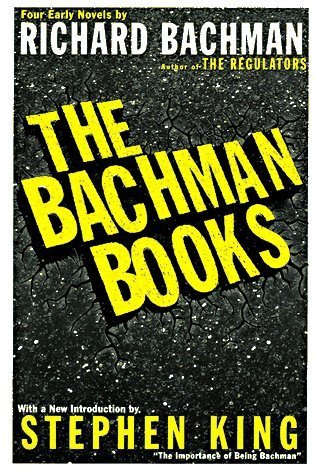
Stephen King’s The Bachman Books (1985) collects four early novels originally published under the pseudonym Richard Bachman: Rage, The Long Walk, Roadwork, and The Running Man. This assemblage offers a unique window into King’s evolving craft, revealing the thematic and stylistic concerns that would later define his monumental career. By cloaking these works under an alias, King not only challenged the publishing establishment’s assumptions about his marketability, but also explored the very nature of authorship, identity, and the relationship between writer and reader.
Context and the Bachman Persona
King adopted the Bachman persona to test whether his success was the result of talent or mere brand. The legend of Bachman—a reclusive, working-class everyman whose books were deemed too stark for mainstream fiction—invoked the naturalism of mid-20th-century American literature. The pseudonym experiment amplifies the collection’s meta-thematic undercurrent: these narratives are preoccupied with the fragility of social order and the specter of violence lurking beneath quotidian life. The very act of unmasking Bachman in 1985 serves as a paratextual revelation, foregrounding questions of authorial authenticity and the commodification of horror.
Novella Analyses
- Rage
A chilling first-person account of a high-school student’s hostage-taking rampage, Rage delves into adolescent despair and the breakdown of communication between generations. King’s sparse prose and claustrophobic setting underscore the unsettling plausibility of Charlie Decker’s spiral into nihilism. The novel’s controversial subject matter—school violence—lends it a grim prescience, and its removal from print in later years only adds to its sense of taboo. - The Long Walk
Set in a dystopian near-future, The Long Walk presents a savage contest in which one hundred teenage boys must maintain a relentless pace or face execution. The narrative’s relentless rhythm mirrors the characters’ physical and psychological torment. Here King channels the existential endurance of Kafka’s In the Penal Colony and the young adult heroism of dystopian precursors, interrogating the costs of obedience, camaraderie under duress, and the allure of sanctioned violence. - Roadwork
In Roadwork, an everyman’s quiet life unravels as a highway expansion project forces the demolition of his home and workplace. Through meticulous attention to suburban detail, King transforms asphalt and signage into symbols of corporate dehumanization. Barton Dawes’s descent into guerrilla resistance becomes an anguished elegy for personal sovereignty and mourning. The novel presages themes of modern infrastructure’s alienation—a motif King would revisit in later works. - The Running Man
Prefiguring the reality-TV spectacles of the 21st century, The Running Man paints a nightmarish vision of televised manhunts. Ben Richards’s flight from a totalitarian game show exposes the commodification of human suffering and the voyeuristic impulses of mass audiences. Its breakneck pacing and satirical edge anticipate not only the advent of reality programming but also King’s more expansive critiques of media saturation.
Thematic Cohesion and Literary Significance
Though disparate in setting and plot, the four novellas cohere around a central preoccupation with institutional power: be it the school system, dystopian state, corporate bureaucracy, or sensationalist media. King/Bachman interrogates the mechanisms by which societies regulate—and often brutalize—the individual. These narratives also explore how ordinary people, when pushed to extremes, reveal profound depths of resilience or desperation. Stylistically, the leaner, more economical prose of the Bachman works contrasts with the expansive, ornate storytelling found in King’s later epics, offering a study in narrative economy and tension.
Legacy and Influence
The Bachman Books stands as a testament to King’s versatility and his willingness to subvert expectations. Its early explorations of psychological trauma, societal collapse, and media critique have rippled through horror and speculative fiction. Moreover, the Bachman experiment invites readers to consider the interplay between authorial identity and reader reception—a discourse that resonates in today’s era of social media personas and ghostwriting.
One might argue, The Bachman Books is more than a mere curiosity in King’s oeuvre; it is a crucible in which the author’s foundational themes were distilled. Its austere narratives probe the dark heart of American life, questioning the very structures that bind or break us. For both devoted King enthusiasts and students of contemporary fiction, these four novellas offer a concentrated dose of the moral urgency and narrative propulsion that have made Stephen King a defining voice of late 20th-century literature.
Discover more from The New Renaissance Mindset
Subscribe to get the latest posts sent to your email.
 The New Renaissance Mindset