
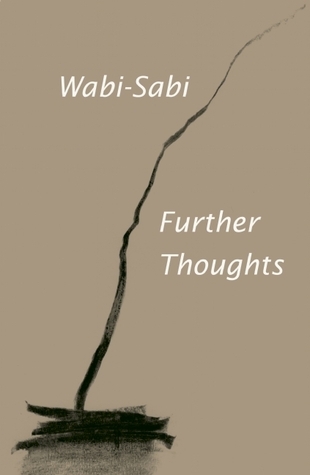
Leonard Koren’s Wabi-Sabi: Further Thoughts reads less like a conventional monograph and more like an invitation to a practiced, patient conversation — half aphorism, half careful exegesis — with one of the thinnest and most capacious concepts in modern aesthetics. Where so many volumes try to define wabi-sabi by checklist or historical excavation, Koren treats it as a sensibility: a set of attentional habits that recalibrates how we see materials, time, and the quiet economies of imperfection.
Thesis and approach
Koren’s central move is subtle but decisive. Rather than proving wabi-sabi historically or reducing it to a tidy philosophy, he explores it as an operative lens. The book’s essays and reflections coax readers into the practice of noticing — creases, weathered edges, the soft authority of a repaired seam — and then shows how those notices orient ethical and creative responses to a world that prizes the new, the glossy, and the absolute. If the cultural tide is toward erasure and perfection, Koren asks: what is lost when we flatten lived things into flawless surfaces?
Structure and style
Formally, the book favours intimacy over system. Sentences are economical; paragraphs are often vignette-like, returning repeatedly to small objects, small gestures, and small acts of care. Koren writes with a scholar’s precision but also with the gentle impatience of someone who’s learned through making. This blend — concise theoretical claim followed by concrete anecdote — keeps the prose from becoming abstract ornamentation. The voice is conversational but rigorous: suggestive rather than dogmatic, contemplative rather than sermonizing.
Major themes
Several interlocking themes run through the book:
- Time and transience. Koren repeatedly redirects attention from monumental temporality (history as epoch) to the quotidian passage of things: patina as memory, wear as testimony. Time, in his hands, accrues as texture.
- Materiality and process. The author refuses the modern binary that pits idea against matter. Wabi-sabi is most fully realized in processes — in the crackle of glaze, the seam slowly mended — and Koren’s descriptions honour the stubborn reality of material resistance.
- Beauty as asymmetry. The book challenges aesthetic-commodity logics by privileging asymmetry, incompleteness, and restraint. Beauty here is not triumphalist; it is relational, often humble, and frequently melancholic.
- Ethics of care. Implicitly political, Koren’s wabi-sabi proposes an ethics: to tend rather than consume, to repair rather than discard, to listen rather than dominate. These ethical inferences are never forced; they emerge naturally from the aesthetics he describes.
Strengths
Koren’s greatest gift is his eye. He can take a small, almost banal detail — the way light gathers in a dent in a tea bowl — and show how it reframes the whole. The book is pedagogical in the best sense: it trains perception. For artists, designers, and anyone working with materials, Koren’s reflections function as practical philosophy. He also resists romanticizing wabi-sabi into sentimental nostalgia; his writing recognizes its melancholic edges without letting melancholy calcify into passivity.
Another strength is the restraint of the prose. Koren trusts the reader to make connections; he rarely over explains, which honours the very ambiguity central to the concept. This restraint mirrors the aesthetic he describes.
Shortcomings
The book’s virtues are also, occasionally, its limits. The absence of broader cultural or historical scaffolding may frustrate readers looking for contextual depth: Koren assumes a familiarity with certain Japanese aesthetic traditions and with debates in contemporary design that not all readers possess. Likewise, his ethical extrapolations — while compelling — sometimes feel more suggestive than defensible; readers seeking a rigorous moral philosophy of repair and restraint will need to supplement Koren with other sources.
At times the aphoristic style flirts with elusiveness. The very terseness that trains attention can leave some arguments underdeveloped; a few more sustained case studies (on contemporary craft, or on industrial design practices that resist disposability) would have strengthened the book’s claims about cultural change.
Significance
Koren’s Further Thoughts is not primarily an academic intervention; it is an educative text for perception and practice. Its significance lies in helping to reorient how creators and consumers think about value. In a culture that equates newness with worth, Koren’s wabi-sabi offers a semantic shift: value measured in care, longevity, and the honest testimony of use. For contemporary designers and artists wrestling with sustainability and meaning, these reflections feel uncommonly urgent.
Read as a manual for seeing, Wabi-Sabi: Further Thoughts is a small, lucid, and often profound companion. It will not satisfy the reader who demands exhaustive historicism or systematic argumentation, but it will repay those who wish to relearn perception. Koren’s book is best taken slowly, the way one might sip a lingering cup of tea: an exercise in attending, in learning not to smooth away the very marks that tell a thing’s life.
Recommendation: For artists, designers, curators, and thoughtful readers who want an aesthetics that doubles as an ethic, this book is essential reading — not because it resolves wabi-sabi into doctrine, but because it trains the eye to live with the imperfect, and thus to see what the modern world so often refuses to acknowledge.
Discover more from The New Renaissance Mindset
Subscribe to get the latest posts sent to your email.
 The New Renaissance Mindset