
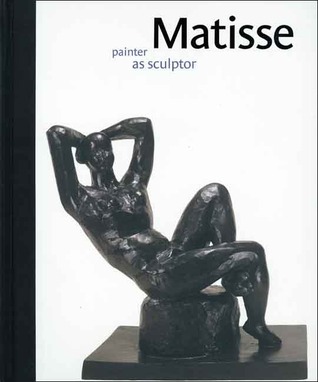
Dorothy Kosinski’s Matisse, Painter and Sculptor reads like a curator’s close-reading: richly attentive to objects, attentive to provenance and process, and driven by a desire to show how a single artist sustained two apparently distinct practices across a long career. Kosinski’s central move — to treat Matisse’s painting and sculpture not as separate chapters of a life but as mutually illuminating fields of experiment — yields a book that is at once corrective and clarifying. The result is less a sensational revaluation than a careful re-charting of continuities: of line and volume, of rhythm and mass, of surface and space.
Kosinski’s analytical lens is admirably tactile. She closes in on material decisions — the way a brushstroke negotiates a plane, the way modeling in clay anticipates a painted contour — and shows how Matisse’s sculptural thinking surfaces in his canvases, and vice versa. Passages devoted to emblematic works (the dance of figure and ground in The Dance; the condensation of form in the series of Blue Nudes; the porous corporeality of his later cut-outs) make visible what one senses when standing before these works: Matisse’s persistent negotiation between the volumetric and the instantaneous. Kosinski excels at translating that visual sensation into verbal argument without oversimplifying or resorting to jargon.
Structurally the book is judicious. Kosinski interleaves biographical detail with formal analysis, but biographical moments never overwhelm the formal argument. She uses the artist’s movements — from Nice to Paris, from atelier to atelier, from the plaster room to the studio floor — as a way of mapping shifts in medium and emphasis, rather than as mere chronological scaffolding. Her archival awareness shows: letters, exhibition histories, and studio anecdotes are marshalled to support claims about intent and process, yet she resists the temptation to collapse interpretation into biography. The book’s archival grounding gives authority to its claims without draining the prose of its interpretive energy.
One of the book’s particular strengths is its sensitivity to paradox. Kosinski is alert to the ways Matisse’s apparently decorative solutions often embody philosophical tensions: ornament as argument, simplification as ethical stance, leisure as labor. She reads the cut-outs, for example, not as late-career concessions to frailty but as a distillation of an enduring modernist program — an insistence on the primacy of composition and rhythm. This insistence reframes familiar narratives about decline and recuperation; instead, Kosinski presents a continuous line of inquiry that crosses media and decades.
If the book has limits, they are those common to curator-scholars who write with an eye toward exhibitions. At times Kosinski’s judgments feel calibrated for gallery pedagogy: definitive, accessible, and geared toward supporting a coherent public presentation. That clarity is largely an asset, but it occasionally smooths over contested interpretations. Readers looking for a polemical rethinking of Matisse’s place within the broader politics of modernism — with extended engagements on race, empire, or the art market — may find Kosinski’s account conservative in its intellectual scope. She prefers close looking to grand theoretical demarcations, which will satisfy formalists and practitioners but may leave readers seeking bolder historical or theoretical claims wanting.
Another minor quibble: the book’s emphasis on canonical masterpieces risks underplaying the importance of lesser-known works that complicate the neat narrative of continuity. Kosinski does include such works, and often to illuminating effect, but a more sustained attention to the minor pieces — the studies, the contradictory experiments — might have further nuanced her thesis and shown how experimentation sometimes resists coherent narration.
Yet these are small reservations against a book that does exactly what it sets out to do: it brings Matisse’s double practice into sharper focus and restores feeling and craft to the heart of argument. Kosinski’s writing balances erudition with lucidity; she writes for readers who want to think through images, not merely be told what they mean. Her intervention is historiographical rather than polemical: she reframes rather than overturns, enriches rather than replaces.
For students of modern art, museum-goers who want more than a label, and readers interested in technique and temperament, Matisse, Painter and Sculptor is a substantive and rewarding account. It reminds us that the artist’s boldest innovations — the economy of line, the refusal of illusion, the choreography of color and mass — are best understood when painting and sculpture are read together, as complementary ways of thinking through form. Kosinski’s book offers precisely that reading: rigorous, humane, and finally persuasive.
Discover more from The New Renaissance Mindset
Subscribe to get the latest posts sent to your email.
 The New Renaissance Mindset