
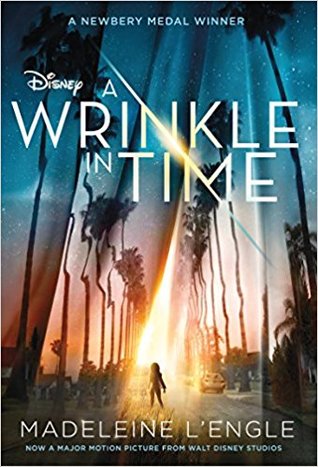
Madeleine L’Engle’s A Wrinkle in Time is at once a children’s novel, a piece of speculative philosophy, and a coming-of-age parable. First published in 1962, the book has endured because it refuses the condescension often levelled at “juvenile” literature: it addresses the emotional complexity of growing up and the metaphysical questions adults worry over, but it does so from the gritty, impatient vantage of a fourteen-year-old girl who is furious at the universe and desperate to belong in it.
The plot is straightforward in outline: Meg Murry, awkward and fiercely loyal, her gifted younger brother Charles Wallace, and the compassionate, bemused Calvin O’Keefe are carried through space and time by three mysterious figures—Mrs. Whatsit, Mrs. Who, and Mrs. Which—on a mission to rescue Meg and Charles Wallace’s scientist father from a dark, oppressive intelligence called IT. L’Engle frames the adventure with a vocabulary that mixes physics (tesseracts, fifth dimensions) and mythic imagery; the result is a hybrid narrative that insists both on the legitimacy of scientific wonder and on the irreducible power of love.
What gives the novel its unusual gravitas is L’Engle’s refusal to simplify her moral landscape. The central conflict is not merely between good and evil as abstract forces but between modes of being: connection versus isolation, humility versus conformity, vulnerability versus control. Meg’s journey is inward as much as outward. Her greatest enemy is not the inscrutable IT but the impulse—fostered by fear and self-doubt—to disconnect from others. It is only when Meg learns to accept her imperfections and to act from stubborn, recognizably human love that she can undo the depersonalizing machinery of the novel’s central antagonist.
Stylistically the book is notable for its liminality. L’Engle writes with a tone that moves easily from colloquial specificity—Meg’s petulant, domestic irritations—to passages of intense, quasi-religious lyricism. She is never sentimental about pain; instead she locates meaning in the abrasions of character. The dialogue, particularly that of the three celestial women, operates on multiple registers: Mrs. Who’s epigraphs from canonical voices, Mrs. Whatsit’s earthy wit, and Mrs. Which’s halting, elongating speech function as a chorus that links the story to a broader cultural and spiritual conversation. The inclusion of quotation as formal device does double duty: it broadens the novel’s intellectual reach while also reminding the reader that truth often arrives in fragments already said by others.
One of the book’s richest achievements is its philosophical ingenuousness. L’Engle does not ask the reader to accept a single theological position; instead she stages an ecumenical, pluralistic dialogue in which elements of Christian language sit beside cosmological wonder and ethical humanism. This openness is both strength and weakness. It makes the novel capacious—able to hold scientific curiosity and spiritual longing—but on occasion the book lapses into didacticism, tending to resolve complexity with moral aphorism rather than with sustained interrogation.
From a contemporary vantage the novel also invites critique. Its binary gestures—light/dark, free/willed versus uniform obedience—sometimes flatten the political and social mechanisms that sustain oppression. Cultural and racial dynamics are present more as ornament than as the object of sustained scrutiny. Still, these limitations do not negate the book’s emotional honesty. L’Engle’s Meg is an unusually candid heroine: petulant, impatient, shamefully brave. She models a mode of ethical formation rooted in fallibility, which is precisely what has made the book resonate across generations.
In terms of legacy, A Wrinkle in Time helped to legitimize speculative fiction for young readers as a site for serious thought. It bridged science and myth in ways that anticipated later YA fiction’s appetite for moral and metaphysical risk. Read today, the novel retains the capacity to unsettle: its most memorable insistence is not on spectacular feats of imagination but on the small, stubborn declaration that love—messy, unglamorous, and often irrational—can be a force of resistance.
In short, L’Engle’s book is less a tidy children’s story than a sustained moral experiment. It invites readers to inhabit that experiment: to feel their own fears, to test their convictions, and—if they are lucky—to discover that courage often looks a lot like caring for someone who cannot repay you. That combination of intellectual ambition and tender moral insistence is the novel’s enduring gift.
Discover more from The New Renaissance Mindset
Subscribe to get the latest posts sent to your email.
 The New Renaissance Mindset