
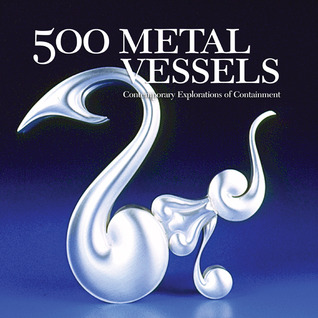
Marthe Le Van’s 500 Metal Vessels arrives like a compact anthology of the everyday and the ceremonial — a taxonomy of containment that doubles as a meditation on form, function and the material imagination. If a vessel’s primary job is to hold, this book insists that holding is never neutral: it is a cultural act, a technical achievement and an aesthetic statement. Le Van’s project is simple in premise and generous in execution: five hundred objects, photographed and arranged so that their differences read as a conversation about scale, surface and human use.
Visually the book succeeds immediately. Page after page, metal performs the same miracle it does in the workroom: it seems both stubborn and supple. Polished bowls glow like tongues of light; oxidized surfaces accumulate history; folded metal carries the memory of tools. The book’s photographic language — close crops, attentive detail shots paired with whole-object views — encourages a kind of ekphrastic looking: the eyes learn to read seams and hammer marks as one reads lineation or meter in a poem. The layout is smartly paced; objects are allowed quiet moments on the page, and the sequence — rather than feeling merely alphabetical or categorical — evokes an argument about how designers and makers think with weight, balance and negative space.
Thematically, 500 Metal Vessels is subtle but insistent. Containment is treated not only as a mechanical problem (how to keep liquid in, how to stack) but as a social grammar. Vessels stage rituals — the pour, the toast, the offering — and the book teases out how a single form can mean service, status, or care depending on context. There is also a persistent, generous attention to contradiction: vessels are decorative and utilitarian, fragile and durable, intimate and monumental. In this sense the book performs a little philosophic move: it returns objects to the field of lived experience, where use-value and meaning co-produce one another.
Scholarly readers will appreciate the curatorial restraint. Le Van resists the temptation to over-interpret; captions and short essays (where present) provide just enough historical and technical framing to orient without dictating. This restraint is an ethical choice — it allows the objects to remain speculative, to sustain multiple readings. That said, the book’s very success as a visual compendium creates a minor limitation: breadth occasionally flattens nuance. With 500 entries the editorial voice must generalize, and readers seeking deep technical case-studies (process breakdowns, workshop histories, or extended maker interviews) will want to supplement the volume with more specialized monographs or catalogues raisonnés.
The book’s chief accomplishment is pedagogical and poetic at once. For makers, it is a practical primer in possibilities — a visual vocabulary of joints, lips, rims and spouts from which to improvise. For historians and critics it is a field guide to modern metalworking’s dialogues with tradition: how contemporary makers borrow, subvert, and reconfigure methods such as raising, hammering, welding and patination to produce forms that speak to our current domestic and public imaginaries. For collectors and lovers of material culture the book offers a lucid reminder that objects collect not only things but also attention and care.
If 500 Metal Vessels has an ethical horizon, it is one of stewardship. By assembling works that range from the visibly hand-made to those that verge on industrial finish, the author prompts readers to consider questions of labor, provenance and longevity. In an era of disposable goods, a book like this doubles as a manifesto for mindful making: a celebration of surfaces that age with dignity and of forms that invite repeated handling rather than passive display.
In sum, this volume is less an exhaustive scholarly treatise than a richly curated atlas — a reference that will reward repeated visits. It is ideal for readers who delight in looking closely: artists, craftspeople, curators, and anyone who appreciates how the smallest rim or seam can reframe an ordinary gesture. As an object in its own right, the book is well-made, its sequencing and imagery cultivating a kind of habit of attention that, like the vessels it documents, holds something fragile and valuable: our capacity to see what the hands have done.
Discover more from The New Renaissance Mindset
Subscribe to get the latest posts sent to your email.
 The New Renaissance Mindset