
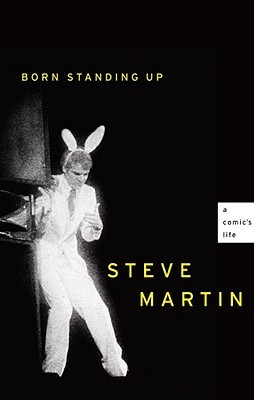
Steve Martin’s Born Standing Up is less a celebrity memoir and more an exercise in the poetics of performance. Written with the same economy and precise timing that made Martin one of the most influential stand-up artists of the late twentieth century, the book maps the career of a man who used absence and restraint as tools of his craft.
Summary in one line
Martin recounts how a shy, inventive boy from the suburbs became an unlikely icon of absurdist stand-up, tracing the apprenticeship, the telescoped rise, the dizzying success, and the deliberate relinquishment of the spotlight.
What the book does formally
The memoir is spare and controlled. Sentences land with comic timing: a clause, a brief silence, then the punch of a revealing image. Martin’s prose is not showy; on the contrary, it mirrors the aesthetics of his comedy—precision, repetition, escalation, and then a furnished anticlimax. Rather than sprawling anecdote or revelatory confession, the narrative moves in carefully lit vignettes. These are scenes—airports, dressing rooms, highway motels—rendered with the eye of someone trained to notice the exact physical gesture that will make an audience laugh.
Themes and tensions
At its heart the book is about apprenticeship and the ethics of success. Martin shows how stand-up is a craft that demands solitary work: the timing of a pause, the pruning of a line, the rehearsal of a face. He attends to the body of the performer: the hands, the walk onstage, the small idiosyncrasies that signal truth to a room. Equally compelling is his exploration of identity. The public “Steve Martin”—zany, exaggerated, hyper-confident—was a constructed persona. The memoir charts the slow, often lonely work of building that persona, and the eventual recognition that performance can eclipse the performer if left unchecked.
Another persistent tension is between abundance and absence. Martin rose by compounding absurdities—gags stacked like Russian dolls—yet he chose to step away just as his audience demanded more. The decision to quit at one’s peak becomes a thesis about artistic control: absence, for Martin, is a final punchline.
Voice and artfulness
There is wit but not vanity. The book has moments of lyrical tenderness—his brief meditations on family, on early magic tricks, on the exhilaration of a perfect set—balanced against the deadpan humour that is his signature. Importantly, Martin refuses the salacious trade of many show-business memoirs. There are fewer backstage scandals than technical expositions: how a joke is built, how a routine breathes, how the performer listens to the room. Those technical passages are the book’s richest contribution to literature about performance.
Weaknesses
Readers seeking gossip, exhaustive catalogues of Hollywood deals, or introspective melodrama may feel shortchanged. The memoir’s very restraint—its refusal to milk every anecdote for maximum scandal—can seem withholding. At moments one wishes for deeper excavation of private motives or more sustained reflection on the aftermath of leaving stand-up for film and music.
Verdict
Born Standing Up is a rare artist’s memoir that teaches by showing rather than telling. It will repay not only fans of Martin’s work but anyone interested in the mechanics of comedy, the discipline of craft, and the odd courage it takes to abandon applause. Read it slowly—like a set—so you can feel the rests, the wagers, and the small, exacting moves that make a life in performance worth the telling.
Discover more from The New Renaissance Mindset
Subscribe to get the latest posts sent to your email.
 The New Renaissance Mindset
A beautifully crafted reflection—your review captures the soul of the book with clarity, depth, and elegance. You highlight Steve Martin’s artistry, restraint, and craftsmanship with remarkable precision. Truly an insightful and compelling appreciation of a performer who mastered both presence and absence.
LikeLiked by 1 person
Thank you!
LikeLiked by 1 person