
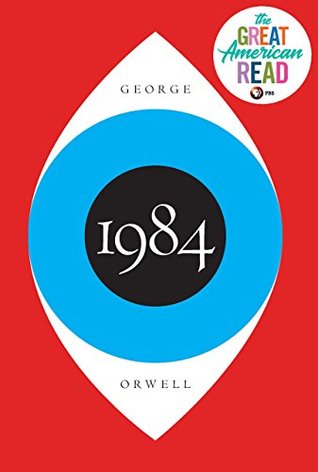
George Orwell’s 1984 is one of those rare novels that wears its bleakness with cold, analytical clarity: a work of moral and imaginative pressure that compresses historical anxieties into a single, terrible hypothesis about political life. First published in 1949, the novel reads like a thought experiment about power’s capacity to remake reality itself — not merely by coercion, but by changing what people can think, say and remember. Its durability as literature rests on the ruthlessness of that idea and on his austere, unsentimental craft.
The premise and the apparatus of control
At the center of the book is Winston Smith, a petty functionary in the Ministry of Truth whose job is to rewrite past records to match the Party’s present proclamations. Winston’s private rebellion — a furtive diary, a love affair, a hunger for truth — provides the human scale against which the Party’s mechanisms are laid bare. The author constructs those mechanisms with methodical economy: ‘telescreens’ that observe and instruct, omnipresent propaganda, ritualized hatred, and the linguistic engineering of Newspeak. Each device is dramatized with a clarity that makes the novel feel less like prophecy than forensic anatomy.
What makes 1984 intellectually dangerous (in the best sense) is that it refuses to confine totalitarianism to theatrical spectacles of violence; its genius is to show how power colonizes interior life. The Party’s aim, as it calmly states, is not only to stop dissent but to stop the possibility of dissent by reshaping the terms in which thought can occur. The slogan “Who controls the past controls the future; who controls the present controls the past” is not merely memorable rhetoric in the book — it is the novel’s diagnostic formula for how regimes manufacture reality.
Style and rhetorical restraint
Orwell’s prose is direct and plain, a style perfectly suited to the book’s themes. He avoids rhetorical excess; the horror accumulates from specificity rather than sensationalism. The palpable texture of the world — decaying urban streets, the sour bureaucratic tone of the ministries, the mechanical cadence of Party slogans — is achieved with economical details that register as sociological fact. At the same time, the novel is not without lyric or moral intensity: moments of quiet human longing (Winston’s private reflections, his relationship with Julia) are scored against the mechanical sameness of the regime, and this contrast intensifies the tragedy.
He is also a superb ironist. The very names — Ministry of Truth, Ministry of Love — invert expected meanings, and this inversion is not mere cleverness but a moral argument about language. Newspeak, the Party’s programmatic simplification and impoverishment of vocabulary, is a central formal device: it dramatizes how language can be weaponized. The novel thereby stages a meta-level critique about naming and meaning that remains relevant to any age in which public discourse is bent to instrumental ends.
Characters and human stakes
Characters in 1984 are drawn with a functional fidelity: they are less individualized portraits than ethical vectors. Winston is the moral consciousness only insofar as he resists the ideological grammar around him; Julia, ostensibly a more pragmatic figure, embodies a different form of resistance — sensual, immediate, less political in the abstract. O’Brien’s role, and the novel’s most chilling scenes of interrogation and re-education, convert personal betrayal into philosophical demonstration: the Party does not merely punish; it teaches the truth of its own logic by breaking the student.
The novel’s closing movement — Winston’s capitulation — is its most difficult artistic choice because it squares a realist, almost clinical depiction of power with the ethical requirement to mourn human defeat. The ending is not an accident of despair but the point: Orwell insists that power that controls knowledge can remake desire itself.
Endurance and cautions
Part of 1984’s enduring power is its precision: it gives language to the mechanics of modern domination in ways that can be applied to many historical moments without being a simple allegory of any one regime. That generality is also a limit: the novel is primarily a book about structures and ideas, and its psychological portraiture is subordinate to its civic argument. Critics have argued that its bleakness flirts with fatalism; yet that bleakness is the novel’s ethical hardiness — a prompt to vigilance rather than resignation.
1984 endures because it insists that literature can be a tool of political imagination without sacrificing aesthetic rigour. The writer’s achievement is both diagnostic and imaginative: he shows, with unsparing lucidity, how language, history and intimacy can be enlisted in service of domination. Reading 1984 today is less an act of nostalgia than an exercise in political literacy — the novel teaches how to recognize the grammar of power when it arrives clothed in euphemism, statistics and administrative routine. It remains one of the clearest articulations in modern letters of why truth and the freedom to think matter, and of what is at stake when they are taken from us.
Discover more from The New Renaissance Mindset
Subscribe to get the latest posts sent to your email.
 The New Renaissance Mindset