
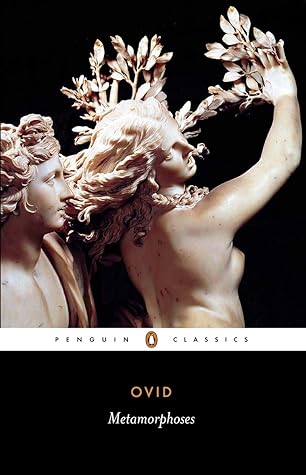
Ovid’s Metamorphoses is less a single tale than an architecture of change: a vast, ebullient mosaic of transformations that proceeds from the universe’s primeval chaos to the deification of Julius Caesar. Composed in fluent dactylic hexameter and stretching across fifteen books, the poem is both encyclopaedia and incantation — an artful catalogue in which the act of becoming is the poem’s only constant. Read as literature rather than mere mythography, Metamorphoses rewards us with a sustained meditation on power, identity, art, and the violence that often accompanies change.
Form and narrative strategy
The book organizes a dizzying succession of myths through a technique of linked episodes: one story spills into another by associative detail, image, or word. This chain-like structure produces an experience of movement — narratives accrue momentum like beads on a string — and it enables the poet to juxtapose tones and genres with startling agility. In one passage he can perform mock-epic, in the next register a brutal tragedy, and then a slyly erotic vignette; the transitions are rarely announced but often rhetorically precise, producing an impression of continuity precisely because nothing ever stays the same.
Ovid’s narrative voice is central to the poem’s force. He is at once a witty companion and a provocateur: urbane, reflexive, and frequently self-aware about the art of storytelling. The poem constantly reminds the reader that metamorphosis is not only the subject but the very process of poetic making — myths are materials for the poet’s craft, and the poem itself transforms them into new cognizance.
Major themes
Several themes recur and intertwine:
- Transformation as power and punishment. Change is creative and punitive: gods use metamorphosis to reward, to rescue, and often to humiliate. The transformations reveal hierarchies and the gods’ caprices, but they also blur distinctions between victim and agent.
- Voice and silencing. Many metamorphoses are also narratives of speech and its loss: mortals plead, poets narrate, and some figures are literally transmuted into trees, stones, or constellations that “speak” only by their presence. Ovid is acutely aware of how narrative can both preserve and erase.
- Art and illusion. The poem interrogates artistry — Pygmalion’s statue, Arachne’s tapestry, the poet’s own reworkings — asking what it means to make an image of life and whether art imitates or remakes reality.
- Ambiguity of moral lessons. Ovid resists clear moralizing. His portrayals of desire, vengeance, and divine cruelty are often shown in their complexity: sympathy and irony coexist in ways that refuse simple didactic readings.
Close readings (select episodes)
Its genius shows not just in isolated stories but in how those stories illuminate one another:
- Daphne and Apollo. A study in erotic pursuit and bodily refusal, the Daphne episode converts sexual violence into arboreal stasis. The metamorphosis spares Daphne from violation but condemns her to a perpetual, speechless existence — an evocative paradox about freedom gained through immobilization.
- Arachne. Transformation interrogates rivalry between human craft and divine prerogative. Her weaving succeeds technically but provokes punishment; Artistry is staged as both sovereign skill and dangerous hubris, and the spider that remains is at once testament and exile.
- Pygmalion. Here the boundary between life and art collapses. The animation of an object addresses the poet’s work: to call a form into living presence is a paradoxical mixture of desire, illusion, and creation.
- Orpheus and Eurydice. Ovid’s retelling tightens the tragic axis of loss and poetic impotence. The poet-musician’s failure at the threshold of sight and memory makes a bleak comment on the limits of art to reverse irreversible change.
Tone, ethics, and the voice of the poet
Ovid is a stylistic chameleon: playful, bawdy, elegiac, and sometimes mordant. Moral ambivalence runs through the text — sympathy for victims coexists with erotic relish and ironic detachment. This tonal complexity is often read as a deliberate challenge to Augustan moralism: his world is one in which imperial order and mythic violence coexist uneasily, and his exile (to the Black Sea coast) supplies a shadow behind the laughter. Whether read as subversive or serenely aesthetic, the poem resists being pinned down to a single political or ethical program.
Legacy and contemporary relevance
Metamorphoses is a foundational text for Western art and literature: its narratives have fuelled painters, dramatists, and novelists for centuries because its stories are pliant — endlessly reworkable. Today the poem speaks powerfully to readers interested in identity, embodiment, and the politics of transformation. Its insistence that identities are never fixed but always in process resonates with contemporary debates about selfhood, memory, and representation.
Reading suggestions
Approach the poem as a long poem rather than a bag of unrelated myths. The cumulative effect — the way transformations echo and refract one another — is where Ovid’s singular achievement resides. If you read in translation, consider editions that offer notes and cross-references; reading parallel passages together (for example, Arachne near Pygmalion, or Daphne beside Narcissus) sharpens the thematic architecture.
Final evaluation
Ovid’s Metamorphoses is a masterwork of imaginative energy and formal cunning. It combines the pleasures of storytelling with a philosophic, often unsettling inquiry into change: its causes, its witnesses, and its costs. The poem’s pleasures are double-edged — wit married to cruelty, beauty married to loss — and that very tension is what keeps Metamorphoses perpetually alive. For anyone interested in how myth becomes literature, or how poetry can remake the world, Ovid remains indispensable.
Discover more from The New Renaissance Mindset
Subscribe to get the latest posts sent to your email.
 The New Renaissance Mindset