
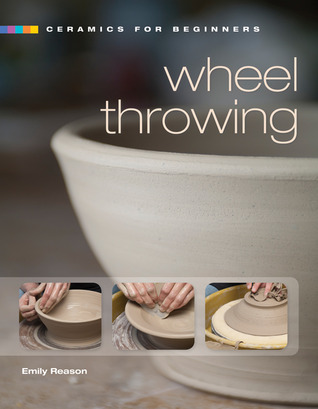
Emily Reason’s Ceramics for Beginners: Wheel Throwing arrives — or feels as if it arrives — at the crossroads between a how-to manual and a cultivated meditation on craft. On the surface it is a pedagogical text: clear sequences of steps, attentive photographs (or visual descriptions), and practical troubleshooting for the awkward moments every novice has with a rotating lump of clay. Read more closely, however, and the book reveals itself as an argument about attention, patience, and the ethics of making: how the hand learns to listen, how failure becomes information, and how the wheel enacts not merely circular motion but a pedagogy of time.
Structure and Approach
The author organizes the book with pleasing economy. Chapters progress from foundational—setting up the wheel, choosing clay, basic centring—to progressively generative forms: cylinders, bowls, simple vases, and then modestly inventive variations. Each chapter pairs succinct procedural instruction with brief reflective notes: why a particular gesture matters, what the beginner feels in the body when a wall collapses, how to translate a desired silhouette into incremental manipulations of pressure and speed. This dual register — technical and contemplative — is the book’s chief virtue. It admits novices into the workshop while also teaching them how to think like makers.
Voice and Pedagogy
The authorial voice is both encouraging and exacting. Reason resists two unhelpful extremes: the cheerleading platitude that insists “anyone can do pottery” without showing how, and the fetishized expert voice that makes the craft feel inaccessible. Instead, she writes with the patient precision of a seasoned teacher: authoritative where clarity is required, and quietly philosophical where technique touches temperament. Her pedagogical moves are notable for scaffolding: each skill is introduced in a minimally demanding context before being recombined into more complex tasks. Readers will appreciate the book’s explicit “what to do next” cues and its short lists of common missteps.
Language and Imagery
Although primarily utilitarian, the prose is not without lyricism. Reason uses tactile metaphors that will resonate with readers who attend to the materiality of making: she likens the wheel’s rhythm to a heartbeat, the clay to a living landscape that responds to nudges and insistences. These metaphors are never decorative for their own sake; they function to translate sensory knowledge into language, enabling the novice to rehearse movements mentally before trying them physically. This is a rare and valuable thing in craft manuals.
Strengths
— Clarity without condescension. It teaches technique while respecting the learner’s intelligence.
— Integration of reflective teaching: moments that invite learners to consider process, not just product.
— Troubleshooting sections that read like mini case studies — concrete, empathic, and actionable.
— Emphasis on adaptive thinking: modifying speed, pressure, and posture rather than rigidly following recipes.
Limitations
— Scope: as the title promises, the book privileges beginners; readers seeking advanced formwork, thin-walled porcelain techniques, or complex surface decoration will find those areas only touched upon.
— Visual dependence: the book’s usefulness would deepen with more comparative photographs of “failed” vs. “repaired” pieces; while descriptive language is strong, hands-on crafts benefit enormously from visual exemplars.
— Cultural context: Reason occasionally gestures toward historical lineages of wheel-throwing without fully engaging the global histories or the contemporary ecosystems of studio practice; a brief chapter placing wheel work in broader cultural frames would enrich the reader’s ethical imagination about making.
Audience and Utility
This book is ideal for the adult beginner, the studio teacher seeking a class curriculum, and the maker who wants a compact, reflective primer. It functions well as both bedside reading for slow absorption and as a practical companion in the studio. Because it attends to the interior life of the maker — frustration, delight, the rhythms of small progress — the book transcends simple utility and becomes, in effect, an apprenticeship in print.
Ceramics for Beginners: Wheel Throwing succeeds by doing two things at once: it equips hands with dependable technique, and it cultivates a material mind. It offers beginners not only skills, but a way of seeing that will serve them long after the first dozen wonky bowls are fired. For anyone who wants to understand what it is to learn by doing — and to be gently instructed in the patience that making requires — this book is an intelligent, humane, and practical companion.
Discover more from The New Renaissance Mindset
Subscribe to get the latest posts sent to your email.
 The New Renaissance Mindset
I’m curious, how does Emily Reason’s approach to wheel throwing compare to other beginner’s guides? 🤔
LikeLike
Hello Marcus,
I wish to make sure I understand your question, so can you please be more specific?
What other guides are you referring to? (Please note that I haven’t read but a fraction of the many available on the market)
What would be your criteria of comparison?
LikeLike