
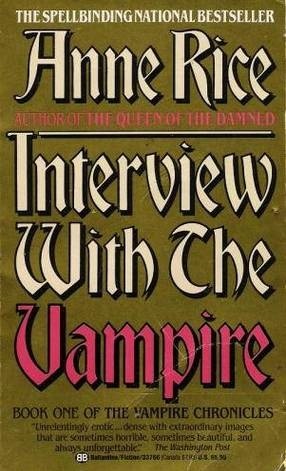
Interview with the Vampire presents itself as a confessional document — a long, elegiac first-person recollection — and through that frame Anne Rice re-animates the Gothic tradition for the late twentieth century. The novel is less a catalogue of monstrous deeds than an extended meditation on consciousness, loss, and moral solitude. Its vampires are not merely predators; they are reflective beings whose immortality intensifies the human problems of identity, desire, and meaning. The book’s lasting power lies in its combination of lush, sensuous prose with a moral seriousness that funds its melodrama.
Form and Narrative Voice
The author chooses a framed-interview structure: a contemporary interviewer records Louis’s testimony. That frame does two key things. First, it insists the reader read the vampire as historical subject rather than mere monster: Louis’s life is social, situated, containing class, religion, and intimate relationships. Second, the confessional mode allows it to fuse the objective and the intimate; the narrative moves between documentary detachment and breakdowns of feeling. Louis’s voice — rueful, rhetorical, haunted — is the book’s engine. He oscillates between philosophical speculation and sensory description, and Rice exploits that dialectic to explore vampirism as metaphysical burden rather than simple evil.
Themes
1. Mourning and Immortality
Rice makes grief the central texture of vampire life. Immortality in Interview does not bring triumphal mastery but an accumulation of losses: lost time, lost kinship, lost capacity for ordinary consolation. Vampiric memory becomes a kind of melancholic archive; the long life turns into a longer elegy. The novel thereby inverts the expected fantasy of eternal youth: perpetual life exacerbates exile from the human community.
2. Ethics and Responsibility
It stages ethical dilemmas rather than simple moral binaries. Louis, unlike the charismatic and amoral Lestat, is tormented by culpability: how to justify feeding, how to reckon with the pain inflicted on others. In this sense the book is a study of conscience — not theological certainty but persistent, troubling reflection. Rice’s vampires negotiate a secular theology of responsibility in which vampirism is a test case for human moral imagination.
3. Otherness, Desire, and Sexuality
The author decouples vampirism from demonization and instead explores it as a modality of desire and otherness. Intimacy between vampires is intensely eroticized without always being explicitly sexual; the hunger motif functions simultaneously as eros and violence. Her portrayal opened vampire fiction to queer readings long before such readings were mainstream: the bonds between Louis and Lestat are erotically charged, intensely intimate, and politically transgressive in the veneer of 1970s taboos.
4. Religion and Doubt
A Catholic upbringing, the language of sin and sacrament, and an abiding preoccupation with God and absence of God run throughout the novel. Rice uses religious vocabulary to amplify the existential vacuum left by vampiric life: rituals, penitence, and sacramental language become tools for examining unbelief. The novel stages a spiritual crisis as much as a metaphysical one.
Style and Language
The prose is richly ornate; it favours long, sinuous sentences and sensory detail. This is a conscious aesthetic choice: the language enacts the sensual world that the narrator both cherishes and has to betray. The downside is occasional purple excess — some passages verge on melodrama — but when this writer is at her best her diction converts the grotesque into profoundly human experience. Her evocations of New Orleans and the 18th–19th century settings are particularly effective, grounding the supernatural in historical specificity.
Characters
- Louis: The reflective, anguished moral center. He is a study in interiority — a man whose grief and conscience make him an unreliable but compelling witness.
- Lestat: Charismatic, theatrical, and amoral; an oppositional force to Louis’s conscience. Lestat’s theatricality exposes vampirism as an aesthetic choice as much as a condition.
- Claudia: Tragic and uncanny, she crystallizes the novel’s most disturbing ethical paradox: a child’s body with adult intellect. Claudia forces Louis and Lestat (and the reader) to confront questions about agency, innocence, and monstrosity.
Critique & Place in the Gothic Tradition
Interview with the Vampire recasts Gothic preoccupations — terror, transgression, the uncanny — as psychological and ethical dilemmas. Where Stoker’s Dracula externalized fear in an invading body, Rice internalizes it, making the vampire a mirror that reflects cultural anxieties about sexuality, faith, and social alienation. Some critics resist her sentimentalism and occasional rhetorical excess; others praise her for renewing the genre’s capacity to interrogate human feeling. The novel’s influence is unmistakable: it inaugurated a modern, introspective vampire aesthetic that subsequent writers and screen adaptations have inherited and transformed.
Reading Interview with the Vampire is to be invited into a prolonged act of sympathetic imagination. It does not ask you simply to shudder at the monstrous, rather it asks you to listen to the long confession of a being who is both predator and mourner. The novel’s strengths lie in its emotional seriousness and its sumptuous prose; its weaknesses emerge when the rhetorical intensity tips into overwrought melodrama. Ultimately, the book is a major achievement in late-20th-century Gothic fiction — a work that complicates our notions of monstrosity and makes immortality feel, paradoxically, unbearably human.
Discover more from The New Renaissance Mindset
Subscribe to get the latest posts sent to your email.
 The New Renaissance Mindset