
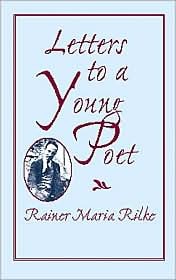
Rainer Maria Rilke’s Letters to a Young Poet reads like a distilled apprenticeship in attention. What began as a sequence of private replies (written between 1903–1908) to an earnest novice, Franz Xaver Kappus, has become a canonical pocket-manual for anyone who considers making their inner life the material of art. The book’s power lies not in technical instruction but in the author’s sustained moral and poetic insistence that creativity is an inward work of cultivation rather than a craft of tricks.
Form and voice
The epistolary form turns intimacy into argument. Rilke writes as a tutor who never lectures, a friend who never flatters. His sentences move like thought-images: aphoristic, sensual, and at once philosophical and confessional. He avoids prescriptive curricula—no lists of meters or exercises—but he does give a pedagogy of solitude, patience, and inward rigour. The voice is paradoxically both remote and solicitous: remote because it refuses to pace the student’s anxieties, solicitous because it treats those anxieties as the raw material of an artist’s maturation.
Major preoccupations
Three interlocking themes dominate the letters. First, solitude as discipline: it frames solitude not as loneliness to be cured but as a condition that permits depth. Second, interior responsibility: it exhorts the young poet to live richly within himself, to answer “the questions” rather than prematurely seeking solutions. Third, the ethical-ontological view of creation: art is not a social ambition but an inward necessity that demands integrity—even at the cost of social success. These themes cohere into a philosophy of work and waiting: to be an artist is to accept forms of incompletion and to let time transmute them into voice.
Style and rhetoric
Rilke’s rhetoric is economical but capacious. He prefers image and metaphor to argumentation: love becomes “a house with many rooms,” suffering a companion to be learned from, the self a territory to be mapped slowly. The prose reads like compressed lyric—so that even when it seems to offer counsel, what it gives is often an invitation to risk being misunderstood. This is a book that teaches not by solving doubts but by enlarging the reader’s tolerance for them.
On advice and pedagogy
It’s tempting to treat the book as a how-to for writing, but its true lesson is pedagogical: Rilke insists that the teacher’s task is to provoke a discipline within the student, not to deliver formulas. He declines easy consolations (rejecting fame as the aim) and instead recommends patience and inward fidelity. For today’s reader—used to immediate feedback, to metrics and external validation—his counsel is radical: he asks artists to practise an ethics of attention that privileges depth over publicity.
Limitations and tensions
The book’s virtues double as its limits. Rilke’s privileging of solitude can sound elitist or impractical—an aestheticism that risks ignoring social contexts that shape voice, access, and survival. The letters are written from the position of an established European poet of the early twentieth century; some of the social assumptions embedded in their worldview (about vocation, masculine models of solitude, and the possibility of withdrawal) register as historically specific. A modern reader might want Rilke’s inward rigour tempered with an account of community, collaboration, and the material constraints that many artists face.
Enduring value
Despite these tensions, the letters remain almost unnervingly useful. Rilke’s best aphorisms — the plea to “be patient toward all that is unsolved in your heart,” or the imperative, “You must change your life” — are not sentimental platitudes but ethical provocations. They displace the anxiety of instant success and return the reader to a longer timescale: the patient construction of attention, the slow answering of questions, the acceptance of necessary solitude. For many readers—writers and non-writers alike—this is precisely the kind of counsel that reframes failure and restlessness as stages of formation rather than terminal verdicts.
Who should read it
Letters to a Young Poet is indispensable for aspiring artists, teachers of creative practice, and anyone grappling with vocation or the interior demands of making. It’s less an instruction manual and more a compact philosophy of becoming: a book to be consulted when doubt feels loud and the long work of attention feels too heavy.
Rilke’s letters ask us to take the inner life seriously enough to treat it as work. Where contemporary culture often flattens creativity into brand-able output, he offers, with grave tenderness, a counterproposal: that art is the faithful, sometimes lonely, cultivation of one’s depths. Read it not for tactics but for temper — and you will find a mentor whose teaching bears the weight of lived lyric experience.
Discover more from The New Renaissance Mindset
Subscribe to get the latest posts sent to your email.
 The New Renaissance Mindset