
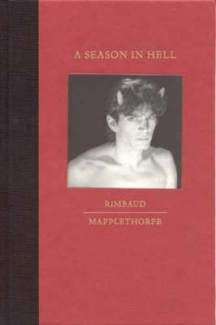
Arthur Rimbaud’s A Season in Hell reads like a small, incandescent apocalypse: a compact, fiercely personal document in which a young poet brutalizes his own mythology and attempts — in the same breath — to transfigure failure into art. It is not a comfortable book. It is stubborn, querulous, visionary, and often unbearably intimate: part confession, part indictment, part fever dream. For anyone interested in the transition from Romantic lyric to the fractured subjectivity of modern poetry, this work remains indispensable.
Rimbaud wrote with an almost scientific impatience at the self. The book’s voice alternates between self-accusation and clinical observation; the “I” is sometimes a prophet, sometimes a patient on a surgeon’s table. That instability is the book’s engine. Rather than seeking consolatory coherence, Rimbaud stages an interrogation: what happens to language when the poet is disenchanted with his own instruments? What becomes of meaning when the writer tears his own certainties to shreds? The answers the text gives are neither neat nor consoling — they are instead luminous fragments that linger.
Formally, A Season in Hell is hybrid: prose passages breathe like long inhalations, then explode into lines that verge on incantation. This mixture resists neat categorization (it is neither pure prose nor conventional lyric), and that hybrid form suits the book’s program: to dislocate habitual perception and force the reader into a new attentiveness. The prose sections can feel claustrophobic and elliptical; the lyric moments open like mirrors into private visions. Rimbaud’s capacity for synesthetic metaphor — where smell takes on colour, or sensations become moral categories — is at full throttle, and here it serves to register spiritual derangement as aesthetic transformation.
Thematically, the book revolves around exile, culpability, and the poet’s wager. Hell is not only a metaphysical location but a condition: alienation from self, from language, and from the social world. Rimbaud dismantles the Romantic notion of the inspired solitary genius and replaces it with a vision of the poet as both addicted dreamer and responsible agent. There is a repeated concern with commerce and survival — the poet’s art is always shadowed by economic precarity — and this grounds the visionary excess in blunt material reality. Equally striking is his examination of moral agency: he wants to know whether the poet can be absolved, or whether confession itself is another kind of vanity.
One of the abiding pleasures of the text is its moral ambivalence. The author refuses the easy rhetoric of self-justification; he refuses, too, the posture of the self-sacrificing martyr. Instead, he keeps probing the perplexing fact that the poet’s ecstatic power often coexists with moral and emotional disarray. The result is a text that feels honest about contradiction: it knows that genius and self-destruction can be braided together without tidy resolution.
Historically, A Season in Hell is a hinge. It registers the last acute flowering of a certain nineteenth-century lyric sensibility while prefiguring the fragmentation and interiority of twentieth-century modernism and surrealism. Later readers and poets would take up Rimbaud’s willingness to destabilize the speaking subject; his influence is traceable in modernist experiments with voice and in the surrealists’ appetite for visionary rupture.
If the book has limits, they are precisely those of any work born of extreme autobiographical fever: it can be elliptical to the point of opacity, and its self-focus sometimes verges on narcissism. Yet those very excesses are the price of its originality. This poet is not interested in comfort; he demands that the reader be willing to be discomfited, to follow a speaker who is repeatedly disintegrating and reassembling his language.
In the end A Season in Hell is less a steady confession than a map of a soul in excavation. It is an unfinished ritual — fierce, contrite, visionary — and it still reads like a provocation. For readers who want to see lyricism stripped to its raw operations, for those curious about the poet’s ethics under pressure, and for anyone interested in how poetic language can both wound and heal, Rimbaud’s short, burning book remains a necessary and unnerving companion.
Discover more from The New Renaissance Mindset
Subscribe to get the latest posts sent to your email.
 The New Renaissance Mindset