
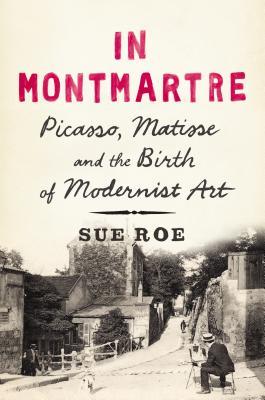
Sue Roe’s In Montmartre: Picasso, Matisse and the Birth of Modernist Art is a capacious, elegiac portrait of a place and a moment. It threads biography, cultural history, and close-looking criticism to argue that Montmartre — with its cafés, studios, cheap lodgings and convivial degradations — was not merely backdrop but active engine of a seismic aesthetic shift. The book reads as both a social history and a curated salon: intimate enough to register personality, broad enough to trace artistic, technological, and social forces that made modernism possible.
The author approaches Montmartre with the sensibility of a novelist and the discipline of a historian. Rather than delivering a dry catalogue of dates and works, she stages the neighbourhood itself as protagonist: its winding streets, the cheap light of garret studios, the hum of cafés and cabarets, the uneasy proximity of bohemia and poverty. Against that living backdrop she places two giants — Pablo Picasso and Henri Matisse — along with a supporting cast of lesser-known artists, dealers, models and proprietors whose actions and interactions illuminate the emergence of what we now call modern art.
Roe’s strongest achievements are threefold. First, she restores contingency to origin stories. The book is alert to the messiness of invention: half-formed ideas, accidental collaborations, financial precarity and the constant negotiation between spectacle and sincerity. Modernism is not a sudden rupture produced by heroic geniuses alone but a culture produced by social networks, technological shifts (photography, print culture) and the everyday economies of a neighbourhood that both sheltered and exploited its makers.
Second, Roe offers vivid character studies. Her portraits of Picasso and Matisse are empathetic without being hagiographic: she tracks their rivalries, aesthetic wagers, and differing social strategies — one often theatrical and mercurial, the other methodical and formally restless. Importantly, she does not flatten her narrative into a duel for supremacy; instead she underscores how their divergent practices helped define modernism’s plural possibilities.
Third, it pays careful attention to gender, class and the often-ignored labor that sustained the avant-garde. Models, studio assistants, and the women who managed households and cafés recur in the margins and occasionally push into the center of the narrative. These figures complicate the familiar story of masculine genius and reveal how modernism was stitched together from precarious, often invisible work.
Structurally the book moves between micro-history and panoramic sweep. Chapters that linger over single evenings in a café sit comfortably beside others tracing market dynamics or exhibition histories. This variety is a pleasure: the prose is spry and exact, able to turn a single anecdote into a small allegory about taste and reputation. The archival work is evident in the texture of detail; letters, police reports and contemporary reviews are marshalled to give voice to the period.
Yet the book is not without friction. At times Roe’s appetite for narrative colour leads her to foreground drama over sustained critical analysis of artworks themselves. Readers looking for extended formal readings — deep examinations of individual paintings or plate-by-plate analyses of stylistic evolution — may find the book’s sociocultural frame occasionally eclipses aesthetic scrutiny. Likewise, while she admirably attends to a broad cast, some secondary figures remain underdeveloped; their glimpses, compelling as they are, sometimes feel like invitations not quite answered.
Another subtle limitation is tone. Roe’s sympathetic immersion in Montmartre’s mythology risks reproducing some of the romantic clichés she otherwise seeks to demystify. She is careful, but not always entirely immune, to the nostalgia that long shadows cast over accounts of bohemian Paris.
Contribution and Conclusion
On balance, In Montmartre is a major contribution to public-facing art history: richly researched, gracefully written, and generous in perspective. Roe’s book reframes Montmartre not as a single birthplace of modernism but as a crucible where social conditions, personalities, and cultural infrastructures converged to make new visual languages possible. For readers coming to Picasso and Matisse with fresh curiosity, it offers an accessible, humane guide; for specialists, the book’s archival pulls and social readings suggest productive avenues for further research — particularly around labor, gendered economies, and the material infrastructure of artistic renown.
If you prize interplay between biography, urban history and visual culture — and if you relish storytelling that keeps one eye on evidence and the other on implication — this book will repay repeated readings. It is less a treatise on modernist aesthetics than an invitation to look again at how art happens: not in isolation but in streets, cafés and the everyday negotiations of a city that taught the twentieth century how to see.
Discover more from The New Renaissance Mindset
Subscribe to get the latest posts sent to your email.
 The New Renaissance Mindset