
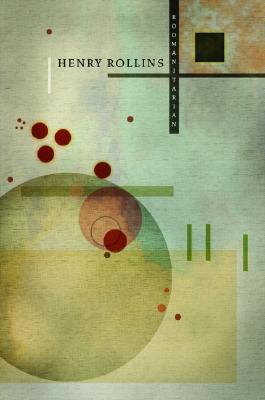
Henry Rollins’s Roomanitarian is a compact blast of the author’s characteristic electricity: part essay collection, part personal manifesto, and entirely tuned to the register of a voice that has been honed on stages, bus trips, and the small, unforgiving hours of hotel rooms. First published by Rollins’s own 2.13.61 press in 2005, the book runs roughly 160 pages and collects the muscular, combative prose that many readers have come to expect from him.
At its best, the book reads as a concentrated study in endurance and attention. Rollins is famously a chronicler of travel and of the punk/DIY life—he writes as someone who has been shaped by motion and by constraint—and here those energies are corralled into essays that are equal parts sermon and field report. The book sits squarely within the texture of his oeuvre: a blend of travel/gig journals, meditative rants, and short-form lyric-prose that resists easy categorization. That placement in his bibliography helps explain the readerly expectations the book both meets and subverts.
Formally, Rollins favours a rhetoric of truncation and emphasis: short, declarative sentences that land like punches, sudden anecdotes that swerve into aphorism, and a confessional habit that turns outward into social critique. The effect is theatrical without feeling staged—read aloud, many passages gain aural momentum, the cadence of a performer who has learned to fill silence with urgency. This is not an observational, detached essayism; it is a prose that is emotionally and morally invested. It makes claims, accuses, apologizes, and sometimes performs small acts of self-exposure. Those acts are not designed to solicit pity so much as to demonstrate endurance. The book’s recurring leitmotif—doing the work, surviving the day, keeping sentinel over the small things that constitute a life—comes through again and again.
Consider a passage that encapsulates the book’s ethical stance: “My main goal is to stay alive. To keep fooling myself into hanging around. To keep getting up every day.” The bluntness of that sentence—its near-clinical admission of precariousness—reveals the spine of Rollins’s writing here: honesty as act, honesty as performance. He is at once austere and plaintive; his temper is often frustrated, but it is a frustration generated by care rather than cynicism.
Thematically, Roomanitarian orbits around solitude, discipline, and the aesthetics of small rebellions. Hotel rooms and transient spaces become metaphors for interior life: temporary, functional, and revealing. In this liminal geography, Rollins examines the thin places where conviction either hardens into stoicism or withers into complacency. He is preoccupied with what might be called ethical fidelity—how to remain honest to one’s own limits and obligations in a culture that rewards spectacle and ease. These essays are less interested in producing systematic theory than in staging a persistent interrogation of how a life gets lived, moment to moment. The result is a set of fragments that together assemble a rough credo. (This is consonant with how readers and reviewers have broadly classified his books—as hybrid forms that mix diary, rant, and cultural commentary.)
As a literary object, the book is not without its limits. Its rhetorical mode—intensity over subtlety, declamation over dispassionate nuance—will alienate readers who prefer balanced exposition or structural finesse. At times the text circulates within its own register of outrage and resolve, risking echo chamber effects: a few riffs feel repeated rather than deepened. Yet those very repetitions are also part of Rollins’s signature: insistence as method. For readers attuned to mood, velocity, and moral heat, the repetitions read as insistence; for others they might read as immaturity of argument.
What it ultimately offers, and what makes it worthy of critical attention, is the way it transforms the ordinary—hotel rooms, odd routines, transient friendships—into loci for sustained ethical questioning. It is a book best approached not for argumentative rigour but for rhetorical truthfulness: a text where personality and principle are braided, where performance is a form of conviction. In that sense it functions as a useful corrective to more domesticated, professionalized forms of contemporary memoir and cultural criticism. For students of prose who want to see how voice can be weaponized and tenderized in equal measure, Rollins provides a study in sustained affect.
Recommendation: read Roomanitarian if you value prose that refuses the comfort of neutrality and instead presses youthful ferocity into disciplined reflection. If you come seeking a tidy thesis or a systematic cultural history, look elsewhere; but if you want a muscular, sometimes raw example of how an author translates life’s small urgencies into sustained writing practice, Rollins delivers.
Discover more from The New Renaissance Mindset
Subscribe to get the latest posts sent to your email.
 The New Renaissance Mindset