
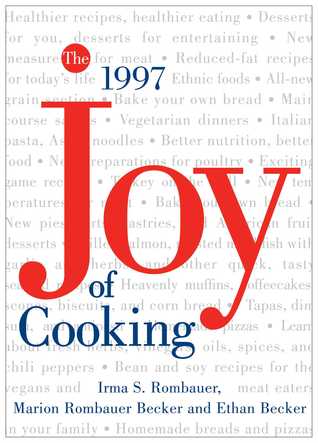
Irma S. Rombauer’s The Joy of Cooking is an unlikely classic: at once a pragmatic manual, a conversational memoir, and — when read closely — a vernacular text that helped shape twentieth-century American domestic culture. First self-published in 1931 as a modest compilation of tested recipes and “casual culinary chat,” the book rapidly left the confines of private domestic instruction to become a national touchstone of how America eats, teaches, and remembers food.
Form and tone are the book’s most striking literary features. Rombauer writes not as an aloof expert but as a companionable instructor: the prose is plainspoken, often wry, and repeatedly anticipatory of the reader’s mistakes and anxieties. This voice constructs an ethic of intimacy around the act of cooking — recipes function as small dialogues between author and home cook rather than as inscrutable decrees. The result is a pedagogy that privileges confidence and improvisation; Her directions are precise enough to be reliable but permissive enough to invite adaptation. Scholars of rhetoric and everyday life will find in these pages a model of how technical writing can also cultivate character.
Formally, Joy introduced innovations with lasting technical consequences. Rombauer’s “action” recipe style — writing instructions as sequential actions rather than mere ingredient lists with terse directions — transformed the user-experience of cookbooks, turning recipes into performative scripts that novices could follow in real time. This structural choice is as much a rhetorical maneuver as an ergonomic one: it reduces the cognitive burden of cooking, tacitly democratizing culinary competence. The book’s layout, the illustrated chapter headings by Marion Rombauer Becker, and the inclusion of menus, substitutions, and “what to do when…” marginalia all contribute to an inclusive, learner-centred text.
Context matters. The book’s emergence in the depths of the Great Depression — and its later adaptations during wartime rationing — made it not only a manual for good taste but a practical survival guide. Editions produced in the 1940s explicitly addressed shortages and substitutions, demonstrating how a cookbook can be an instrument of resilience as well as pleasure. That responsiveness to material circumstance explains a large part of the book’s massive sales and cultural traction in the mid-twentieth century.
Yet the history of Joy is also a history of editorial negotiation. The book is family property in a rare, multi-generational sense: Marion Rombauer Becker, and later Ethan and John Becker (and collaborators), stewarded and revised the text across decades. Those revisions — some welcomed, some criticized — reveal the tensions between preserving a familiar voice and adapting to new culinary technologies, tastes, and health consciousness. The oscillation between simplification and professionalization across editions (notably the shifts in the late twentieth century and the restorations of the 2006 and later editions) invites reflection on how culinary authority is both inherited and contested.
If we read The Joy of Cooking as literature, its most interesting passages are not the recipes alone but the moments of cultural annotation: remarks on hospitality, thrift, and seasonal living; offhand stories about the author’s household; and the way recipes are woven into moral counsel. These asides turn the cookbook into a ledger of domestic values. Critics who dismiss it as merely utilitarian miss how its rhetorical strategies produce a felt sense of belonging that modern cookbooks often package differently — as lifestyle, brand, or celebrity. Joy remains stubbornly domestic in the best sense: oriented toward everyday work and the maintenance of relationships.
Finally, the book’s durability is itself a subject of inquiry. Continuous republication, ongoing family edits, and periodic critical reappraisals show that The Joy of Cooking functions like a communal text — one that accumulates layers of memory, taste, and social change. For readers today, its greatest value is dual: it offers recipes that still work, and it offers a model of culinary instruction as humanistic practice. For historians, rhetoricians, and literary critics, it is a primary source for studying how normative domestic knowledge is produced and circulated.
Read The Joy of Cooking not only for its recipes but as a cultural document: a pragmatic, humane, and rhetorically savvy manual that helped define American home cooking. Its warmth, structural innovations, and historical adaptability make it worth sustained attention — both at the stove and in the seminar room.
Discover more from The New Renaissance Mindset
Subscribe to get the latest posts sent to your email.
 The New Renaissance Mindset