
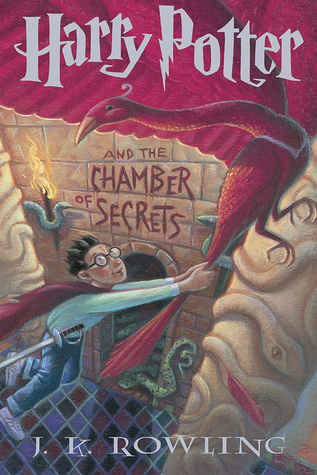
If the first volume of J.K. Rowling’s saga announced a wholly imagined magical world with the innocent exhilaration of discovery, Harry Potter and the Chamber of Secrets registers the series’ movement from charm into consequence. Rowling’s sophomore effort tightens the mechanics of her imagination while deepening the book’s moral and formal ambitions: it is at once a school-story mystery, a gothic fable, and a meditation on language, memory, and the violence of inherited prejudice.
Formally the novel is a detective story fitted to a coming-of-age story. Rowling deploys the conventions of the whodunit—clues dropped with a mixture of generosity and misdirection, red herrings (Lockhart’s charisma, the suspicious house-elf Dobby), and an eventual unmasking that rewards careful readers—with the affective logic of a school tale: rites of passage, friendships tested, authority figures whose competence is porous. The result is a narrative that feels fair to its readership: the mystery can be assembled from the evidence given, yet the emotional stakes remain grounded in Harry’s interior life rather than the mere pleasure of puzzle-solving.
One of the novel’s most striking moves is to render language itself a locus of power. Parseltongue, the ability to speak with snakes, becomes a social scarlet letter—Harry’s facility with it isolates him, exposes him to suspicion, and indexes the porous boundary between hero and monster. More broadly, the book prizes names, inscriptions, and texts: Tom Riddle’s diary is not a neutral document but an active agent, a persuasive fiction that reshapes reality. The diary dramatizes a recurrent Rowling concern: texts can act like charms—seductive, harmful, capable of reviving past violences. In that sense the Chamber is both literal chamber and archive: a sealed past that, when opened, circularly reproduces old hierarchies.
The book’s treatment of prejudice and heredity is more explicit and incisive here than in the first book. The “pure-blood” rhetoric circulating through Hogwarts is not merely world-building flourish; it is a social ideology whose logic supports exclusion and violence. The narrative pairs this ideology with institutional abdication—teachers who shrug, bureaucracy that disavows responsibility, and a school myth that sanitizes its founder’s darker impulses. The story thus reads as a microcosm of how discriminatory ideas fossilize into structures and legends—an apt lesson for readers learning how myths are made and why they matter.
Characterization benefits from thew author’s economical but revealing strokes. Ginny Weasley, who might have been limited to victimhood, is instead written with an inner life that makes the trauma of possession feel unsettlingly real; her vulnerability and resilience complicate the simplistic binary of innocent/culprit. Tom Riddle, as a portrait in varnish, provides the novel’s central antagonist not only through overt malice but through rhetorical charm—charm that mimics the allure of totalizing ideologies. Even secondary figures—Lockhart’s narcissism, Dobby’s self-effacing insistence, the Weasleys’ familial solidarity—are more than props: they stage alternative social models to the poisonous exclusivity the Chamber symbolizes.
Stylistically, Rowling remains a model of clarity and craft. Her prose is unobtrusive, attentive to the rhythms of youthful thought and the exigencies of plot, allowing tonal shifts from the farcical (Lockhart’s antics) to genuine horror (the basilisk’s presence) to register without jarring the reader. Yet this apparent simplicity conceals a structural sophistication: Rowling orchestrates set-pieces—an eerie corridor, the school’s petrified tableau, the climactic confrontation in the Chamber—with a sense of pacing that is almost cinematic, privileging atmosphere as much as explanation.
Critically, the novel is not without flaws. Its plotting occasionally relies on narrative conveniences—the diary’s existence and function, for example, fold together a number of explanatory gaps—and some readers may find the moral geometry too tidy when measured against the gravity of the themes invoked. But those shortcomings are outweighed by the book’s ambitions: Rowling is not merely entertaining; she is interrogating how stories (and the institutions that repeat them) enforce certain hierarchies.
Ultimately, Chamber of Secrets marks the series’ first sustained turn toward complexity. It preserves the pleasures of discovery and camaraderie that made the first book so appealing, while introducing recurring motifs—language as power, the toxicity of purity, the persistence of the past—that will haunt the story’s future. As a middle chapter it performs important work: it refuses to let its world remain idyllic, and in doing so teaches young readers that curiosity must be paired with ethical attention. That combination—an appetite for wonder bound up with an insistence on responsibility—is what makes the novel endure beyond its immediate audience: a children’s book that remembers, persistently, the consequences of the stories we tell.
Discover more from The New Renaissance Mindset
Subscribe to get the latest posts sent to your email.
 The New Renaissance Mindset