
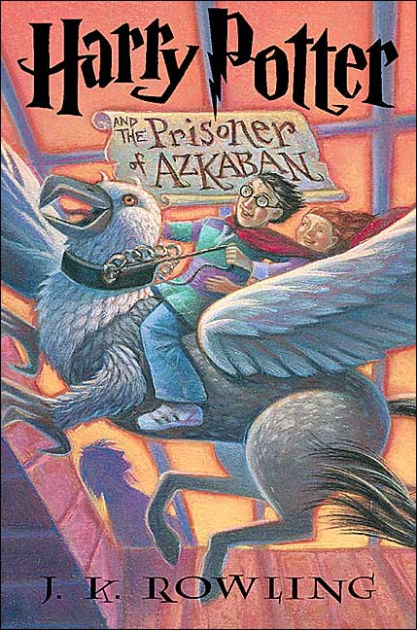
Rowling’s third instalment in the Harry Potter sequence marks a decisive tonal and structural shift: less the cosy wonder of schoolroom discovery and more a novel preoccupied with memory, justice, and the uncanny ways the past returns to shape the present. Prisoner of Azkaban is both a tighter mystery and a deeper moral exploration than its predecessors; it is where Rowling first asks her readers to hold two uncomfortable truths at once — that the world is dangerous and that mercy is often complicated.
At surface level this is a superbly engineered children’s mystery. The book tightens its narrative focus around three converging threads — the escaped convict Sirius Black, the fearsome Dementors, and the revelation of hidden parentage and loyalty — and rewards careful reading with an elegant, retroactive rearrangement of events. Rowling plays a classic trick of the genre: she scatters clues that read differently once the final configuration is revealed. The result is a pleasurable intellectual reversal for adult readers and a satisfying unraveling for younger ones.
But the novel’s true power lies in its thematic architecture. Time — both its passage and its manipulation — becomes the book’s central preoccupation. The arrival of the Time-Turner, Hermione’s exhausted double life, and the climactic, morally ambivalent time-rescue all insist that the past is not a sealed vault but a material to be worked upon. Rowling uses time as a device to dramatize ethical complexity: saving an innocent life may require deception, risk, and a recalibration of responsibility. The Time-Turner’s limited, controlled use gestures at a larger ethical constraint that will haunt later volumes: some wrongs can be undone, but most have to be lived with, understood, and redeemed through courage rather than retroactive correction.
If this book deepens in complexity, it also darkens in tone. The Dementors — literal soul-suckers who render their victims into inert, frozen versions of themselves — are one of Rowling’s most evocative allegorical creations. They act as a gothic chorus for depression, fear, and the paralyzing effects of trauma; in making them a public, institutionalized threat (the guard of Azkaban), Rowling creates a social as well as personal malady. Facing a Dementor becomes the book’s emblematic moral test: not merely to be brave, but to reclaim one’s inner light. The Patronus charm, then, is not just magic but a metaphor for imaginative, self-generated resistance.
Characterization sharpens in this volume. Remus Lupin arrives as both mentor and melancholy figure, a teacher whose laconic kindness masks a tragic history; his humanity complicates the school’s tidy staff/student binary and introduces the reader to the theme of social stigma. Sirius Black’s arc — from public monster to wronged friend — exposes the hazards of rumour and the cruelty of institutional justice. Rowling’s gift is to stage these reckonings within a school that still feels recognizably intimate; Hogwarts remains a home, but its halls are now threaded with adult-sized dangers.
Stylistically, the author balances brisk, accessible prose with moments of gothic lyricism. Her dialogue is at once naturalistic and archetypal — children talk like children but sometimes sound like spokespeople for larger moral questions. She also refines her comic architecture: the Weasley family warmth, the comic relief of Ron’s anxieties, and the farcical elements of wizard bureaucracy all relieve the book’s darker moments without undercutting them. The narrative voice, while still aligned with a child’s perspective, is increasingly willing to let that perspective be pierced by irony and ambiguity.
The book also demonstrates Rowling’s structural savvy. The turns of plot are economical; subplots (the marauder mythology, Buckbeak’s trial) resonate with the main arc rather than distract from it. The novel’s revelations feel earned, not manufactured — a hallmark of work that respects its readers’ intelligence.
Critically, one can quarrel with the reliance on tidy moral reversals: the revelation that Black is innocent and that other adults have been complicit in his suffering may feel, to some readers, too pat an indictment of institutional failure. Likewise, the Time-Turner’s deus-ex-machina convenience raises questions about the narrative ethics of retroactive correction. Yet these objections are minor compared to the book’s achievement: it relocates the series from simple moral certainties into a moral middle ground where pity and justice must be weighed together.
Prisoner of Azkaban is the first Potter book that feels explicitly to be moving toward adulthood — thematically richer, structurally tighter, and tonally more daring. It is a turning point: a children’s novel that refuses to be merely comforting and instead offers a rigorous, imaginative inquiry into memory, trauma, and the ethics of rescue. For readers who came for magic, it supplies it; for readers who want moral subtlety, it delivers that too.
Discover more from The New Renaissance Mindset
Subscribe to get the latest posts sent to your email.
 The New Renaissance Mindset