
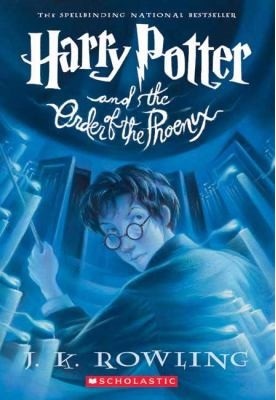
By the fifth book Rowling performs a deliberate tonal swerve: Order of the Phoenix is not merely a continuation of the magical-adventure arc begun in Philosopher’s Stone but the moment when the series grows up, and asks of its readers something harder than puzzles and schoolboy heroics. Structurally the novel is a hinge — bulkier, darker, and more argumentative than its predecessors — and thematically it is an extended study of power: how it is exercised, how it is denied, how it corrodes institutions and individuals.
Power, Authority, and the Bureaucratic Monster
Rowling’s most sustained achievement here is her satirical and often bitter portrait of bureaucracy. The Ministry of Magic, personified by Cornelius Fudge and enacted through the petty cruelties of Dolores Umbridge, becomes a state apparatus bent on silencing truth for the sake of stability. The malignancy is not merely villainous; it is mundanely procedural. This allows it to dramatize political dynamics familiar from civic life — denial, scapegoating, the manufacture of consent — while keeping the stakes personal. The attacks on Harry are less about physical danger (though that is present) than epistemic deprivation: adults who should know refuse to see; the press twists facts; officialdom substitutes intimidation for inquiry. The result is an elegiac warning about the ease with which civic truth can be displaced by administrative self-preservation.
The Interior Life: Anger, Grief, and Adolescent Isolation
The novel’s real energy is interior. From the opening chapters onward it refuses the consolations of easy mentorship. Harry’s anger and loneliness — his grief for Cedric, his want of adult guidance, his mistrust of Dumbledore — become the narrative engine. The author moves away from the relatively external conflicts of earlier books into a psychological realism unusual in children’s fantasy. Harry’s devolving relationship with authority, his insomnia, his rage-fuelled impulsivity, and his recurring nightmares intensify the book’s moral seriousness. The narrative voice, still third-person but tightly aligned with Harry, lets us feel the claustrophobia of adolescence post-trauma: not a clinical portrait but a vivid emotional ecology.
Umbridge, the Aesthetics of Cruelty, and Narrative Antagonists
Dolores Umbridge is a marvel of imaginative specificity. Her cute, saccharine affect and love of kitten plates make her cruelty more repellent because it is domesticated: the most stifling violences in this book are protocols enforced in the name of “safety” and “decency.” Rowling’s choreography of Umbridge’s punishments, of the classroom as arena for humiliation, converts schooling into carceral space. By contrast, the clandestine pedagogy of Dumbledore’s Army restores education to its radical core: a form of collective agency and mutual empowerment. The split between official pedagogy and grassroots learning is one of the novel’s most resonant juxtapositions.
Symbolism, Structure, and the Department of Mysteries
Rowling uses the architecture of the magical world as a symbolic stage. The Ministry — labyrinthine, glassy, bureaucratic — reflects institutional opacity; the Department of Mysteries, where readers finally confront prophecy and loss, is where metaphysics and human cost meet. Prophecy in this book is less a destiny than a set of rhetorical possibilities that characters must interpret and contest. By making prophecy ambiguous and its consequences contingent, Rowling resists teleological determinism and insists on moral choice.
Strengths and Limits
The book’s length and episodic density occasionally work against it: sprawling subplots and heavy expository passages can slow the moral urgency it promises. Some subordinate characters feel used more as moral counterpoints than as fully realized persons: their function is ideological rather than interior. There are moments where Rowling’s rhetoric grows didactic, and the novel’s moral certainties can read as blunt instruments. Yet these flaws are the product of a book trying to do too much — to build a political satire, a psychological study, a school story, and a mythic epic at once.
Order of the Phoenix is the series’ intellectual and emotional fulcrum. It complicates Rowling’s moral universe: heroism involves not only daring but endurance, not only spectacle but the small, stubborn acts of truth-telling. For readers who entered the world seeking enchantment, this volume offers the less easy enchantment of ethical complexity — an invitation to recognize that the real battlefields of adulthood are often administrative offices and public opinion, as much as dark forests and ancient curses. In that move — from outward quest to inward scrutiny and civic critique — she secures the novel’s standing not simply as children’s literature but as a work of moral imagination.
Discover more from The New Renaissance Mindset
Subscribe to get the latest posts sent to your email.
 The New Renaissance Mindset