
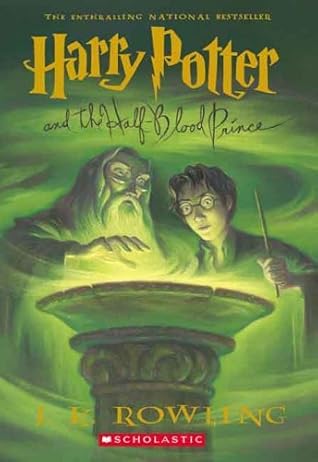
J.K. Rowling’s sixth instalment in the Harry Potter sequence is the book in which the series sheds most of its juvenile skin and begins to operate, with near-full force, as a novel about knowledge, culpability, and the ethical weight of memory. Half-Blood Prince is not merely darker in tone; it is structurally and thematically preoccupied with the antecedents of evil and the pedagogies of betrayal. If earlier volumes staged battles between good and evil as a matter of allegiance and bravery, this book insists that evil also has a history that must be excavated, catalogued, and understood — and that understanding does not absolve the living from acting.
One of the author’s most accomplished achievements here is her use of memory as epistemology. The device of Dumbledore’s guided review of Tom Riddle’s past makes the novel an archaeology of a villain: memory sequences are not indulgent flashbacks but forensic tools. Through them she asks a deceptively simple question — what in a life accumulates into monstrousness? — and answers it by juxtaposing ordinary formative episodes with the malign choices that amplify them. In doing so she complicates the reader’s appetite for origin stories: knowing how evil was made becomes both necessary and morally ambiguous, for understanding does not soften culpability but it does change how one fights.
Closely tied to that excavation is the book’s sustained engagement with moral ambiguity. The Half-Blood Prince himself — a pseudonymous textbook owner whose marginalia allow Harry to excel — becomes a small-scale meditation on the ethics of knowledge. The book grants advantage, but that advantage is tainted by the Prince’s own provenance. Likewise, Severus Snape’s presence—already ambivalent in earlier volumes—hardens into a central puzzle: loyalty and hatred coexist in a figure whose actions resist simplistic categorization. Rowling stages a world in which adults are fallible, secrets are currency, and authority figures can be both guides and culpable bystanders.
Rowling’s narrative craft is on display in how she balances plot propulsion and character interiority. At its core the novel is a detective story: an inquiry into Horcruxes and a race to locate the broken pieces of Voldemort’s soul. Dumbledore’s methodical tutoring of Harry functions as an apprenticeship in historical method as much as in magical lore — the hero is trained to read, to corroborate, to weigh testimony. Yet between those investigations Rowling devotes substantial attention to the quotidian, comic and agonized details of adolescent life: crushes, jealousies, awkwardness. This juxtaposition is not merely tonal contrast but thematic: adolescence is the human condition in miniature, a period when identity is forged amid competing attractions and moral tests.
Stylistically, the novel is leaner and more concentrated than some of its predecessors. Rowling’s penchant for richly detailed set pieces remains — the portrait of Dumbledore’s obscured past, the claustrophobic hunt in the cave — but she now pares back some of the encyclopedic playfulness that characterized earlier volumes. The author’s gift for naming and for linguistic whimsy persists, but she increasingly uses those gifts to underwrite the novel’s tragic architecture. The result is a book that moves with a seriousness and inevitability that culminates in its central act of violence. Dumbledore’s death is, narratively, a coup de théâtre that redefines the stakes of the series: it is not only the death of a mentor but a deliberate shifting of responsibility onto the younger generation.
If the novel has any weaknesses, they are mostly pacing and exposition. The necessity of assembling backstory — Horcrux lore, Voldemort’s biography — sometimes requires passages that read like briefing documents rather than scenes. At moments, an explanatory zeal slows the narrative, and the insistence on setting up the final volume can make certain episodes feel instrumental. Yet this is perhaps an inevitable cost of a penultimate volume whose duty is to prepare rather than resolve.
Ultimately Harry Potter and the Half-Blood Prince is a transitionary masterpiece: it bridges the series’ youthful adventure with the darker moral seriousness of the finale. It asks its readers to consider how histories — personal and national — make monsters; how knowledge can be both liberation and corruption; and how youthful courage must learn to bear the consequences of adult eviction. Rowling here shows herself at her narrative and moral most ambitious: a storyteller willing to excavate the price of victory and to make adolescence the crucible in which the future must be forged.
Discover more from The New Renaissance Mindset
Subscribe to get the latest posts sent to your email.
 The New Renaissance Mindset