
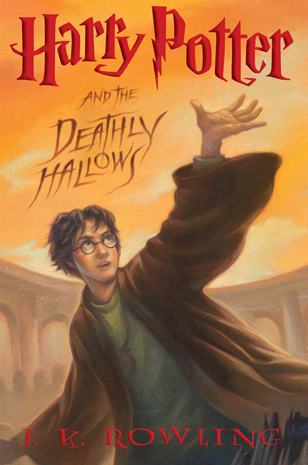
J. K. Rowling’s Harry Potter and the Deathly Hallows performs the double task required of a concluding volume in an epic sequence: it must both resolve a sprawling plot and transmute the series’ earlier motifs into a final grammar of meaning. In this seventh book, Rowling moves decisively away from episodic schoolroom adventures into a sustained, often harrowing narrative of war, exile, and ethical choice. The result is less a tidy finale than a moral reckoning — a book that demands readers weigh personal loyalties, the costs of secrecy, and the paradoxes of power.
At the level of plot, Deathly Hallows reads like an apotheosis: the hunt for Horcruxes reframes the familiar quest motif as one of spiritual and psychological excavation. Horcruxes function as physicalized forms of moral fracture — each object both preserves and pollutes, extending Voldemort’s life while diffusing responsibility across objects and history. By forcing Harry, Ron, and Hermione out of the institutional shelter of Hogwarts and into the liminal landscapes of the English countryside and occupied London, Rowling strips the narrative of many comforts and makes ethical choice the only shelter. The novel’s tempo — episodic at first, then sustained in its late, violent crescendo — mirrors a descent into clarity: the story pares away adolescent distractions until only sacrificial consequence remains.
Thematically, the book is preoccupied with death, memory, and the moral logic of sacrifice. From the opening chapter’s wakeful bereavements to the crucible of the Department of Mysteries and the climactic Battle of Hogwarts, death is not merely an adversary but a truth to be engaged with. Rowling’s invention of the Deathly Hallows — a tale-within-the-tale that borrows folk motifs — is a masterstroke of thematic condensation. The Hallows present a dialectic: mastery of death through objects (the Elder Wand, the Resurrection Stone, the Cloak) versus mastery of death through acceptance. Harry’s ultimate choice — to confront death rather than possess it — transforms the fairy tale into a moral parable about humility and the limits of dominion.
Character work in Deathly Hallows is uneven but often compelling. Harry’s arc culminates in an ethics of responsibility that had been gestating throughout the series; he becomes less the reactive hero of earlier volumes and more an agent who understands the web of consequences that his actions weave. Hermione and Ron are no longer merely his sidekicks but moral poles: Hermione’s careful, bookish prudence and Ron’s erratic, often jealous courage both humanize the cost of resistance. The novel’s most audacious (and controversial) achievements concern Severus Snape and Albus Dumbledore. Rowling reframes Snape’s previously ambiguous cruelty through newly revealed motives and loyalties, complicating our sympathy and forcing readers to reassess earlier condemnations. Dumbledore’s posthumous unmasking — his youthful errors, his private hubris — destabilizes the archetype of the infallible mentor. Both revelations underline one of the book’s insistences: moral greatness is possible alongside moral failure.
The author’s prose here is functional rather than florid; her narrative energy lies less in lyricism than in scene construction and tonal modulation. She juggles genres — quest, war narrative, domestic drama, detective fiction — and in doing so tests her structural dexterity. The long middle sections, which follow the trio in exile, have been criticized for episodic digressions and uneven pacing, but they also permit an intimacy and moral testing unavailable inside the school’s walls. The climactic sequences at Hogwarts repurpose the author’s comedic and Gothic gifts: humour and futility coexist, grief is interrupted by the absurdities of human survival, and violence shocks not for spectacle but for its moral price.
There are, inevitably, problems. Some resolutions feel teleological: key items and revelations sometimes appear because the plot needs them, rather than because the narrative has earned them by earlier foreshadowing. Critics have also objected to an overly tidy epilogue: the coda’s domestic calm risks diluting the ambiguities the main text has so insistently produced. Moreover, Rowling’s treatment of certain secondary characters — their sudden redemptions or deaths — occasionally flirts with melodrama, as if to assure the reader that moral balances have been struck. These are not fatal flaws, but they register the difficulty of reconciling mythic closure with psychological verisimilitude.
What elevates Deathly Hallows beyond mere genre consummation is its willingness to interrogate power’s ethical architecture. The book interrogates institutions as much as individuals: the Ministry’s collapse, the corrupted press, and the ease with which ordinary people become complicit under pressure all function as a civic critique. In this sense the novel moves beyond children’s fantasy into a commentary on the fragility of democratic culture and the ways in which courage and memory sustain communal life.
Ultimately, Harry Potter and the Deathly Hallows is a work about the moral imagination: the ability to hold the past — with all its betrayals and loyalties — and to act in ways that honour life’s precariousness. It may not resolve every narrative strand with perfect symmetry, and its final domestic scene may comfort more than it questions, but Rowling’s concluding volume does accomplish what the best epics do: it forces readers to confront the price of victory, to parse heroism from vanity, and to accept that endings are less about erasure than about the stories we choose to remember. For those who came to the series as children and returned as adults, this book operates both as an elegy and as an instruction: to live intentionally in the face of mortality is itself a kind of triumph.
Discover more from The New Renaissance Mindset
Subscribe to get the latest posts sent to your email.
 The New Renaissance Mindset
What a brilliant and insightful analysis! I truly appreciate how you unpacked Harry Potter and the Deathly Hallows not just as a finale, but as a moral and ethical exploration—highlighting Rowling’s treatment of sacrifice, responsibility, and the complexities of power. Your reflection on character arcs, thematic depth, and the interplay between plot and moral imagination captures the richness of the series while acknowledging its imperfections. This appreciation of both narrative craft and ethical resonance makes your review thoughtful, compelling, and deeply rewarding to read.
LikeLiked by 1 person
Thank you, Mr. Verma.
LikeLiked by 1 person